Start with Queen’s Cove if you want the romantic arrangement to touch a restaurant, a bookshop, an inherited inn or a return to a familiar town. Choose Vancouver Storm if the attraction is a professional team’s wider social world: players, their friends, employees and, eventually, a coach. The useful difference is what keeps these adults in each other’s lives, rather than which series has the most appealing trope labels.
For a straightforward first encounter, pick That Kind of Guy for Queen’s Cove or Behind the Net for Vancouver Storm. If one particular setup matters more, Archer explicitly permits standalone reading. This guide compares official premises, rather than claiming firsthand reviews of the novels. English titles identify the works throughout; they do not imply that every title is available in every translation.
One current detail matters before choosing: Vancouver Storm has five novels, ending with The Wild Card, released on February 3, 2026. Archer’s general reading-order page still stops at book four, but her individual fifth-book page identifies its final position. The comparison below uses that fuller record, checked on October 25, 2026.
Queen’s Cove: affection tied to a place people work
Queen’s Cove is the stronger starting direction when you want a recognizable local undertaking to make the romance interesting. The four premises give different answers to what might keep someone attached to a town. Owning a business, making a joint property usable and completing fieldwork create distinct obligations; they should not be compressed into a vague promise of small-town coziness.
In That Kind of Guy, Emmett Rhodes agrees to cosign a restaurant loan in return for a fake engagement that will help his mayoral campaign. Consider it if you enjoy a public arrangement with a concrete local purpose. There are two kinds of credibility to be curious about: the image someone presents to a community and the confidence another person needs to build a working future. That is a more specific invitation than simply wanting an attractive pretend fiancé.
For a reader choosing a first book, the civic element distinguishes this from an athlete managing a celebrity image. A town election makes a local audience relevant to the advertised arrangement. If business ambitions attract you, the restaurant element gives the other side of the bargain weight too. You can decide whether that combination sounds entertaining without treating the romance as a realistic guide to campaign management or lending.
The Wrong Mr. Right pairs a bookstore owner with surfer Wyatt Rhodes through relationship coaching. Its particularly useful distinction is that learning about dating sits beside maintaining a business. Choose this premise if you want confidence to be interesting outside romantic success as well. A shop gives the decision somewhere to return: the question is not only whom a person might date, but what kind of life they want around that possibility.
Surfing does not make this a Vancouver Storm installment. It belongs to Queen’s Cove, and Wyatt’s activity should not be confused with membership of the hockey team. That distinction matters if you came looking for athletes: you may be drawn to an active, confident partner without wanting a whole professional sporting institution. Equally, a love of bookshops is a good reason to investigate this title, not proof that you will prefer every book set in the same town.
In Your Dreams, Holden Rhodes begins with a jointly inherited inn and a renovation, alongside a bargain about finding Holden a wife. This is the Queen’s Cove choice to examine when shared practical work attracts you more than a public campaign. Property gives people a reason to negotiate something that exists beyond their immediate attraction. For a reader, that can make the difference between wanting witty encounters and wanting an ongoing undertaking to bring the pair back together.
Ask which prospect appeals: public coordination in Emmett’s setup, personal coaching beside the bookstore, or cooperation over a place that needs work. The inn premise need not mean that the novel is a renovation procedural. Its value for selection is simpler: if you like relationships forming while adults have something tangible to do, you have a specific title to investigate.
Finn Rhodes Forever adds a different attachment to place: returning firefighter Finn, a past relationship, and the heroine’s doctoral fieldwork. It is the second-chance option among these four. A reunion changes the kind of curiosity you bring. You may want to know how present-day ambitions coexist with old expectations, rather than watch two people build their first understanding from nothing.
The fieldwork matters to that choice because coming back to somebody’s life is different from receiving all their attention. If you want a heroine with a concrete task already underway, that advertised commitment may be the draw. If your strongest preference is an entirely new romantic connection, begin elsewhere. A familiar town and a familiar lover are separate attractions, even when one premise offers both.
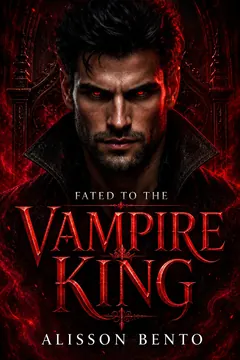
From Alisson Bento’s books
A vampire romance about a captive bargain that turns into the only place she wants to be.
Kindle edition · Check Kindle Unlimited availability on Amazon.
Vancouver Storm: choose the relationship to the team
The Storm novels share professional hockey, but the route into that environment changes. The sequence moves through an assistant arrangement, a performed relationship, an existing friendship, a marriage bargain and the coach’s workplace. Choosing among those entry points is more precise than treating a hockey player’s job title as the entire recommendation.
Behind the Net introduces goalie Jamie Streicher and his live-in assistant, whose music ambitions also form part of the premise. This is a useful first investigation if you like professional and domestic boundaries occupying the same setup. Employment supplies a reason for contact; the assistant’s creative interest gives you something to consider beyond being near an athlete. Ask whether you want that overlap of work, home and individual ambition.
The Fake Out centers a fake relationship with scorer Rory Miller, the heroine’s ex’s rival. Here the starting attraction can be social positioning: choosing a particular partner changes the meaning of being seen together. If you enjoy a romantic performance that has a pointed audience, this setup is more directly relevant than merely preferring a cheerful sports setting. The ex’s connection helps distinguish the premise from Queen’s Cove’s civic bargain.
The Wingman pairs defenseman Hayden Owens with longtime friend Darcy Andersen through dating coaching. Friendship is the useful selection filter. You are considering a pair with an existing bond, so the promise to investigate differs from the surprise of learning an unfamiliar person’s habits. If it is the possible reclassification of familiar attention that attracts you, put this title ahead of an assistant or fake-dating premise on your personal shortlist.
Gloves Off gives Georgia Greene and enforcer Alexei Volkov a marriage of convenience tied to inheritance and citizenship. This is a formal arrangement from the outset. A reader may enjoy the gap between the public label and private feeling, or find a legal commitment more interesting than pretending to be on a few dates. Those preferences point toward this book specifically; they do not make every fake relationship equally appealing.
The Wild Card changes the professional position at the center: Tate Ward is a coach and single father. Dell’s description names Jordan Hathaway and makes their team employment connection explicit. Choose this premise if leadership, family responsibility and working in the same organization interest you more than another current-player courtship. It broadens the ways to belong to the Storm world without beginning a sixth book or a separate numbered series.
The professional titles identify different entrances, but they do not measure how much competition appears on the page. Knowing that Jamie is a goalie or Alexei an enforcer cannot establish a percentage of game scenes, travel chapters or locker-room dialogue. If you want sport mainly as a social setting, the assistant, friendship and marriage premises give you reasons to investigate; they are not proof that technical passages are absent. If you want extensive competitive action, investigate that separately rather than buying on the position name alone.
The same care helps preserve the other adult’s interests. The music ambition in Behind the Net and the business in The Wrong Mr. Right are meaningful selection details even though one book belongs to hockey and the other to a town series. A reader seeking a woman with a working or creative aim need not exclude either world. The sharper question is whether you want that aim to meet an athlete’s household or an ongoing local enterprise. It makes the comparison personal without reducing either protagonist to the romantic partner’s occupation.
If two books sound similar, compare the purpose of the arrangement
The most revealing cross-series comparison is The Wrong Mr. Right versus The Wingman. Both advertise dating coaching, so that label alone cannot settle the choice. The first gives you a bookstore and a surfer; the second places the lessons within a longstanding friendship connected to professional hockey. Decide whether your curiosity starts with someone’s local everyday life or with an established bond acquiring another meaning.
For example, a hypothetical reader who wants bookish surroundings and an individual business ambition has a clear reason to investigate The Wrong Mr. Right. Another who mainly wants the possibility that a friend’s attention has been misunderstood has a reason to investigate The Wingman. Neither reader needs a ranking of the two novels’ quality. They need to identify which starting condition they want to spend time with.
Coaching itself can also raise a preference worth naming. Do you enjoy a temporary imbalance of confidence, with one adult offering guidance? Or do you prefer two people who both feel equally unsure? These descriptions establish the coaching premise, not every detail of how agency or confidence develops. If that balance is central to your enjoyment, use the actual edition’s sample to investigate it rather than assuming the word coaching guarantees a particular emotional result.
A second comparison runs from That Kind of Guy to The Fake Out to Gloves Off. The first connects the performance to civic image and a restaurant loan; the second connects it to an ex’s rival; the third begins with marriage and material eligibility. Think about whom the arrangement must convince and what the adults expect it to accomplish. An audience, an adversarial connection and a formal status create different reasons to keep pretending.
This distinction helps if you often say that fake dating is your favorite trope. You may actually prefer a negotiated exchange where both people have practical aims, or you may prefer the satisfaction of choosing someone inconvenient for an ex. Alternatively, you may want the intimacy implied by a marriage label before the feelings are settled. Naming that preference gives you a reason to choose among Archer’s specific books without inventing a sequence that groups all the pretend relationships together.
A third comparison is In Your Dreams, Holden Rhodes versus The Wild Card. Both descriptions give the adults work that brings them together, but the structure differs. A jointly inherited inn suggests shared responsibility for a property. A coach and a staff member belong to an organization with professional authority already built into it. If unequal workplace power is something you would rather avoid tonight, that distinction is useful before you decide that any shared-task romance will do.
Conversely, if institutional roles are precisely what interest you, the team gives you a different question from private renovation. How does attraction fit beside an adult’s job and responsibility to other people? That is a reason to consider the coach premise, not an assurance about how every boundary is handled. Neither a sport nor a town name can answer all of a reader’s preferences by itself.
Read each numbered group in its own order
Queen’s Cove runs That Kind of Guy; The Wrong Mr. Right; In Your Dreams, Holden Rhodes; Finn Rhodes Forever. Vancouver Storm runs Behind the Net; The Fake Out; The Wingman; Gloves Off; The Wild Card. These are separate lists, not nine consecutive chapters of one couple’s story.
Archer’s reading guidance allows individual entry while recommending order because characters recur. That gives you a sensible default: choose the social world first, then begin at its first book. You do not need to complete Queen’s Cove before opening Behind the Net. These sources do not establish a compulsory cross-series chronology or a continuous shared plot between the two groups.
Keep the distinction between following a romance and recognizing its surrounding people. Being able to start a later book does not promise that recurring appearances reveal nothing about earlier stories. If preserving those discoveries matters more than reaching your favorite premise immediately, stay within the numbered sequence. If the specific couple is the attraction, accept the author’s standalone invitation and make that your starting point.
For a separate author with both local-community and team branches, our Sarah Adams reading guide offers another bibliography to explore. Those branches belong to Adams; similarities in setting do not connect their fictional worlds to Archer’s.
When neither town nor team is the real attraction
Consider The Heartbreak Rule if what you actually want is comedy as a profession: comedian Gemma and theater owner Reid have to work around a venue change. Archer lists it separately as a standalone. It is not a missing Queen’s Cove installment, a Storm prequel or a short interlude that must be inserted between numbered novels.
That alternative can sharpen the main decision. Perhaps you wanted banter and creative work all along, while the small-town and hockey labels merely happened to be the suggestions you saw. A venue and performance premise gives that preference its own place. Newsletter bonus scenes are a different kind of material; save an associated bonus until after its novel rather than counting a signup offer as another required book.
Check which edition you are choosing
Two real dates show why product order can mislead. Archer dates The Wrong Mr. Right to June 30, 2022, while Orion’s English paperback is dated April 4, 2024. The Wingman has an author-listed September 26, 2024 release and a Dell paperback published March 11, 2025. Later editions do not move either story to a new numbered position.
Similarly, Gloves Off is already published: Dell dates its paperback to June 17, 2025, despite a lingering preorder heading on Archer’s page. Use the work’s title and series number to identify the story, then the language and format to identify the copy. This guide retains English titles because specific translated-title mappings have not been established here.
Archer’s FAQ also explains that Queen’s Cove publishing arrangements outside North America affect Kindle Unlimited decisions. A banner on an author page cannot establish inclusion for your account today. Check your own territory’s exact edition if borrowing through a subscription is decisive. That is a purchase-format question, separate from which fictional world you want.
The next choice can therefore stay small: That Kind of Guy for the civic and business doorway, Behind the Net for the team and assistant doorway, or one later premise whose difference you can name. If you want another team-based author afterward, the Windy City guide compares a separate connected series. For Alisson Bento’s own fiction, browse the romance catalog. Keep that browsing distinct from Archer’s reading lists, and choose the people and obligations you want to spend your next reading hours with.