Start Rokia with the situation that interests you: Isabella and Kinan in the divided city of The Truth Untold; four young people brought together in Sindrome; or Lavinia and the otherworldly Arthur in Guilty. Drunk in Love. For Guilty, continue with Guilty. Burn for love. Dangerous Love, released in Italian on 13 October 2026, introduces Caroline Night and Damon Piers. It should not be added to the Guilty sequence merely because its title also contains “Love.”
The immediate choice is between different fictional situations, followed by a choice of edition. Platinum copies of The Truth Untold and Sindrome revisit their respective stories in collector presentations. The TEA edition of Drunk in Love is another edition of that first Guilty novel. A Sweet Christmas is a shared anthology, with a Rokia contribution involving Sia and Derek. Counting every cover as the next novel creates an order the publisher has not established.
Put the characters beside the titles
A useful reading note begins with four lines rather than one numbered list spanning the bibliography:
- The Truth Untold. La verità nascosta: Isabella, also called Issa, and Kinan; a divided city and a concealed explanation.
- Sindrome: Sia, Derek, Olivia and Edgar; a four-person emotional ensemble.
- Guilty. Drunk in Love → Guilty. Burn for love: the continuing Arthur story, beginning with Lavinia.
- Dangerous Love: Caroline Night and Damon Piers; the Piers family’s wealth, household and academy.
These identifiers matter when a catalog mixes printings, ebooks and audio. They also prevent a misleading association: school settings, painful pasts and fairy-tale imagery can recur without establishing one continuous plot. The official descriptions give these situations separate casts. They do not instruct readers to finish Isabella’s story before meeting Sia, or to read Sindrome before opening Guilty.
This map discusses publisher descriptions and edition records. It does not claim to assess every scene of every novel. Its purpose is to help you select an opening, preserve the clear Guilty continuation and understand what a different physical package offers.
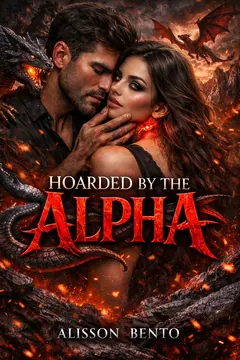
Kindle edition · Check Kindle Unlimited availability on Amazon.
The Truth Untold: begin with the divide
In Salani’s introduction to The Truth Untold, separated Red and White students begin attending the same academy. Isabella and Kinan meet across that division. This identifies the attraction without explaining the secret around which the description builds its invitation.
Choose this candidate if you want a relationship beginning inside a social divide whose explanation you do not yet possess. The reading question is how much Isabella understands about her world. You can be curious about her changing understanding without first searching for an account of what the Red students hide. Finding that answer before sampling would remove part of this particular premise’s uncertainty.
It also gives you an alternative to Guilty. Both introductions invite unease, but they introduce it differently. Here your doorway is a city with opposing groups and an apparently recognizable institution. In Guilty, someone explicitly claims to come from a parallel universe. A reader wanting to investigate what is wrong with a social order may prefer Isabella’s doorway; someone specifically seeking another realm has a clearer signal in Arthur’s introduction.
Do not turn the fairy-tale language around The Truth Untold into a promise of comfort or a particular ending. Likewise, an academy does not establish ordinary campus romance. If the divided community interests you, choose this title in a readable edition and leave the concealed explanation concealed. There is no need to acquire a Platinum copy as an additional story afterward.
Sindrome: four people, another use of fairy tales
The publisher’s Sindrome page centers Sia, Derek, Olivia and Edgar, brought together through a doctor and an opportunity in journalism. This changes the selection question. You are considering developing connections within a group, rather than another Isabella-and-Kinan volume.
The description invokes a witch, prince, dragon and mermaid. Those images should not be converted into a literal fantasy cast. In this introduction, they frame people dealing with suffering. A reader seeking a supernatural system should not choose Sindrome solely because a dragon appears in the promotional imagery. Someone interested in several personalities learning how to coexist has a more relevant reason to investigate it.
Sia and Derek’s antagonism provides one point of interest; Olivia and Edgar provide another. The useful comparison is not a competition over which pair is “more damaged.” It is whether you want several people’s responses and relationships to shape your attention. If you prefer an opening concentrated on one encounter, consider the group premise before committing. If you enjoy watching different temperaments collide, its breadth may be the attraction.
The synopsis mentions distress, loss of voice, panic and anger. Those descriptions do not authorize diagnosing the characters or treating the novel as clinical guidance. They also do not establish that affection alone cures a condition. Approach it as fiction about these people, and ask directly about any subject that matters to you. You can ask about depictions of panic without requesting every character’s history.
Sindrome is the relevant starting novel if the Sia-and-Derek Christmas contribution brought you here. Meet the larger ensemble before the seasonal return. That preserves your introduction to the people around the couple instead of treating the novel as background to clear hurriedly before a bonus story.
Guilty: the firm sequence is Drunk, then Burn
Read Drunk in Love before Burn for love. Arthur connects the descriptions; the second assumes earlier events. Burn is a continuation choice, rather than an interchangeable alternative opening.
Drunk introduces Lavinia and a stranger who says he is a prince from a parallel world. This is the explicit otherworld doorway on the map. You need not infer magic from a metaphor, nor read Sindrome to decode the prince. The premise supplies its own starting relationship and fantastic problem.
One significant content distinction belongs to the opening: the publisher expressly describes Lavinia attempting suicide. Someone avoiding that subject should know it is in the stated premise, rather than being reassured by the romantic title. This verified observation is not a comprehensive warning inventory and does not describe every subsequent scene. It does give you a concrete reason to pause or seek a targeted check.
If you begin, keep the second novel’s full synopsis for later. Its function is to reorient returning readers, and it reveals developments that the first book has not yet delivered to a newcomer. Knowing that Burn follows Drunk is useful; knowing every condition under which it begins is unnecessary preparation. A friend can confirm the title order without summarizing the transition.
“Drunk” and “Burn” are not measurements of sexual detail. Nor do two available titles certify the future of every related publication. The supported instruction is narrower: follow this Arthur arc in this order. If an endpoint or absence of cliffhangers determines your choice, seek an explicit answer about that structure. The titles alone cannot supply one.
Dangerous Love: a new Italian release
As checked on 25 October 2026, Dangerous Love is a released Italian book. The live publisher-supplied Apple Books record states publication on 13 October 2026. Older search results may still display preorder wording. That stale language should not turn a published title into a future announcement.
Salani’s description introduces twenty-year-old Caroline Night, employment with the Piers family, access to their academy, and Damon Piers. Compared with Guilty’s parallel-world prince, this invitation foregrounds wealth and unequal access. Compared with The Truth Untold’s divided city, the immediate doorway is a powerful family’s property and institutions.
That difference guides a choice without inventing scenes. Ask whether you want to follow someone whose practical opportunities are entangled with the people around a potential relationship. Caroline’s circumstances make work and access relevant to the attraction, rather than decoration around a wealthy hero. If you want an academy setting where the protagonist’s opportunities do not depend on the family surrounding the romance, compare that preference with Caroline’s employment and access before choosing.
Caroline’s age belongs to Caroline. It does not establish every protagonist’s age or classify the whole catalog as adult romance. A distinct cast is evidence against casually calling this Guilty book three, but not a guarantee that no continuation is possible. The consulted page provides no definitive standalone or future-series statement. Choose the Caroline-and-Damon story described there, checking separately if complete closure is essential.
Compare access, belonging and the opening you want
If an academy setting brought you to these books, consider who determines the terms of entry. In The Truth Untold, the educational encounter arises from a division within the city. In Dangerous Love, Caroline’s opportunity is connected to the family employing her. These are different approaches to belonging and power. The first may interest someone wanting to question a community’s boundaries; the second, someone interested in an opportunity dependent on a private circle. Neither invitation establishes ordinary campus life merely by naming an academy.
For Sindrome, the documented starting opportunity is in journalism and brings four people together. Similarities elsewhere in the catalog should not turn that into another identical exclusive academy. “Choose the school book” is therefore an imprecise recommendation. Ask which starting position attracts you: Isabella’s membership of a divided community, Caroline’s access through employment, or the interactions among Sindrome’s four people. These questions follow the premises; they do not announce particular scenes or their solutions.
Even the word “prince” does different work. In Guilty, the claim of a parallel universe supplies an expressly fantastic possibility. In Sindrome, the fairy-tale figure appears beside other images framing the ensemble. You do not need a final genre verdict to recognize that those signals should not be swapped when choosing a first book.
If an opening sample is available for your chosen edition, use these distinctions to guide attention rather than test for a predetermined answer. With Isabella, notice whether you want to keep discovering her understanding of the division. With Caroline, consider whether her practical position interests you alongside the attraction. With Sindrome, ask whether the people introduced make you curious about the group. For Drunk, assess whether you want to follow the encounter into its fantastic possibility. Those are proposed reading questions, not observations pretending that a particular sample was read here.
Platinum changes the object you choose
The publisher calls The Truth Untold. Platinum the Isabella-and-Kinan story in a collector presentation. It identifies Sindrome. Platinum with Sia, Derek, Edgar and Olivia. These are specific same-story relationships, not a universal rule about every book carrying “Platinum.”
For a first read, choose between the standard and collector presentation of the story you want. If you already own it, decide whether the physical redesign itself appeals. Both are legitimate purchases. Neither requires pretending that the collector copy fills a missing place between two other novels.
The page totals show why counting pages can mislead: the standard Truth Untold record lists 592, while Platinum lists 504; Sindrome lists 560 and its Platinum 432. These are edition measurements. They do not establish abridgment, missing scenes, rewritten outcomes or exclusive material. A different format and layout can produce a different total without supplying another installment.
For a shared read, agree on chapters or recognizable stopping points rather than matching pages between bindings. For a gift, identify the recipient’s existing story before asking about their desired cover. Someone who already owns Sindrome may enjoy another presentation, but that is a collecting question. Someone requesting their next unread Rokia story needs a different recommendation.
TEA, audio and translation do not add installments
TEA’s Drunk in Love record explicitly states that it is licensed from Magazzini Salani. It remains the Lavinia-and-Arthur opening in another print edition. Salani also lists an audio version. Listening and reading are alternative ways of approaching that installment, not successive parts.
One verified Spanish title is The truth untold. La verdad que nos separa. The publisher-supplied Spanish ebook listing identifies its language and Isabella-and-Kinan premise. A Spanish reader can use this exact title instead of an improvised translation of La verità nascosta.
This does not establish a complete translated catalog. The language of this guide, a shop interface or English words on a cover cannot prove the language inside. Keep the original title and central characters in a borrowing note, then verify the selected edition’s language. This matters especially when friends discuss one story under different subtitles.
A Sweet Christmas returns to Sindrome’s circle
The official A Sweet Christmas description identifies a five-author anthology and a contribution involving Sia and Derek. Its form differs from a full Rokia novel. For a first encounter, save the seasonal return until after Sindrome: a recommendation preserving introductions, not an invented mandatory chronology.
Ask whether you want that shorter return alongside work by other contributors. The collection also includes Erin Doom and Carrie Leighton, whose characters belong to their own narrative circles. A shared cover does not merge their worlds with Rokia’s. Our guides to Erin Doom’s connected stories and Carrie Leighton’s Better route explain those separate choices if the other contributors interest you.
Salani’s other print listing repeats the contributors and story descriptions. Another publication record does not automatically mean another set of Christmas stories. Check the contents before acquiring a second copy, especially if you already own the collection and want something new by Rokia.
Decide what you want to discover first
The strongest contrast lies in the questions each opening raises. The Truth Untold approaches a divided community and a hidden explanation. Sindrome invites attention to four interacting people and difficult emotional experiences. Guilty offers an explicit crossing between worlds and a continuation to follow. Dangerous Love introduces a pair within structures of wealth, employment and access.
Imagine choosing for a small reading group. Readers who want to discuss uncertainty about institutions have a reason to investigate Isabella’s city. Readers attracted to different emotional perspectives have a reason to inspect Sindrome’s opening. Readers wanting a fantastic journey can test Drunk rather than assume that all four options offer equivalent magic. Those are hypothetical preferences, not claims about which book is objectively strongest.
A second practical situation is borrowing from a friend. If the offered book says Burn, ask for Drunk first. If it says Sindrome. Platinum, you can decide on the story without finding the standard binding as an extra prerequisite. If it says A Sweet Christmas, recognize that you are borrowing a collection with a related return, rather than the main novel introducing its couple. The name on the cover tells only part of what you need.
None of these premises supplies a universal age recommendation, heat score or guaranteed ending. A fairy-tale phrase, academy or Christmas cover cannot replace a title-specific suitability check. If one subject determines your choice, ask about it directly and keep the answer separate from whether the binding is standard or Platinum.
Choose one cast first, then one edition. Reserve Burn for after Drunk, the Sia-and-Derek seasonal return for after their introduction, and collector copies for an intentional edition choice. For another romance premise altogether, browse Alisson Bento’s book catalog. A useful list helps you find the story you want now; it need not turn every Rokia product into a compulsory step.