
Choose a Jescie Hall book by the relationship problem you want to follow. Hawke begins with an unwanted roommate disrupting an existing relationship. KID puts addiction and an intense connection with Johanna in the foreground. That Sik Luv advertises a masked stalker and conflict around desire and religious teaching. The Canary Cowards joins a sports physiotherapist and an injured football player. Green Light builds an online obsession and revenge premise around new stepsiblings. These are different invitations within the author’s dark and contemporary romance territory.
For a first choice, investigate Hawke if domestic tension and secrets attract you, The Canary Cowards if the professional relationship is your strongest interest, or That Sik Luv if you specifically want the stalker premise. Choose KID because its addiction-focused setup interests you, and Green Light because its online deception and stepsibling conflict do. None is presented here as a universal gentle introduction or as a test of how much darkness you can tolerate.
This is a discovery guide using Hall’s public pages and publisher descriptions, rather than a claim to have read these novels in full. It covers five books featured on the author’s site, not a certified complete lifetime bibliography. Original titles are retained. A guide in your reading language does not itself verify that a particular translated edition exists.
The author and the five-book starting shelf
Hall’s official site identifies her as an author of dark and contemporary romance and features Green Light, The Canary Cowards, That Sik Luv, Hawke and KID. Her author biography describes an interest in difficult subjects, forbidden territory and flawed characters. That is useful context for the shelf, without turning a general author statement into a guarantee about any individual ending.
The name is Jescie Hall. Match it along with the exact book title when identifying a copy. Titles such as Green Light and KID are not unique across publishing, and a search can produce unrelated stories. The spelling That Sik Luv is the published title used on the author’s own pages; replacing its words with a tidier version makes identification less reliable.
The five featured works also do not establish one continuous series merely because a retailer presents them together. An author catalog, a set of special editions and a narrative sequence answer different questions. You can compare the five premises before deciding which possible connections matter to you. Buying every title to obtain permission to start one is not a requirement established by this selection.
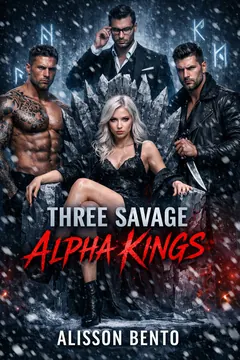
From Alisson Bento’s books
A shifter romance about one heroine, more than one devoted hero, and no choosing.
Kindle edition · Check Kindle Unlimited availability on Amazon.
Hawke: a household with an existing romantic arrangement
In Hall’s own description, Nicole and Patrick move forward with their relationship and live together, but a secret leads to Hawke becoming an unexpected roommate. The publisher-supplied Blue Nose description on Audible identifies him as ex-convict Cameron Hawke and emphasizes Nicole’s curiosity about his hidden past. The household’s tension is part of the starting situation.
The important choice is whether an existing romantic arrangement makes the newcomer more interesting to you. This is not the same setup as two unattached strangers meeting in a new place. Nicole’s current life already has a structure, and the unexpected roommate places another person inside it. The premise invites interest in what she notices, what she resists and what a secret does to the meaning of familiar surroundings.
Choose it when unwanted proximity is appealing because it complicates choices already being made. A shared home can make avoidance difficult without supplying a single outside adventure that occupies everyone. If you prefer to follow a person revising an apparently settled picture of her life, that is a concrete reason to try the book. It is different from choosing it solely because the hero is described as dangerous.
Hall’s content notes identify infidelity outside the central couple, drug use, the death of a friend involving drunk driving, manipulation and attempted sexual assault. Those are author-supplied topics, not a whole-book assessment from this guide. In particular, do not use a roommates label as reassurance that the difficult material stays within comic domestic friction.
KID: attraction does not remove the addiction premise
Hall’s public description places Johanna inside a story voiced around addiction, mutual need and the possibility that the two people’s problems could pull them down together. The Blue Nose Publishing description on Audible calls it a spin-off romance with immediate attraction and explicitly identifies heavy drug use, trauma, self-inflicted pain and graphic sexual content.
Choose this route when you want the difficult personal condition to be central to the reading decision. The attraction is not simply an extra thrill beside a neutral background. The advertised questions concern need, dependence and what happens when the person imagined as a source of rescue has serious problems of her own. That can interest a reader who wants intense emotional entanglement, without requiring a claim that the book provides a particular model of recovery.
There is a meaningful difference between wanting two people to recognize each other and wanting a relationship presented as able to solve everything. The description supports investigation of the first possibility; it cannot certify the second. If you read, notice which choices make you curious about the characters as people, rather than reducing either to a problem the other must fix. This is a suggested reading lens, not a report of the novel’s eventual answer.
The author’s title-specific notes add M/F/F scenes, rough sexual activity, knife play and mentions of suicide. Those notes are relevant even if what first attracted you was the prospect of a tender connection. Equally, an additional participant in an intimate scene does not by itself establish a lasting multi-partner relationship structure. Ask that question separately if it matters to your choice.
That Sik Luv: masked pursuit and the meaning of desire
The author’s description of That Sik Luv names Aero as a stalker, describes his masked presence and puts the narrator’s desires in conflict with teachings about sexual shame. Its advertised attraction involves pursuit and a restricted view of what she is permitted to want. That distinguishes it from Hawke’s unexpected roommate and KID’s addiction-centred need.
Choose this title because the pursuit itself interests you. A masked figure with hidden information creates a different starting balance from two people who share a workplace or home and know each other’s ordinary role. You may be drawn to secrecy, recognition or the narrator’s response to being observed. Those are reasons to inspect this particular premise, rather than assuming every possessive romantic lead offers the same experience.
The religious element also deserves to be named precisely. The description concerns what a character has been taught about desire and how her attraction conflicts with it. That is more specific than a decorative church setting. A reader interested in forbidden desire may find that conflict compelling; another may prefer a story where religion is not part of the central personal tension. Neither preference can be settled by the masked-man image alone.
Hall’s warnings for this title include stalking, religious trauma, a cult-like setting, a masked man, an age gap, consensual non-consent themes, graphic violence and murder, and mentions of sexual assault of a minor. The page also lists detailed sexual practices and M/F/M scenes. This is not a promise that every reader will interpret every consent dynamic identically, nor evidence that one listed practice defines the whole relationship.
The Canary Cowards: professional distance and personal curiosity
Podium’s publisher page introduces Dylan as a physiotherapist working with former football star Lake Decker, whose injury has interrupted his career. Their description highlights his confidence, her professionalism and secrets he wants to understand. Hall’s own shorter account places Dylan’s work and unwanted assignment at the centre of her circumstances.
Choose this route when professional interaction provides the tension you want. A physiotherapist and a client do not meet on an entirely neutral social footing. Their contact has a practical purpose, while attraction and curiosity threaten to make it personal. The reading question is what you want to watch happen to that boundary, not simply whether a sporting backdrop sounds appealing.
The injury matters to that initial structure because it changes the player’s relationship to his work. The premise gives Lake a reason to encounter someone professionally whose reactions he cannot control through his former sporting status alone. Dylan, meanwhile, arrives with work and secrets of her own. These are starting pressures to investigate, not proof of how realistically the whole novel handles rehabilitation or professional ethics.
Hall’s warnings identify the death of a parent, a supporting character’s cancer diagnosis, a derogatory comment about autism not made by the main characters, and assumptions about sexual orientation. This is a different published list from the one for That Sik Luv. The difference helps you ask specific questions; it should not be converted into a universal ranking in which one book must be emotionally easier for everybody.
Green Light: online identities, revenge and a changed family connection
Podium’s Green Light page identifies a dark college romance involving a man’s online obsession with his new stepsister. Its description uses the handles K1ngK0br@ and vEn0mX and foregrounds deception, disappearance, revenge and a desire to regain love. Keep that combination visible when deciding whether the premise attracts you.
The online dimension and the family connection are separate pressures that happen to meet. An online identity raises questions about what somebody knows and what was performed for them. Becoming stepsiblings adds a different context to future contact. If you want a story where information and proximity change the meaning of an earlier encounter, this setup provides a reason to investigate. It does not describe an interchangeable college flirtation.
The advertised revenge is another important difference from reluctant professional attraction. One participant wants to make the other’s feelings hurt in response to a perceived injury. A reader may actively want that hostility in fiction or find it exhausting. Choose with that mechanism in mind, rather than relying only on the title’s possible suggestion of permission or optimism.
Hall’s notes for Green Light include bullying and toxicity, the stepsibling setup, sexual blackmail, off-page sexual assault and torture, drug use, dubious consent and animal cruelty. Her animal note specifies that the act is not by the main characters and that the animal survives. Attribute that detail to the author’s note; it does not establish the absence of other difficult material or how an individual reader will react.
Connected reading without inventing one author-wide saga
The Blue Nose record explicitly calls KID a spin-off. A special-edition set made in collaboration with Hall pairs Hawke and KID. Together, those are useful reasons to investigate that pair when context matters. They do not establish that the five featured books form a single numbered sequence or that every unfamiliar character requires another novel first.
Starting with Hawke before considering KID is a cautious contextual route if both interest you. Treat that as a reading suggestion, rather than a claim that the opened primary pages supplied an official mandatory order or a complete shared-character map. If a specific spoiler matters, seek an exact answer about the pair before choosing. There is no need to invent missing bibliographic certainty in order to recommend a first premise.
Other author-linked stories are also not automatically additional volumes of these five. Hall’s older public pages mention the Players series and A Sliver of Infinite. This guide does not certify their present publication state, completeness or relationship to the featured novels. A displayed story link is a discovery lead, not evidence that every text is a current interchangeable retail edition.
Three comparisons that make the shortlist more useful
Compare Hawke and Green Light by the origin of the pressure. In the former, Nicole already has a boyfriend and a new roommate enters that arrangement. In the latter, the publisher foregrounds an online connection, deception and revenge alongside becoming stepsiblings. Both involve uncomfortable proximity, but disruption by a newcomer and retaliation after a perceived betrayal create different reasons to anticipate the next encounter.
Compare KID and The Canary Cowards without treating every difficult personal condition as the same plot. One description foregrounds addiction and mutual need; the other explicitly starts with a professional whose job involves a client’s injured body. Ask whether your interest lies in the possibility of personal rescue, the boundary between work and attraction, or both. A healthcare profession in a premise does not turn every emotional connection into a treatment relationship.
Finally, compare That Sik Luv with Green Light by what the description makes uncertain. The former emphasizes a masked stalker and a narrator’s conflict with teachings about desire. The latter supplies an online history and an openly retaliatory position. If you want secrecy around a pursuer, the first is the clearer lead. If you want the consequences of a connection that has already become a grievance, investigate the second on those terms.
Format, language and the next choice
For English audio, Podium credits Angelina Rocca and Grayson Owens for Green Light, and Devin Sanclemente, Teddy Hamilton and Lee Daniels for The Canary Cowards. The pages identify duet narration. These are production credits, not performance reviews: no full recording was listened to for this guide. Try the edition’s sample if an actor’s delivery matters to your response.
Keep the recording date separate from a novel’s first publication. Podium’s Green Light audio record is dated April 29, 2025, and The Canary Cowards May 27, 2025. Those dates identify those English recordings. A different cover or later audio entry does not, by itself, supply a new novel or a sequel. Match author, exact title, language and format before making a choice.
If you want a wider way to compare unsettling romantic premises, the dark romance starting guide offers separate routes. For another author, browse Alisson Bento’s romance catalog, whose standalone books have their own setups. Here, the strongest first choice remains the Hall premise you can name most clearly, paired with the exact title-specific information you need before opening it.