Grim by M.K. Eidem is the first Tornian/Tornians science-fiction romance. Its central pair is Lisa Miller, a widowed human mother of two girls, and King Grim Vasteri, an alien warrior whose society regards his scars as making him unsuitable for a mate. Choose it if an alien romance involving children, family belonging, and a deeply unequal initial bargain interests you. Lisa’s immediate priority is returning to her daughters, not volunteering for a new relationship in space.
The author’s name is essential. Several unrelated books use Grim in their titles, so this guide deliberately concerns Eidem’s Lisa-and-Grim story. It does not claim that every broad search for a Grim book refers to this work. Nor does the title mean that the romantic lead is a supernatural reaper: the author identifies the genre as science-fiction romance and establishes an alien empire.
The following analysis uses the author’s published premise, verified series records, and the descriptions of related works. It is a discovery guide, not a claim of a full-novel reading. That distinction leaves room for useful interpretation of the specific setup without inventing scenes, a heat score, or an ending the checked descriptions do not establish.
Lisa arrives with a family and an existing love
Lisa is the mother of Carly and Miki. The official premise says her husband, Mark, died after a long struggle with cancer, a year before the story’s starting situation. She misses him and does not share her friends’ wish that she begin dating again. She doubts that another man could be loved in the same way or care for the girls as their father did.
That gives the romantic opening two emotional dimensions. Lisa is not simply unattached; she has an important prior relationship whose loss matters to her. She is also responsible for children whose needs cannot be separated from her own future. A new partner is not merely someone she might desire, but someone whose place in the family would have to mean something to Carly and Miki as well.
Readers looking for a heroine with an established adult life may find this more specific than the general label single mother. Her problem includes grief, loyalty to a remembered marriage, and practical responsibility. The premise does not invite us to regard Mark as a mistake that must be corrected. It establishes that Lisa valued him, which changes the emotional question of imagining another relationship.
This is also why describing the book as a second-chance romance can be misleading without qualification. The advertised new pairing is Lisa and Grim, not the reunion of former lovers. The second chance would be a broader possibility of love after loss. If you want the trope about two people recovering their own past relationship, that is a different request from the one this premise answers.
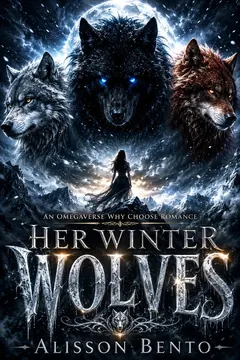
From Alisson Bento’s books
A shifter romance about one heroine, more than one devoted hero, and no choosing.
Kindle edition · Check Kindle Unlimited availability on Amazon.
The abduction makes her first goal concrete
The author’s description places Lisa at her husband’s grave before she wakes aboard an alien ship. She has been treated as unprotected by those who take her, but she is not a person without relationships or obligations. Her separation from Carly and Miki is the immediate problem she confronts. She demands to return to them.
That difference in interpretation matters. A label assigned by an outside society does not describe the whole of Lisa’s life. The aliens’ apparent reading of her situation ignores the children for whom she is responsible. For a reader interested in cultural conflict, this is a concrete mismatch with consequences, rather than a harmless misunderstanding about etiquette.
The setting also changes the scale of available choices. Lisa is away from home, facing unfamiliar men and a destination she did not choose. Her need is not an abstract desire for adventure. Keeping that urgency visible gives a more accurate account of the attraction’s starting conditions than reducing the setup to a woman meeting an impressive alien king.
If abduction is something you specifically seek in fiction, this is verified in the premise. If you prefer a human heroine who knowingly travels to another world and voluntarily begins a courtship, recognize the difference before choosing. Those are different fantasy situations even when both later involve affection, protection, or an unfamiliar household.
Grim has power, but his society excludes him
Grim is introduced as the king of Luda, an exceptionally feared warrior and the emperor’s blood brother. These are substantial sources of rank. Yet the official description says his scars make him unfit in the eyes of his society, leaving him without the expectation of a partner or descendants. Political importance and social acceptance do not coincide.
That contrast gives the scarred-hero premise its particular shape. Grim is not powerless in every setting. He can command and negotiate while still being rejected by rules about who is desirable or permitted a future family. Readers who like the gap between public authority and private exclusion have a precise reason to investigate the opening.
The language of unfitness belongs to the fictional society’s judgment. It should not become this guide’s verdict on his body or a factual statement about anyone’s actual capacity for love. The premise establishes a stigma and its consequences for him; it does not establish a real medical conclusion from visible scars.
There is also a troubling asymmetry worth retaining: experiencing exclusion does not mean Grim begins on equal terms with Lisa. He belongs to the society that has transported her, and he has resources she needs. His personal rejection and her immediate lack of alternatives can be part of the same setup without cancelling each other out.
What the Tornian crisis adds to the romance
The author describes an empire affected by a past infection that made female births rare. Its rulers have searched other worlds for compatible women, and the emperor’s discovery of a human woman leads to the mission that brings Lisa into the situation. This is fictional worldbuilding about the empire’s survival, not real biology.
The distinction between an institution’s need and an individual’s wishes is central to the premise. The empire thinks in terms of compatibility and population. Lisa thinks in terms of her daughters and a family left behind. Those different scales help explain why the same encounter can look like an opportunity to one side and an emergency to the other.
For a reader, scarcity can make family status and mate selection politically consequential. It can also create a setting in which women are described as resources. You may enjoy examining that uncomfortable arrangement in fiction, but it should be named accurately. The survival of an invented empire does not make Lisa’s removal voluntary or settle what she wants.
This is a more specific reading choice than simply preferring a royal hero. Grim’s kingship sits inside social rules that restrict him, while the empire’s project affects the human woman he encounters. The tension connects private hopes to institutional priorities. You can be curious about how that conflict develops without assuming that either the romance or the society will resolve it in a particular way.
The bargain combines protection with pressure
The official premise says Grim offers to accept and protect Lisa’s children if she agrees to Join with him exclusively. She understands the bargain as the way available to retrieve her daughters. That gives family protection a clear place in the relationship’s beginning, but also makes the initial agreement unequal. The protection is attached to a condition she did not choose in ordinary circumstances.
This matters for readers who ask for a protective alien hero. Protection can describe what he promises without proving that the starting situation is free of coercive pressure. A wish to return to one’s children is not a casual preference. Keeping both aspects in view avoids advertising a comfortable mutual arrangement where the premise instead establishes urgency and dependence.
Joining is the term used in the book’s description for the proposed exclusive bond. This guide does not fill in its unverified ceremonial, biological, or sexual rules. In particular, an unfamiliar term should not be turned into a claim that the characters are automatically fated mates or that an instinct supplies their mutual agreement. The published setup establishes a bargain; that is enough to explain the initial conflict.
Readers can therefore distinguish two possible attractions to the story. One is interest in an alien king accepting a human woman’s children as part of a future family. The other is interest in negotiating under highly unequal power. You might want both, one, or neither. The specific premise supports the distinction without telling you how every later interaction unfolds.
Why Carly and Miki are part of the central decision
Lisa’s daughters are not an optional detail in the advertised relationship. Her demand to return to them produces the agreement, and Grim’s willingness to accept them forms part of his offer. That makes the possible relationship a question about a household as well as a couple. Someone wanting adult attraction entirely separated from parenting should notice the difference.
The relevant interest is not merely whether a hero likes children in a general sense. It is how a woman with responsibilities can imagine any future without abandoning them. The premise gives Lisa a priority beyond the new man’s attention. That can appeal to readers who want motherhood to remain visible when a heroine enters a fantastic world.
It does not follow that the girls narrate the story, occupy every scene, or experience no danger. Those are whole-book questions the checked premise does not answer. What it does establish is that Carly and Miki are named people at the center of Lisa’s initial decision. Their presence changes the meaning of Grim’s offer from individual rescue to potential family belonging.
Begin with Grim; distinguish the related titles
The author identifies Grim as book one. Her next listed related work, A Grim Holiday, returns to Lisa and the girls through the meeting of human and Tornian holiday customs. Its description mentions the Festival of the Goddess and an effort to bring their own traditions into the new setting. That is a specific reason to consider it after the opening novel, rather than treating it as an alternative first meeting.
A Grim Pet is another related story. Its premise concerns Carly and Miki helping an injured Great Raptor, a creature associated with Luda. The author notes that it previously appeared in Embrace the Romance. If you already own that anthology, check its contents before assuming that the separate title provides entirely new reading.
These descriptions show different kinds of return: a clash of traditions and a story centered on the children’s response to an injured creature. They do not establish that every title containing Grim is another full-length novel about the couple. Count contents and format, and read later descriptions only when you are comfortable learning about the family’s later circumstances.
Numbering can vary when short works are included in a series count. The author’s site counts A Grim Holiday as a second entry, while some audio records label the later Wray as the second Tornians novel. That does not make Grim a different starting point. Use the actual titles and decide whether a list is counting all entries or only main novels before trying to reconcile every number.
Editions, languages, and audio
Keep Grim, M.K. Eidem, Tornians, and Lisa Miller together when identifying a listing. The Apple Books ebook record names Turtle Point Publishing and identifies the English edition as the first Tornians book. Its publication date is an edition record, not a reason to assume every format first appeared on that same date.
The Apple audio record explicitly identifies an English unabridged audiobook. A store page can be displayed in one language while selling a recording in another. Check the language field of the product rather than the language of the surrounding buttons. This guide does not infer a translated recording from a localized storefront.
The author also has a French Grim page that identifies it as the first French Tornian work and uses the same title. A six-language reader guide does not prove that every matching official translation exists. No Portuguese, Spanish, Italian, or German title is invented here. Follow the actual publisher or author edition record when choosing another language.
Read the title alongside Lisa’s first demand
The title names the king, but the opening problem also belongs decisively to Lisa. Her demand to return to Carly and Miki gives her a stated objective before a reader knows how she will feel about Grim. That is useful when choosing a royal-hero romance: the man’s rank need not be the only reason to care about the premise. You can follow the tension between what he hopes to obtain and what she urgently needs. Keeping those two goals separate allows curiosity about the pairing without treating her existing family as an obstacle that should simply disappear.
Is this the alien romance you want?
The verified appeal is the combination of a widowed mother protecting a family, a scarred king excluded by his own society, and an agreement shaped by unequal options. That is more distinctive than a promise of a huge alien hero. Grief, parenting, status, abduction, and the empire’s reproductive project all affect what the first connection means.
The sources checked do not provide a complete content-warning inventory or a standardized heat rating. This guide therefore does not call the novel gentle, free of specific triggers, or a guaranteed match for every family-centered-romance reader. A family premise can coexist with a dark beginning. Sample the voice and consult current author information about any content that determines your choice.
For a wider comparison, the site’s alien romance guide separates species, communication, cultural learning, and relationship assumptions. Grim adds a concrete example of why an unfamiliar culture’s classification does not necessarily match the human heroine’s actual life. Begin with Eidem’s first book if that precise conflict interests you. For a separate story afterwards, browse Alisson Bento’s book catalogue; its standalone novels are not additional Tornians installments.