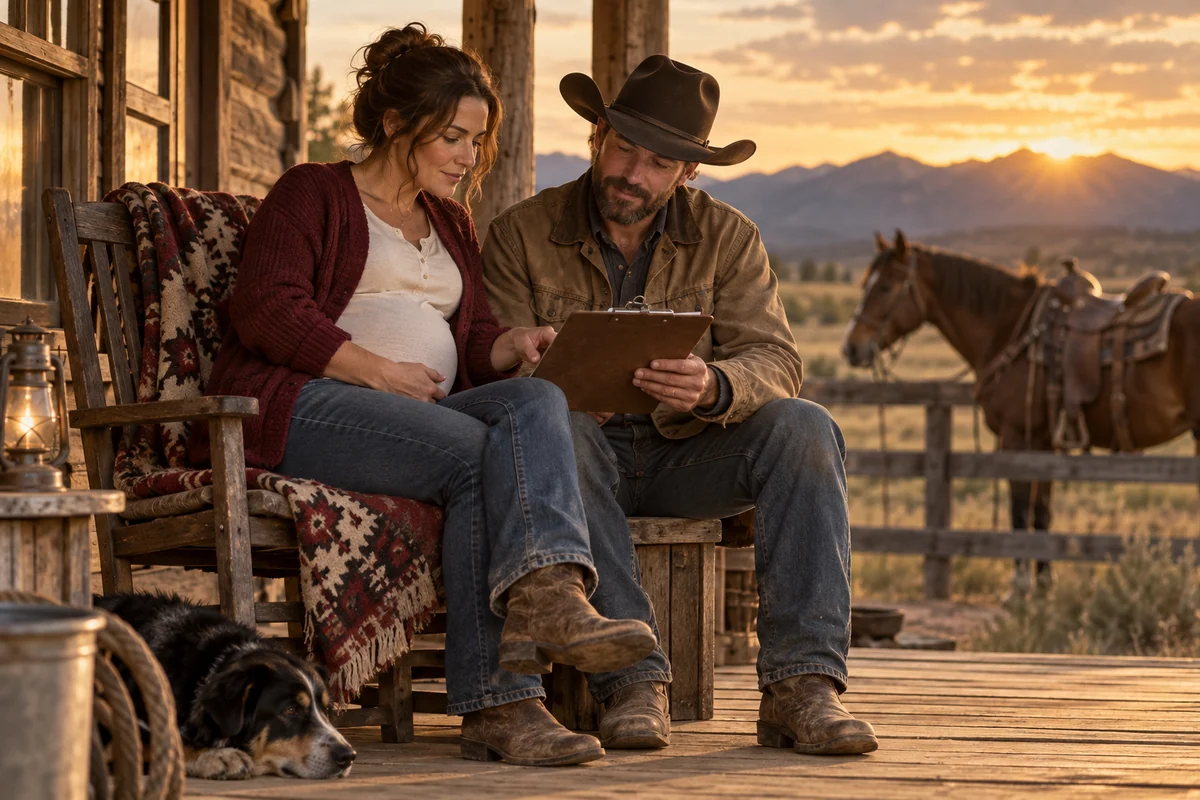
Pregnancy in cowboy romance feels different when it changes work and plans during the main story. Ranch atmosphere can frame a tender family moment, while a sustained pregnancy arc asks adults to reconsider schedules, resources, and where they want to live. Decide whether you want the landscape around a romance or rural work shaping its choices.
You do not need agricultural expertise to enjoy that distinction. Follow the practical question presented in the scene: who can cover an assignment, what commitment cannot be postponed, or how a move would affect another person’s job. Specific responsibilities make the setting matter without requiring the reader to memorize ranch operations.
Identify pregnancy timing
Start by pinning down the timing. An already-pregnant heroine entering a new relationship has different immediate concerns from an established couple receiving unexpected news. An epilogue can show later happiness while skipping the transition you hoped to follow. Ask whether pregnancy occupies the main narrative or appears only after its primary decisions are complete.
Imagine a hypothetical adult romance between thirty-three-year-old Darcy, who coordinates a ranch’s bookings, and Finn, thirty-six, who supervises its work crews. Pregnancy news arrives before the busy guest season. Darcy wants to preserve her position; Finn must reconsider staffing. Their family arc could develop through how they solve competing obligations together.

From Alisson Bento’s books
A vampire romance about a hero who claims her and never lets anyone forget it.
Kindle edition · Check Kindle Unlimited availability on Amazon.
Compare financial and practical support
Financial support and practical support are distinct. Offering a comfortable home answers one need but does not tell you who covers a late meeting or takes responsibility for routine planning. If you enjoy competent tenderness, look for actions fitted to the heroine’s stated preferences rather than gifts that assume what her future should look like.
In Darcy and Finn’s hypothetical situation, replacing her at work without asking could create conflict despite generous intent. Arranging temporary cover after discussing what she wants creates another dynamic. The point is not prescribing how a pregnant adult should work; it is noticing who defines the story’s solution and whose ambitions remain visible.
Notice how the season shapes the couple’s plans
A working setting becomes consequential when the adults cannot simply move every responsibility to a more convenient day. The fictional ranch may have bookings, staffing demands, or a particular busy period. You do not need to know agricultural operations in advance. Follow the commitments the story sets up and the choices the pregnancy makes the characters reconsider.
In Darcy and Finn’s hypothetical guest-season problem, the pressure is not merely that there is work to do. It is that plans already involve other people and dates. A revised schedule might affect guests, employees, and Darcy’s role. That gives their conversation a specific problem to solve, rather than using the ranch as scenery behind a generic disagreement.
Compare a scene where Finn says he will handle everything with one where the adults identify which responsibilities need covering. The first may supply a fantasy of protection and relief. The second can supply the satisfaction of competent teamwork. You may enjoy both, but a recommendation should indicate which receives sustained space in the story.
The season can also shape emotional pacing. A busy period may interrupt private conversations; a quieter stretch may allow the adults to imagine a future in more detail. If you prefer domestic reflection over constant urgency, ask how work pressures balance with time together. A cowboy label alone will not tell you the rhythm.
Read the ranch as a workplace and a home
When work and home share a location, changing one arrangement can affect the other. A conversation about housing may also be a conversation about proximity to a job. A plan to stay can mean taking on a role within an existing household. Ask whether the romance explores those connections or mainly offers an attractive place to live.
Ownership and employment create different stakes. An owner may be deciding how to sustain a property; an employee may be deciding whether the position still fits a future plan. A contractor may have commitments elsewhere. Those roles do not have to be complicated, but knowing which situation the heroine occupies helps you understand what she stands to gain or lose.
You might enjoy a heroine arriving from outside the community, or prefer adults already rooted there. Arrival can make the ranch a new possibility, while established ties can turn a move into a difficult choice. Pregnancy interacts with these starting points differently. Specify whether you want building a new home or adapting one the adults already know.
A reassuring home can still contain negotiations. Sharing space, deciding what stays private, or finding time away from work can become scenes of intimacy. If that domestic texture appeals, ask for it directly. Spacious rooms and a scenic porch may set the atmosphere without showing how the adults actually organize a household.
Distinguish money, time, and reliable help
Financial resources can make some changes possible, but they do not answer every practical question. A character may be able to afford help while still needing to decide who communicates with staff, how plans are made, or which tasks another adult will personally undertake. Look for support fitted to the problem the scene presents.
Reliable help has a time dimension. An offer matters differently if the partner follows through on an ordinary commitment, remembers a conversation, or makes room for a change in plans. Readers who enjoy tenderness through action can ask whether support appears in recurring practical scenes rather than only one expensive gesture.
Support from a wider community may be part of the appeal too. Relatives, neighbors, and colleagues can help, but their involvement may also bring opinions and expectations. Decide whether you want a close community that offers welcome assistance or one whose attention creates pressure. Familiar faces do not automatically create a comforting tone.
If you prefer the central couple to solve most issues privately, mention that. If you enjoy a household and community participating, ask how much space those relationships receive. Both patterns can support a pregnancy arc, but one may offer more intimate couple scenes while the other broadens the family experience.
Compare continuing work with a chosen change of direction
A heroine retaining career goals need not mean she keeps every task or plan unchanged. She might want to continue, adjust a schedule, seek a different role, or make a deliberate transition. The reading preference concerns whether the story takes her goals seriously. Ask about that treatment rather than prescribing one practical solution.
The same applies to the romantic lead’s work. A partner who changes a routine or accepts help may reveal flexibility; one who expects everyone else to adapt around him creates a different conflict. If mutual adjustment is important, request scenes where both adults reconsider their commitments rather than asking only whether she remains employed.
Professional identity can also exist outside the ranch. The heroine may have clients, a separate business, or plans in another place. A future together then raises questions about distance and opportunity. If you enjoy that tension, ask for a family arc that preserves obligations beyond the property instead of assuming life naturally narrows to the ranch.
None of these reading questions provides advice about how a pregnant person should work. The focus is the fictional adults’ priorities and participation. Choose whether you want the novel to explore practical adjustment closely or offer a more concentrated fantasy of care, comfort, and a shared home.
Choose the amount of financial conflict you want
A pregnancy can give money a new emotional significance in a story: uncertainty about income may become uncertainty about future plans. A secure property and a struggling operation supply different kinds of stakes. If you want reassurance, ask whether financial pressure dominates the family arc or remains a background concern.
Financial conflict need not make the romantic relationship hostile. Adults may discuss priorities as partners while facing an outside constraint. Alternatively, they may disagree about whose work counts or who controls decisions. Distinguish shared problem solving from interpersonal conflict about money when requesting a particular tone.
You may enjoy practical budgeting or negotiations about a move because they make the future feel tangible. Another mood may call for resources already in place so that attention falls on emotional commitment. Neither preference is more thoughtful. The useful recommendation identifies what kind of uncertainty will occupy your reading time.
A generous partner and an easy financial situation are separate features. A character can be caring while lacking resources, or wealthy while making unilateral assumptions. If you want both material security and attentive support, state both. A description of a prosperous ranch proves neither the relationship dynamic nor the tone of its family conflict.
Use rural atmosphere to refine the emotional mood
A rural setting can create pleasure through familiarity: recurring places, shared meals, quiet conversations, and a community whose members know the adults. It can also create tension through limited privacy or disagreements that are difficult to keep separate from work. Decide which use of the setting you want around the family arc.
Read a sample for the way ordinary scenes feel. Does a return home create room for conversation, or bring another obligation? Do neighbors offer warmth, ask intrusive questions, or both? These details can help you choose tone without needing to know the final family arrangement.
Scenic detail may be enough for a reader seeking atmosphere. If you want work to shape the romance, ask what practical conflict connects the setting to the pregnancy. Staffing, travel, housing, or a chosen change in responsibility can provide that connection. The answer should identify the problem, not describe how the couple ultimately solves it.
Likewise, pregnancy does not automatically turn a cowboy romance gentle. Outside suspense, family opposition, or difficult personal history may remain prominent. If your current mood calls for a mostly reassuring story, request that emotional balance directly and check any specific content concern separately.
Evaluate how much of the transition appears
A discovery scene and a later glimpse of family life can show important events while leaving the intervening changes largely off the page. If the transition is your main interest, ask whether practical and emotional adjustments recur through the story. You are choosing sustained development rather than only a dramatic announcement.
This guide does not present any catalogue book as a confirmed match for pregnancy in cowboy romance. Instead, it helps you distinguish the arc a recommender should confirm. Timing, the relevance of rural work, and the balance of reassurance and conflict each need their own confirmation rather than being inferred from a ranch setting or a family-oriented description.
Once those features are known, choose the scenes you most want to spend time with: planning around a busy season, making a home, discussing a move, or learning to share everyday responsibilities. That concrete preference gives the recommendation a direction while preserving the pleasure of discovering the adults’ decisions.
For a shorter recommendation question, name the scene you hope the premise will produce: “Do the adults work out new schedules together during the pregnancy?” or “Does choosing where to live receive meaningful attention?” A response about those moments tells you more than praise for a hero’s protectiveness, because it connects the family change to the practical setting you specifically want.
Check whether rural atmosphere or family change drives the story
Rural atmosphere and family change can also carry different emotional weights. You may want porch conversations, familiar neighbors, and a reassuring household. Or you may want decisions about an uncertain income and a difficult move. A cowboy label does not settle that balance, nor does pregnancy automatically make the narrative gentle.
A precise request might be: “Adult cowboy romance with pregnancy in the main plot and practical teamwork around ranch schedules, while the heroine retains career goals. Please tell me whether the family arc is mostly reassuring or driven by financial conflict, without explaining the resolution.” That helps distinguish scenic comfort from the sustained change you want.
Read another angle: Pregnancy in why-choose romance: checking the group and family arc · Enemies-to-lovers cowboy romance: land, work, and conflicting loyalties · Single-dad cowboy romance: finding love inside a full family life
Explore the wider romance catalogue. The catalogue groups books by genre and trope; it does not confirm every preference discussed in this guide.