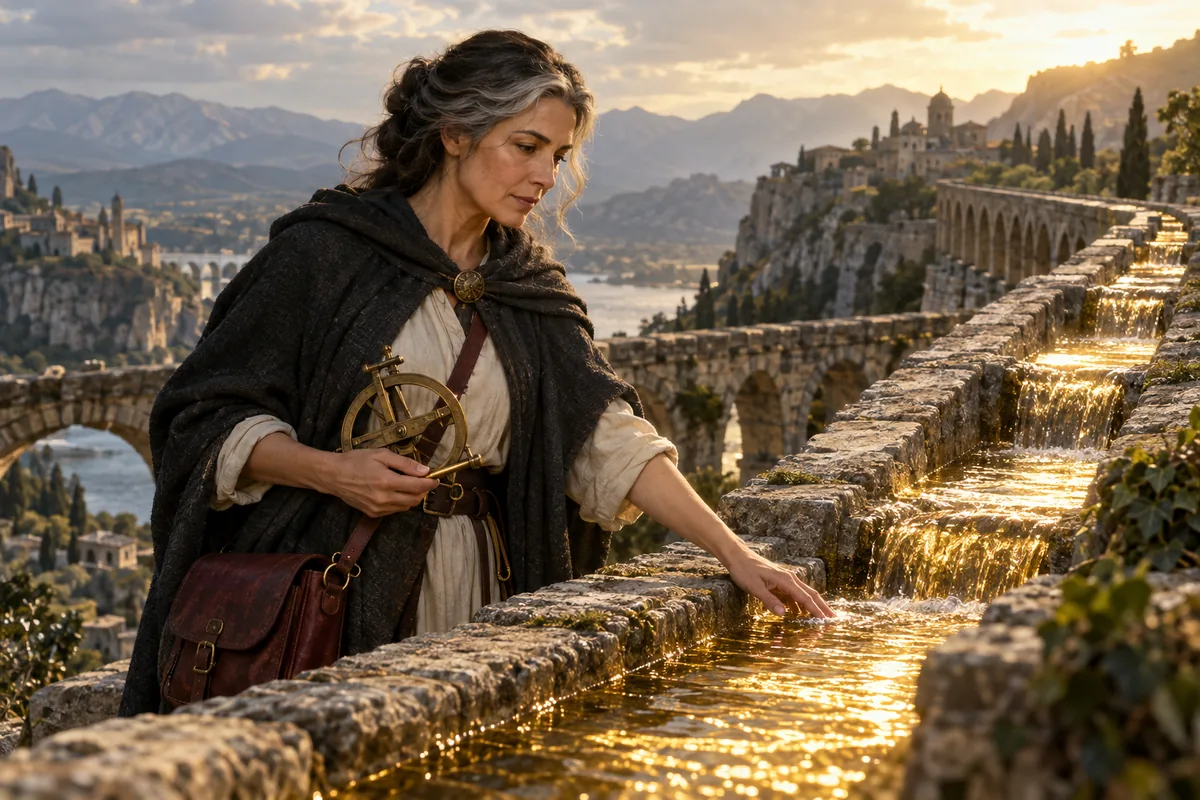
For romantasy with an older heroine, specify the adult age range you want and then choose the life experience you hope to see. A forty-year-old learning magic for the first time offers different tension from a forty-year-old returning to responsibilities she once abandoned. Age can shape the journey without making discovery or vulnerability impossible.
The useful reading preference may be established expertise, accumulated obligations, or the freedom to start again. Those qualities can occur at different ages, so state the numerical requirement separately. “Mature heroine” may describe narrative manner rather than years lived, and an immortal label may tell you little about the life stage depicted.
Use explicit ages instead of immortal age arithmetic
Use explicit ages instead of treating a centuries-old supernatural character as equivalent to an older adult human heroine. The story might portray that immortal through a youthful social role, or explore long experience in detail. If you want a heroine in her forties or fifties, ask for that stated age and the kind of adulthood shown.
Consider a hypothetical adult heroine, forty-six-year-old Iona, who has managed a city’s waterworks for twenty years. When a magical disruption threatens the supply, she understands the infrastructure but must learn unfamiliar enchantments. Her experience changes the initial problem: she is acquiring a new tool, rather than discovering every form of competence from scratch.
Look for adult responsibilities and experience
Established responsibilities can make a magical invitation costly. Iona has employees expecting decisions and a system that cannot simply wait while she travels. Another heroine might have dependents, a long partnership behind her, or a home she deliberately wants to leave. None is mandatory proof of age; each supplies a specific obligation or possibility.
Look for experience entering the action. Does she recognize a negotiation tactic, organize a journey, or revise a plan using what she already knows? A biography announcing decades of skill is less useful to this reading preference if the adventure consistently treats her as a beginner in every situation.
Ask whether discovery or reinvention drives the journey
Discovery and reinvention can overlap, but their central questions differ. Discovery asks what this new world makes possible. Reinvention also asks which earlier choices still fit. Iona may become a different kind of leader through magic while remaining accountable to work she values. Another heroine may decide an old role no longer deserves her loyalty.
A targeted request is: “Romantasy with a heroine explicitly in her forties or older, whose established skills and adult commitments shape the adventure. Does her arc focus on first discovery, return, or reinvention? Please describe that starting direction without revealing her final role.” Add your preferred romance prominence to choose the journey and relationship together.
Read another angle: Human mates in werewolf romance: belonging without becoming a wolf · Trials and tournaments in romantasy: choosing the challenge structure · Romantasy for beginners: start reading without dense worldbuilding
Explore the wider romance catalogue. The catalogue groups books by genre and trope; it does not confirm every preference discussed in this guide.