You can start romantasy without enjoying dense worldbuilding. Choose an opening with a clear adult viewpoint, an immediate goal, and enough context to understand what the next decision costs. Learn unfamiliar details as they become relevant. You do not need to master the map, pronounce every title, or consult a glossary before you are allowed to care about the people.
The practical aim is to discover which style of introduction suits you. A vast invented world can have an inviting entrance, while a familiar setting can hide a complicated plot. Your best starting point is the sample that gives you someone to follow and a reason to want the next scene.
Find the person before trying to understand the whole world
Start with three questions: whose experience are you following, what do they want right now, and what prevents them from getting it? A character trying to leave a room, keep a promise, or protect a friend supplies an emotional anchor. The larger history can unfold around that immediate pressure.
You do not need instant knowledge of the entire romantic arc. An adult protagonist’s response to another person can provide an early point of interest: admiration, distrust, curiosity, or an inconvenient attraction. Those reactions are readable even when the surrounding institution has a new name.
What if the opening starts with politics rather than attraction?
Look for a personal consequence inside the public scene. Perhaps a vote would take away the character’s work or force an unwanted alliance. If you understand that consequence, you have an anchor. If the scene names many factions before showing who will be affected, its entry style may demand more orientation than you want today.
That does not make political romance unsuitable for you. A different book can introduce similar stakes through a clearer viewpoint. Your preference may concern how information arrives, rather than whether courts or councils appear at all.
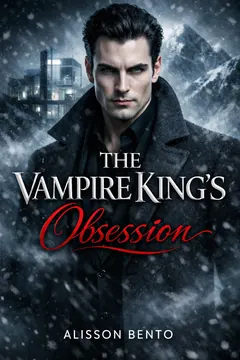
From Alisson Bento’s books
Romantasy
A vampire romance about a hero who claims her and never lets anyone forget it.
Kindle edition · Check Kindle Unlimited availability on Amazon.
Track only world rules that change the current decision
Worldbuilding includes more than magical vocabulary. It can concern customs, authority, geography, resources, and ordinary routines. You need a detail now when it changes what the character can do or why an action matters. Other details may add atmosphere without requiring immediate recall.
Sort new information into a few practical groups:
- Immediate rule: a limit or obligation that changes the current choice.
- Current relationship: someone whose trust, authority, or help matters in this scene.
- Background context: a history or institution that may become relevant later.
- Atmosphere: a detail that gives the setting texture without needing to be memorized.
These groups are temporary. A festival name may be atmosphere until its date becomes a deadline. A distant official may become important when they arrive. You can update your attention as the story changes instead of attempting to predict every detail that will matter later.
Must you understand every magical rule immediately?
No. You need enough to follow the current consequence. If a crossing requires permission and the protagonist lacks it, the obstacle is clear even before you learn every category of permit. If the story then introduces an exception, that exception should give you new information relevant to the next choice.
Curiosity and confusion are different. Wanting to know why a rule exists can be enjoyable. Being unable to tell what the character is doing may interrupt your connection to the scene. Notice which experience the opening gives you.
Try a short invented opening with one useful anchor
Consider this invented example with adults, not a passage from an actual book. An adult courier, Ada, has promised to deliver medicine before a harbor gate closes. An adult gatekeeper, Sol, refuses passage because her permit lacks a tide-mark. Ada knows that obtaining the mark would take longer than the remaining time.
The opening might include an unfamiliar title for Sol’s office, the name of a council, and a reference to an old harbor dispute. You do not need all three explained at once. You already know the person, the urgent goal, and the obstacle. “Tide-mark” has a functional meaning: the missing authorization.
Now Sol offers to escort Ada through if she records his responsibility for the exception. The interaction creates a question about trust. Why is he willing to accept that risk? What does Ada think of someone who refuses first and then helps? The setting becomes interesting through the adults’ decisions.
What would be enough to remember?
A tiny note could read: “Ada needs to deliver medicine; Sol controls passage; exception costs him responsibility.” That is sufficient to follow the next scene. The council’s name can wait until someone from it challenges the exception or explains what responsibility means.
If later scenes contradict your understanding, revise it. You might learn that Sol cannot authorize the crossing alone. A developing understanding is normal in a story that reveals information gradually. The goal is a workable picture, not perfect notes from page one.
Unfamiliar vocabulary and complicated plotting are different
New words can look demanding while their function remains simple. A character wants access to a place; a named rule prevents it; another person offers help. Conversely, a scene written entirely in familiar language can juggle several concealed motives, timelines, and unreliable accounts.
When reading feels difficult, identify the source. Is it recognizing names, following the sequence of events, understanding motives, or remembering the rules? Each suggests a different preference. You might want fewer viewpoint changes while happily accepting invented vocabulary, or a larger cast with straightforward motives.
Also separate the size of the setting from the speed of introduction. A huge world can be revealed through a single journey. A small community can present an intricate history. Page count and map size cannot tell you how many facts you will be asked to hold at once.
If you prefer familiar surroundings, the guide to high fantasy versus low fantasy romance explains that setting choice. Familiarity may help with ordinary routines, but it does not guarantee a less complicated supernatural system.
Use maps and glossaries only when they help you
A supplied map can clarify a route, while a glossary can confirm a term’s meaning. Neither needs to become your first task. If you are already following the character’s goal, continue reading. You can consult supporting material when a specific question interrupts your understanding.
Look up one thing at a time. If you need to know whether two places are separated by water, a map may answer that quickly. You do not need to memorize every settlement. If two similar titles confuse you, check that distinction and return to the scene.
Can a glossary reveal spoilers?
It can, depending on what the book includes. A character list or reference entry may disclose identities, affiliations, or information learned later. Check any introductory note about how to use the material. When uncertain, consult only the specific entry you need rather than reading every entry in advance.
External summaries can also reveal later developments. If you want help from another reader, specify your current point and ask for an explanation using only information available there. A focused question such as “What does this office control so far?” is less likely to invite a full plot recap.
Let a sample test the doorway you actually want
Read enough of the available opening to see how a complete scene works. You are looking for orientation and curiosity, not testing yourself on recall. Afterward, describe the immediate situation in a few ordinary sentences. If you can name the goal, obstacle, and consequence, the new terminology may already be manageable.
Then notice the balance of attention. Does explanation repeatedly pause interactions you care about? Do details arrive through choices? Are you interested in the world for its own sake, or primarily when it changes the relationship? These are legitimate reading preferences, and a sample helps make them visible.
It is also useful to ask whether your questions feel promising. “Why did he risk his post to help her?” can pull you onward. “Who was speaking, and what happened in this scene?” may signal that the style is not giving you the clarity you want. A deliberate mystery usually still offers some stable point to follow.
A sample cannot guarantee the later romance, complete ending, or heat. Use it to judge the entrance, then check those other promises separately. One appealing conversation tells you something about the style without proving the whole book will meet every preference.
Romance-first does not have to mean a world without depth
Romantasy brings fantasy and romance together, though labels and balance vary. Penguin’s beginner guide describes a blend in which romantic decisions can have consequences for the surrounding world. For your own reading, the important part is how the particular book makes that connection visible.
A world can feel substantial through a few consequential details. A travel restriction matters when it prevents a reunion. A custom matters when it changes the meaning of a promise. You can enjoy those discoveries without wanting pages of institutional history before the adults speak to each other.
Choose the proportion that invites you onward. If a fantasy-led quest with a small romantic subplot disappoints you, ask for a central relationship. If discovering magic is equally important, make that preference explicit. The companion guide to romantasy and fantasy romance explores how to describe this balance.
Warm tension, a capable adult protagonist, and a clear personal problem can be excellent anchors. They do not need to arrive in the first paragraph, but the opening should give you some reason to care before asking you to retain a large amount of background.
When should you keep reading, pause, or choose another book?
Keep reading when unfamiliar details are becoming clearer and you want the next interaction. You may be learning a new narrative rhythm, and early uncertainty can resolve through repetition and context. Curiosity about the characters is a strong reason to continue.
Pause when one specific gap blocks understanding. Reread the relevant exchange or use a supplied reference if available. A single confusing rule need not define the entire experience. You can also leave the book for a mood in which you want more discovery and have more patience for explanation.
Choose another opening when you repeatedly lose the immediate thread and the process feels unrewarding. You do not owe a book a fixed number of chapters to establish your taste. Stopping tells you something useful about this entry style; it does not decide whether an entire genre belongs to you.
A practical request for your next read might be: “Adult romantasy with a central love story, a clear initial viewpoint, and world rules introduced through action.” Add whether you prefer a one-volume resolution, a continuing saga, or limited intimate detail. That gives recommendations a sharper target than “the easiest fantasy book.”
Begin where the people make you curious. Let the relevant rules follow them into focus, and use whatever support keeps the reading pleasurable. There is room for a big magical world and a direct emotional doorway, with no entrance exam between you and the romance.