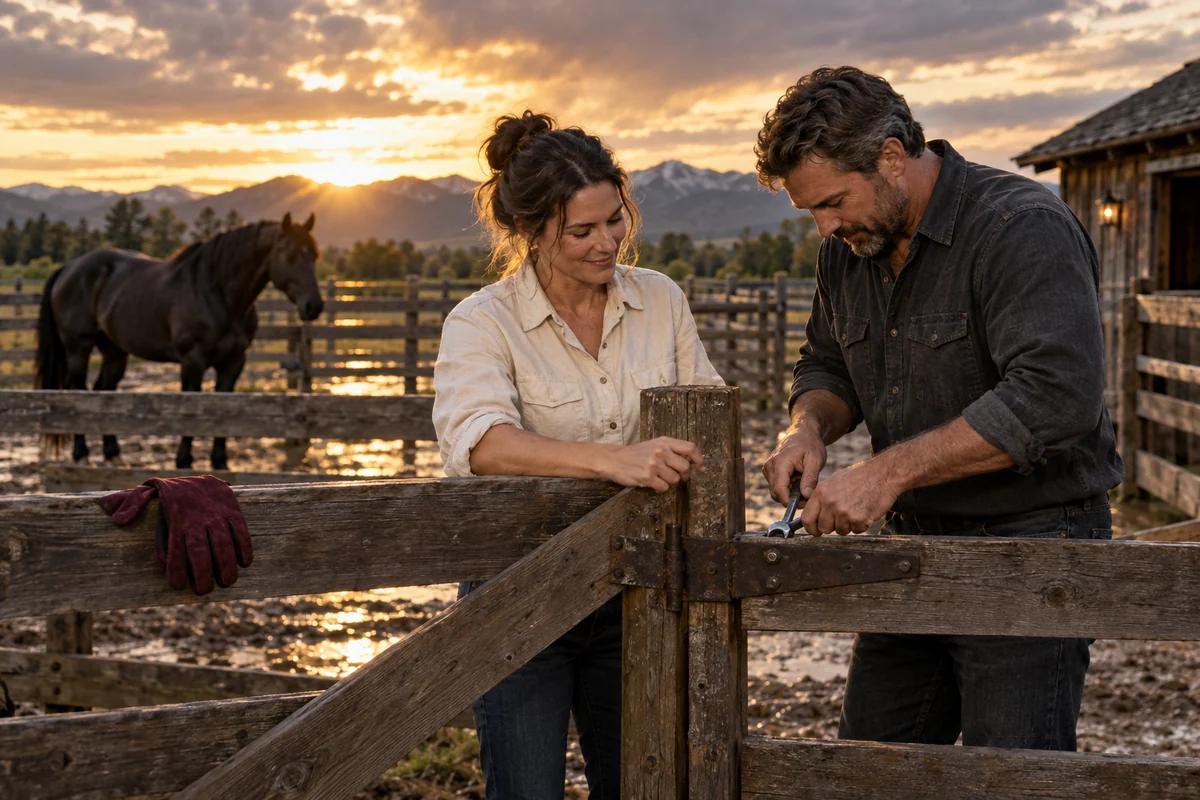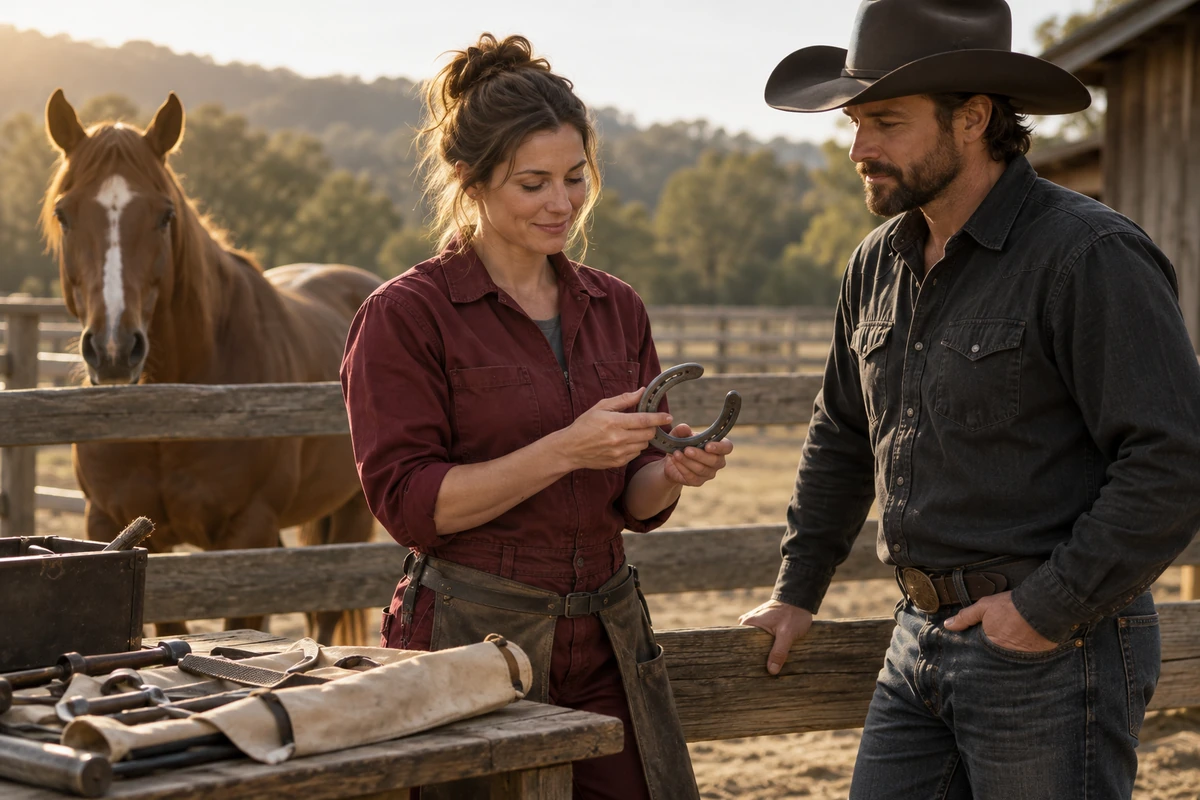
Grumpy/sunshine cowboy romance becomes more specific when temperament affects shared work. A curt reply and an optimistic plan can spark attraction, but competence, limits, and care determine what those styles mean. Choose the practical disagreement you want to follow rather than assuming cheerfulness means naivety or reserve means reliability.
If you like contrasting personalities without making one person responsible for repairing the other, look for distinct skills and concerns. A land-access negotiation and a farrier’s working visit offer useful examples. The second is an adjacent temperament comparison, not a verified grumpy/sunshine taxonomy match.
Optimism can coexist with a demand for evidence
In The Rancher’s Lifeline, Dr. Sabine Vale takes a six-month Marfa contract after a difficult professional tribunal. A hospital expansion grant depends on a road across Cade Mercer’s ranch. The board asks her to persuade him, but she distrusts its account enough to demand engineering evidence.
The verified profile places this in grumpy/sunshine cowboy romance. Sabine’s opening also makes her skepticism explicit. That is useful if you want the brighter temperament to have professional judgment rather than simply insisting everything will work out. The contested access road gives the eventual encounter a real subject beyond changing a rancher’s mood.
A curt manner can contain assistance and boundary friction
A Farrier for the Cowboy begins with Wren Calloway arriving to shoe horses and stepping into a cattle-sorting problem. Bridger Colane’s father arranged the visit, while Bridger needs more hands. Wren notices practical assistance beneath his curt welcome but objects to being managed by someone who is not her employer.
This opening lets you compare behavior instead of adjectives. Assistance has value, and disputed authority still matters. Choose it if hands-on competence and sharp boundaries appeal; its profile establishes a single-parent western working relationship, not a claim that every later scene follows a particular sunshine-versus-grump pattern.
Care can keep its own voice without becoming one-sided labor
A reserved partner may help by preparing tools or taking a difficult task seriously. An expressive partner may ask a needed question or insist a plan can improve. Neither style should automatically decide who carries all emotional work. Look for whether both adults respond when the other needs something.
Ask for “cowboy grumpy/sunshine with competent work on both sides and disagreements that remain meaningful.” Sabine’s evidence request and Wren’s boundary objection show two ways brightness or openness need not mean compliance. They also leave the larger relationship for you to discover, rather than guaranteeing that a warm personality cures grief or a curt manner always conceals devotion.
Read another angle: Morally grey cowboy romance: when rural competence carries a cost · Slow-burn cowboy romance: signs of progress beyond waiting · Grumpy sunshine romance: keep the contrast, share the care
Explore the wider romance catalogue. The catalogue groups books by genre and trope; it does not confirm every preference discussed in this guide.