Late autumn is one of the most demanding seasons on a working ranch, and one of the most useful for a romance writer. On many ranches calves are weaned, cattle are moved to new ground, hay stores are checked and water sources are readied before the first hard freeze. The work is physical, shaped by the weather and shared between people, which makes it a strong setting for a love story as the nights lengthen. This guide explains what the season really involves, how its details can shape a love story, and what to look for when you choose a ranch romance for the colder months.
Why late autumn suits a ranch romance
Seasons give a story a clock, and few seasons on a ranch are as full of deadlines as late autumn. The grass is going dormant, the days are shorter, and the animals and the people who look after them have to be ready for weather they cannot control. For a romance, that pressure does two things at once. It makes time together precious, because there is always another task waiting, and it forces characters to show what they are like under strain. A hero who is patient with a frightened calf or careful with a frozen gate is revealing a kind of character that a candlelit dinner cannot show.
The season also sets the mood. Mornings begin in the dark, breath hangs in the air, and evenings end early, which gives authors natural reasons for long conversations at a kitchen table or in a truck cab with the heater running. Those quiet hours are where many late-autumn romances do their emotional work. They feel different from summer scenes because everyone is tired, cold and carrying more responsibility than usual, and that fatigue makes honesty easier to believe.
You’re on the list. Your free stories are waiting in the Reader Vault. One Night at Silver Creek
Weaning, moving herds and the first hard work of winter
Many ranches wean calves in the autumn, separating them from their mothers so that the cows can recover condition before winter and the calves can be sold or kept on feed. Weaning is noisy and unsentimental, and it is also one of the most emotionally charged jobs on the calendar. The animals bawl, and the people know the separation is necessary but not painless. A writer can use that tension. A character who has grown up with the work may be matter-of-fact, while an outsider may see it as harsh and must learn what it means in practice.
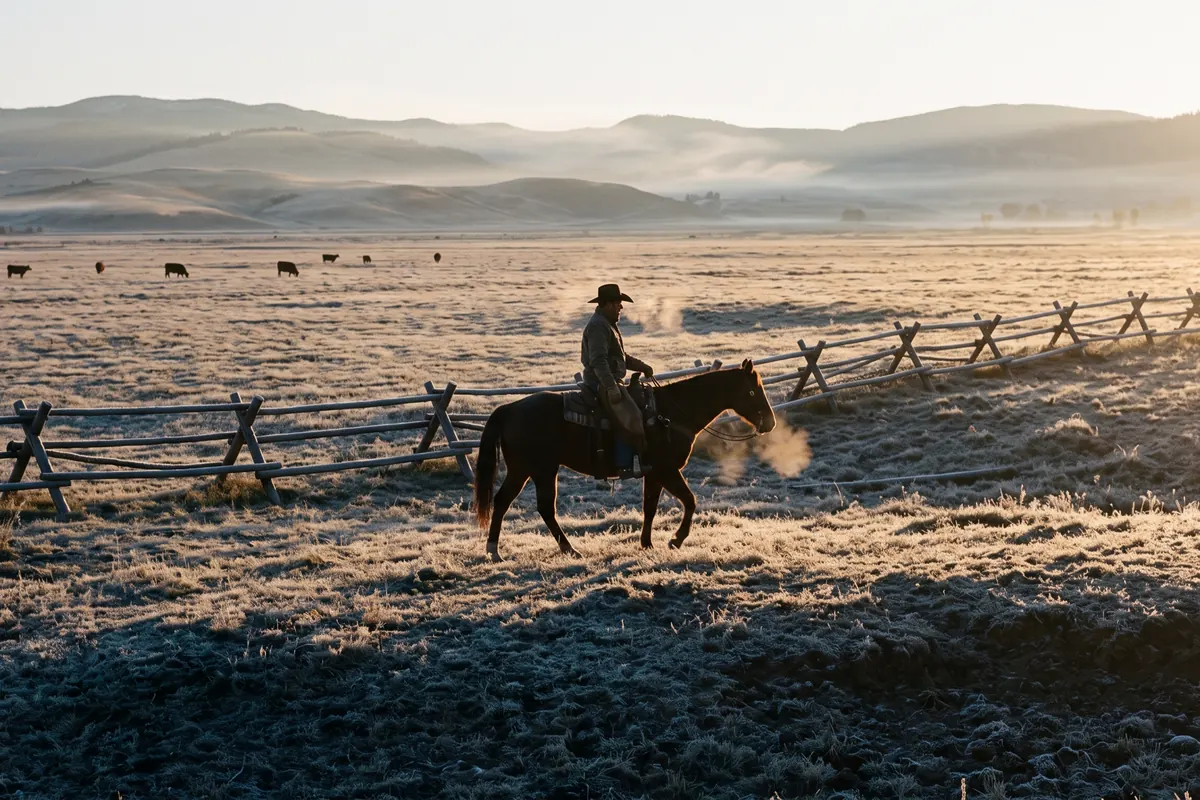
Moving herds is the other great set piece. Where cattle summer on high or distant pasture, they are gathered from summer pasture and driven to lower or more sheltered ground before snow closes off the high country. A move depends on horses that can work in cold, riders who read the animals, and a plan that accounts for gates, water and the forecast. In romance, a herd move is an excellent place to show trust. One rider holds a gap while another brings the cattle through, and neither has to say much because the work has already made them a team.
Hay, water and shelter: the preparation that cannot wait
Winter preparation is less glamorous and more important. Hay cut in summer has to be stored under cover or stacked so that it stays dry, because feed is the difference between a managed winter and a losing one. Water matters just as much. Troughs and tanks freeze, pipes need protection, and ranch hands often spend mornings breaking ice so that animals can drink. A character who knows where the water is, which gate sticks and how the cattle behave in a hard freeze has a kind of practical knowledge that readers quickly learn to respect.
Shelter is the third concern. Windbreaks, sheds and sheltered draws give livestock refuge from cold wind and driving snow, and the arrangements differ from one property to the next. This is a useful detail for authors because it reveals the history of a place. A ranch that has been in one family for generations will have old fences, familiar shortcuts and rules nobody wrote down. An outsider who learns those rules has taken a step toward belonging, and that is a quiet form of romance.
Early snow and the long nights
Early snow changes the rhythm of a ranch immediately. A few inches can cover grazing that the cattle need, hide fence lines and turn a familiar road treacherous, so that even a trip to town needs planning. For a romance, early snow is a strong device because it isolates characters and forces decisions: whether to stay in the house, whether to check the herd in the dark, whether to accept a neighbour’s offer of help.
Long nights reward slower storytelling. With daylight short, the day’s real work often ends before supper, and the evening becomes a space for conversation. Authors can use it to let characters say what they could not say while busy, or to show a couple learning how to share a home at the end of a difficult day. The best late-autumn chapters use the weather as a witness. The storm arrives, the lamps go on, and the two people in the room must decide what they are willing to admit.
Fences, boundaries and disputes
Fences are a constant in ranch life. Fence riding, repair and gate maintenance take time and attention, and in autumn they matter because stock that drifts onto the wrong ground can cause trouble with neighbours. A disputed boundary can turn a simple visit into a confrontation, and the paperwork of land can be as sharp as any argument. Cross My Fence uses that idea directly. Celia Ortega drives from Denver to inspect four thousand acres inherited from her grandfather and finds a rancher waiting at the gate, while the old plat she carries places his fence a quarter mile from the boundary she expected. The map and the fence become the source of friction, and the romance grows out of that disagreement.
Disputes over land and access are a useful way to test a relationship, because both people must argue from evidence. Who owns the road? Who has the right to cross? Who was responsible for the fence? If you enjoy enemies-to-lovers pacing, Enemies-to-lovers cowboy romance: land, work, and conflicting loyalties looks at how land and conflicting loyalties create that kind of tension without turning the ranch into a battlefield.
Community and the people who show up
Ranch communities depend on neighbours. Branding, gathering cattle and hard winter days often involve people from several properties, and a family in trouble can usually count on someone arriving to help. Churches, feed stores, schools and the post office can all become gathering points. For romance writers, this is a rich source of supporting characters: the neighbour who arrives with a truck, the older hand who remembers the last bad winter, the cook who notices when a newcomer is not eating. These people make a small community feel lived in rather than merely scenic.
The Pilot and Her Cowboys shows another side of community. Taryn returns to Crosswind Ranch on a six-week contract to teach aerial support and emergency flight procedures. The work has clear goals and a fixed end date, but the ranch also has a veterinary clinic, rescue horses and a household that recognises her old habits, which leaves little room to treat the assignment as just another job. A second-chance story like this works well in a community setting, because the people around the heroine are part of the emotional problem as well as the practical one.
How competence turns into romance
The common thread across ranch romance is competence shared in small, repeated acts. A hero who can read a cow’s movement, a heroine who knows how to handle a stock trailer, or two people who can fix a gate without discussing it are all displaying trust. Readers feel that trust accumulate across scenes, so that a kiss, when it comes, feels earned. The season amplifies the effect, because the work is unavoidable. The animals need feeding whether or not the characters are speaking.
The Rancher’s Sentence is a useful example of a city professional confronting ranch life. Elena plans three nights in Montana to inspect an inheritance, but her grandfather’s acreage has long been grazed by another ranch under an unrecorded handshake. As an urban planner, she understands land use on paper, and the opening shows how standing on the land changes the scale of those abstractions. Marta, the housekeeper who knew her grandfather, welcomes her into a place tied to a man she barely remembers. The opening’s attention to acreage, grazing and the physical experience of unfamiliar country makes the land feel like a living obligation rather than an asset on a list.
Choosing a late-autumn ranch romance
If you are choosing a book for the colder months, start with how the author uses the season. Some stories keep the calendar in the background, while others make weaning, moving herds, hay and early snow part of the plot. Read the blurb for words that suggest seasonal work, such as an autumn round-up, a winter storm or a ranch preparing for bad weather. Those details tell you whether the book will reward a reader who enjoys practical texture. Cowboy romance vs Western romance: understand the setting, roles, and era helps you tell cowboy romance from western romance, which can change how much ranch work you should expect.
Consider the kind of tension you want. Some ranch romances rely on a fixed contract or a deadline, such as a six-week assignment. Others work through land disputes, inheritance or the slow building of trust among neighbours. The season can strengthen any of these, but it also changes how much time the characters have. A book with a clear end date suits readers who like urgency, while a book that treats the land as a long-term commitment suits readers who prefer a gradual pace.
Does a ranch romance need real ranching detail?
It helps, but accuracy should serve the story. Readers do not need a manual; they need the sense that the work has consequences. A few concrete details, such as the state of the water, the condition of the herd or the route to town, often do more than a long technical description.
What if I am not a rural reader?
Many ranch romances begin with an outsider, which makes them accessible. Look for a city professional or a newcomer as the heroine or hero, because their questions give you a guide to the work. The best of these books let the setting teach you without making you feel excluded.
How do I know a book will handle the season well?
Read the first chapter and notice how the characters talk about weather, animals and the calendar. If the season is only a backdrop, the book may be more about romance than ranching. If the characters treat the work as part of who they are, you have found a setting that can sustain a whole book.