
HEA means happily ever after; HFN means happy for now. Both commonly signal a satisfying, optimistic romantic resolution. HEA emphasizes confidence in a lasting future together. HFN emphasizes a secure, happy present, with less certainty about distant years. Neither label requires a wedding, children, or a life without further difficulties.
The practical question is how much closure you want when you turn the final page. You may want the couple firmly together and the immediate relationship conflict resolved. Or you may want the narrative to make an unmistakable promise about their shared future. Knowing the difference helps you ask for that reassurance without requesting the final scene.
HEA vs HFN in romance: the difference is the horizon
An HEA conventionally leaves you believing the central romantic partners have chosen a relationship that will endure. The story may show a future glimpse, but it can also establish that confidence through a present decision. What matters is the strength of the commitment and the narrative’s treatment of it.
An HFN closes the current romantic arc on a positive note while keeping the longer horizon more open. The adults are together, their central relationship problem has reached a satisfying resolution, and the ending offers hope. It may leave future logistics to be worked out rather than presenting a settled picture of their life years later.
These are reader and publishing terms, not mathematically precise categories. Two readers can agree that an ending is happy and disagree about whether its reassurance is strong enough to call it HEA. That disagreement does not make the difference useless. It means a specific description of the closure is more helpful than treating the initials as a universal certification.
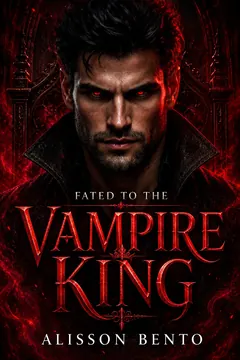
From Alisson Bento’s books
Vampire
A vampire romance about a captive bargain that turns into the only place she wants to be.
Kindle edition · Check Kindle Unlimited availability on Amazon.
Why an optimistic ending matters to the reading promise
Romance Writers of America’s genre definition centers the love story and an emotionally satisfying, optimistic ending. That convention helps explain why readers often check HEA or HFN before starting: the destination is part of the expected reading experience, even when the journey includes painful conflict.
You can know that a relationship ends positively without knowing how the story earns it. The characters’ choices, revelations, sacrifices, and changing understanding still provide discovery. An ending label is closer to choosing the emotional destination than reading a detailed route map.
Does every book marketed with the word romance follow that convention? Marketing can be loose, especially when a broader love story or a romance subplot is involved. If closure matters strongly to you, confirm it through an author or publisher note instead of relying entirely on a category label. You deserve a choice based on the book’s actual promise.
This distinction also separates optimism from lightness. A story can have an HEA after grief, betrayal, or demanding external circumstances. A cheerful opening can lead somewhere less reassuring. Tone tells you what the journey feels like; an ending note tells you how the central relationship lands.
A happy ending does not need a particular life milestone
Do they have to marry?
No. Marriage is one possible expression of lasting commitment, not the definition of it. Adult characters might decide to share a home, sustain a long-distance partnership, or make a clear commitment while keeping separate households. Their happiness should fit the people the story has established.
A proposal alone does not explain whether the relationship’s central difficulty has been resolved. If the partners still cannot communicate or trust each other, a ceremonial moment may feel insufficient to a reader. Conversely, a direct conversation backed by changed behavior can convey permanence without a ring appearing anywhere.
Do they need children or a pregnancy epilogue?
No. Parenthood is not a compulsory proof that love lasts. Adults who do not want children can have an HEA, as can characters whose future plans take other forms. Readers may enjoy a family epilogue, but that is a preference for one kind of closing image rather than a rule every romance must satisfy.
The useful question is whether the ending honors the characters’ stated desires. If both have spent the book wanting a quiet partnership and room for their work, that can be a convincing future. Requiring a different life would confuse a conventional symbol with the emotional resolution it sometimes represents.
Must there be an epilogue?
No. An epilogue can make lasting happiness especially visible, but an ending can establish an HEA in the final chapter. A future glimpse is evidence the story may use, not an essential structural component. An HFN can also include an epilogue if that scene still focuses on the near future.
Two invented endings, one shared breakfast
Consider an invented adult romance about Celia and Owen, who have struggled to reconcile demanding careers with their wish to be together. Neither wants the other to abandon meaningful work. Their conflict concerns whether they can build a partnership without turning every important choice into a contest.
In the HEA version, they have made a workable long-term plan, acknowledged the habits that hurt them, and chosen a shared future. The final scene shows breakfast before a busy day. Their conversation assumes an ongoing life together, and the story frames that commitment as durable. The breakfast is ordinary; its context supplies confidence.
In the HFN version, they resolve the immediate misunderstanding and choose to continue the relationship with honest expectations. A demanding temporary assignment still leaves later arrangements open. The final breakfast is affectionate and secure, with no active breakup hanging over it, but the narrative stops short of presenting their distant future as settled.
The scene furniture is the same: coffee, a kitchen, two people getting ready for work. A kiss could appear in either version. So could a practical conversation. You cannot classify the ending reliably by spotting one domestic object or one romantic gesture; the surrounding resolution gives that moment its meaning.
These examples illustrate a difference in emphasis, not a compulsory script. Authors can convey lasting commitment in many ways, and readers vary in the evidence they find persuasive. When asking about a real book, request the degree of closure rather than assuming it must contain one particular scene.
HFN, an unresolved romance, and a cliffhanger are different
Is HFN just a polite term for a cliffhanger? It should not be used that way automatically. An HFN offers a positive romantic resolution for the current story. A central couple separated by an unresolved betrayal, awaiting a decision about whether they will be together, has not necessarily reached that secure present.
A cheerful interaction immediately before a major relationship crisis is also different from closure. When a description says happy for now, the word happy should describe the relationship’s resolved position, not merely the mood of a single scene.
However, a book can resolve its romance while leaving an external series problem open. The adults might commit to each other while a larger political threat, family mystery, or professional challenge continues. That creates a further question: are you comfortable with unresolved external stakes if the couple’s bond is settled?
The guide to romantic and series cliffhangers explores that distinction separately. Here, keep the ending check focused on the relationship. Ask what remains open, not just whether someone has called the last chapter a cliffhanger.
Can an HEA have later problems or a sequel?
Yes. Happily ever after expresses confidence in the relationship; it does not mean the adults will never disagree, become tired, change jobs, or face another difficult year. A convincing ending may explicitly show that they have learned how to approach problems together rather than pretending problems have disappeared.
Likewise, an HEA does not require every side character’s conflict to be solved. The central romance may be complete while a sibling needs their own book or a wider community faces unfinished work. Romantic closure and universal closure are different requests. You might want both, but it helps to name them separately.
Can the same couple return in another volume? Yes. They might appear in a short follow-up, a new adventure, or a story that examines another stage of their partnership. The existence of a sequel does not retroactively tell you whether the first book offered a positive ending.
Before starting, check what the next volume continues. Is it required to resolve the current relationship? Does it center a new couple? Does it revisit an established bond? A series listing alone cannot answer those questions, and the number on the cover says little about the emotional stopping point.
How to check HEA or HFN without collecting spoilers
Begin with the author’s book page or the publisher’s description. Look for a brief ending note, a statement about whether the book completes the couple’s story, and any mention that the central romance continues across volumes. These describe the reading contract more directly than a review’s reaction to the final twist.
If the available wording is vague, you can ask a precise, spoiler-light question. It does not need to identify who confesses first or explain the last confrontation. The following requests leave room for discovery while identifying the outcome information you need.
- For the relationship: Does this volume end with the central partners together and their main romantic conflict resolved?
- For the future: Is the ending described as HEA or HFN, and does it establish lasting commitment or mainly present happiness?
- For the series: Is another volume necessary to reach the romantic resolution?
- For unfinished stakes: Are the remaining open threads romantic, external, or simply a setup for another couple?
A reader’s answer may use different definitions from yours. When that happens, ask for a broad description of commitment without scene details. If knowing any outcome would reduce your enjoyment, you can skip the check; that is a valid preference too. The point is giving yourself control over how much reassurance you receive.
Choose the amount of certainty that fits your mood
When HFN may be enough
You may enjoy an ending that says these adults have finally found a workable way to be together, while leaving the rest of their lives unwritten. HFN can suit that appetite for a secure present and an open horizon. Open does not have to mean ominous; it can mean the story has finished its task without documenting every future year.
When you want an unmistakable HEA
If you want a strong sense that the relationship will endure, ask for an explicit HEA and a completed central romantic arc. You can also specify that an epilogue is optional: what you need is commitment, not a particular celebration. That makes your preference clearer without narrowing it to one lifestyle.
Neither ending is automatically more emotionally mature, realistic, or satisfying. The better match depends on what you came to the book for. Choose the reassurance that lets you enjoy the journey, and check heat, tone, and difficult themes separately. An ending can promise hope without telling you how gentle or fierce the road will be.