HEA means happily ever after; HFN means happy for now. Both commonly signal a satisfying, optimistic romantic resolution. HEA emphasizes confidence in a lasting future together. HFN emphasizes a secure, happy present, with less certainty about distant years. Neither label requires a wedding, children, or a life without further difficulties.
The practical question is how much closure you want when you turn the final page. You may want the couple firmly together and the immediate relationship conflict resolved. Or you may want the narrative to make an unmistakable promise about their shared future. Knowing the difference helps you ask for that reassurance without requesting the final scene.
HEA vs HFN in romance: the difference is the horizon
An HEA conventionally leaves you believing the central romantic partners have chosen a relationship that will endure. The story may show a future glimpse, but it can also establish that confidence through a present decision. What matters is the strength of the commitment and the narrative’s treatment of it.
An HFN closes the current romantic arc on a positive note while keeping the longer horizon more open. The adults are together, their central relationship problem has reached a satisfying resolution, and the ending offers hope. It may leave future logistics to be worked out rather than presenting a settled picture of their life years later.
These are reader and publishing terms, not mathematically precise categories. Two readers can agree that an ending is happy and disagree about whether its reassurance is strong enough to call it HEA. That disagreement does not make the difference useless. It means a specific description of the closure is more helpful than treating the initials as a universal certification.
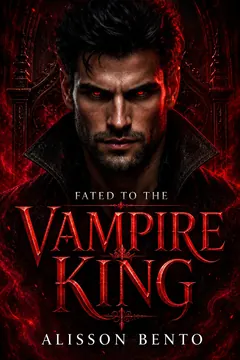
From Alisson Bento’s books
Vampire
A vampire romance about a captive bargain that turns into the only place she wants to be.
Kindle edition · Check Kindle Unlimited availability on Amazon.
Why an optimistic ending matters to the reading promise
Romance Writers of America’s genre definition centers the love story and an emotionally satisfying, optimistic ending. That convention helps explain why readers often check HEA or HFN before starting: the destination is part of the expected reading experience, even when the journey includes painful conflict.
You can know that a relationship ends positively without knowing how the story earns it. The characters’ choices, revelations, sacrifices, and changing understanding still provide discovery. An ending label is closer to choosing the emotional destination than reading a detailed route map.
Does every book marketed with the word romance follow that convention? Marketing can be loose, especially when a broader love story or a romance subplot is involved. If closure matters strongly to you, confirm it through an author or publisher note instead of relying entirely on a category label. You deserve a choice based on the book’s actual promise.
This distinction also separates optimism from lightness. A story can have an HEA after grief, betrayal, or demanding external circumstances. A cheerful opening can lead somewhere less reassuring. Tone tells you what the journey feels like; an ending note tells you how the central relationship lands.
A happy ending does not need a particular life milestone
Do they have to marry?
No. Marriage is one possible expression of lasting commitment, not the definition of it. Adult characters might decide to share a home, sustain a long-distance partnership, or make a clear commitment while keeping separate households. Their happiness should fit the people the story has established.
A proposal alone does not explain whether the relationship’s central difficulty has been resolved. If the partners still cannot communicate or trust each other, a ceremonial moment may feel insufficient to a reader. Conversely, a direct conversation backed by changed behavior can convey permanence without a ring appearing anywhere.
Do they need children or a pregnancy epilogue?
No. Parenthood is not a compulsory proof that love lasts. Adults who do not want children can have an HEA, as can characters whose future plans take other forms. Readers may enjoy a family epilogue, but that is a preference for one kind of closing image rather than a rule every romance must satisfy.
The useful question is whether the ending honors the characters’ stated desires. If both have spent the book wanting a quiet partnership and room for their work, that can be a convincing future. Requiring a different life would confuse a conventional symbol with the emotional resolution it sometimes represents.
Must there be an epilogue?
No. An epilogue can make lasting happiness especially visible, but an ending can establish an HEA in the final chapter. A future glimpse is evidence the story may use, not an essential structural component. An HFN can also include an epilogue if that scene still focuses on the near future.
Two invented endings, one shared breakfast
Consider an invented adult romance about Celia and Owen, who have struggled to reconcile demanding careers with their wish to be together. Neither wants the other to abandon meaningful work. Their conflict concerns whether they can build a partnership without turning every important choice into a contest.
In the HEA version, they have made a workable long-term plan, acknowledged the habits that hurt them, and chosen a shared future. The final scene shows breakfast before a busy day. Their conversation assumes an ongoing life together, and the story frames that commitment as durable. The breakfast is ordinary; its context supplies confidence.
In the HFN version, they resolve the immediate misunderstanding and choose to continue the relationship with honest expectations. A demanding temporary assignment still leaves later arrangements open. The final breakfast is affectionate and secure, with no active breakup hanging over it, but the narrative stops short of presenting their distant future as settled.
The scene furniture is the same: coffee, a kitchen, two people getting ready for work. A kiss could appear in either version. So could a practical conversation. You cannot classify the ending reliably by spotting one domestic object or one romantic gesture; the surrounding resolution gives that moment its meaning.
These examples illustrate a difference in emphasis, not a compulsory script. Authors can convey lasting commitment in many ways, and readers vary in the evidence they find persuasive. When asking about a real book, request the degree of closure rather than assuming it must contain one particular scene.
HFN, an unresolved romance, and a cliffhanger are different
Is HFN just a polite term for a cliffhanger? It should not be used that way automatically. An HFN offers a positive romantic resolution for the current story. A central couple separated by an unresolved betrayal, awaiting a decision about whether they will be together, has not necessarily reached that secure present.
A cheerful interaction immediately before a major relationship crisis is also different from closure. When a description says happy for now, the word happy should describe the relationship’s resolved position, not merely the mood of a single scene.
However, a book can resolve its romance while leaving an external series problem open. The adults might commit to each other while a larger political threat, family mystery, or professional challenge continues. That creates a further question: are you comfortable with unresolved external stakes if the couple’s bond is settled?
The guide to romantic and series cliffhangers explores that distinction separately. Here, keep the ending check focused on the relationship. Ask what remains open, not just whether someone has called the last chapter a cliffhanger.
Can an HEA have later problems or a sequel?
Yes. Happily ever after expresses confidence in the relationship; it does not mean the adults will never disagree, become tired, change jobs, or face another difficult year. A convincing ending may explicitly show that they have learned how to approach problems together rather than pretending problems have disappeared.
Likewise, an HEA does not require every side character’s conflict to be solved. The central romance may be complete while a sibling needs their own book or a wider community faces unfinished work. Romantic closure and universal closure are different requests. You might want both, but it helps to name them separately.
Can the same couple return in another volume? Yes. They might appear in a short follow-up, a new adventure, or a story that examines another stage of their partnership. The existence of a sequel does not retroactively tell you whether the first book offered a positive ending.
Before starting, check what the next volume continues. Is it required to resolve the current relationship? Does it center a new couple? Does it revisit an established bond? A series listing alone cannot answer those questions, and the number on the cover says little about the emotional stopping point.
How to check HEA or HFN without collecting spoilers
Begin with the author’s book page or the publisher’s description. Look for a brief ending note, a statement about whether the book completes the couple’s story, and any mention that the central romance continues across volumes. These describe the reading contract more directly than a review’s reaction to the final twist.
If the available wording is vague, you can ask a precise, spoiler-light question. It does not need to identify who confesses first or explain the last confrontation. The following requests leave room for discovery while identifying the outcome information you need.
- For the relationship: Does this volume end with the central partners together and their main romantic conflict resolved?
- For the future: Is the ending described as HEA or HFN, and does it establish lasting commitment or mainly present happiness?
- For the series: Is another volume necessary to reach the romantic resolution?
- For unfinished stakes: Are the remaining open threads romantic, external, or simply a setup for another couple?
A reader’s answer may use different definitions from yours. When that happens, ask for a broad description of commitment without scene details. If knowing any outcome would reduce your enjoyment, you can skip the check; that is a valid preference too. The point is giving yourself control over how much reassurance you receive.
Choose the amount of certainty that fits your mood
When HFN may be enough
You may enjoy an ending that says these adults have finally found a workable way to be together, while leaving the rest of their lives unwritten. HFN can suit that appetite for a secure present and an open horizon. Open does not have to mean ominous; it can mean the story has finished its task without documenting every future year.
When you want an unmistakable HEA
If you want a strong sense that the relationship will endure, ask for an explicit HEA and a completed central romantic arc. You can also specify that an epilogue is optional: what you need is commitment, not a particular celebration. That makes your preference clearer without narrowing it to one lifestyle.
Neither ending is automatically more emotionally mature, realistic, or satisfying. The better match depends on what you came to the book for. Choose the reassurance that lets you enjoy the journey, and check heat, tone, and difficult themes separately. An ending can promise hope without telling you how gentle or fierce the road will be.
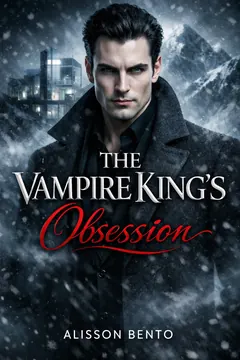
From Alisson Bento’s books
Vampire
A vampire romance about a hero who claims her and never lets anyone forget it.
Kindle edition · Check Kindle Unlimited availability on Amazon.
Dark Romance and Mafia: Commitment Under Pressure
In mafia and Bratva romance, the lovers may face obligations that ordinary contemporary characters never encounter. Family loyalty, criminal hierarchies, a forced alliance, or an inherited debt can place the relationship inside a wider struggle for power. The ending needs to address the forces that made their connection dangerous in the first place.
A protective gesture is not always enough. Imagine a marriage arranged to settle a feud. If the heroine ends the book unable to make any decisions beyond the same arrangement, a lavish wedding celebration may leave the opening conflict emotionally untouched. A stronger resolution shows what has changed: perhaps she negotiates the alliance, secures an independent resource, or forces the hero to relinquish a claim he once considered unquestionable.
This does not require every criminal hero to abandon his world or become conventionally virtuous. Different dark romances make different bargains with their readers. What matters is that the final commitment has consequences. Choosing a partner should cost something when the story has established that loyalty, territory, or reputation is expensive.
The Mafia and Bratva collection offers a way into that atmosphere on Alisson Bento’s site. Use the individual descriptions to distinguish a protector dynamic from a forced-marriage premise or a captive bargain. Those are different sources of tension, even when they appear under the same broad genre heading. A collection label helps you browse; it does not document every book’s ending or content boundaries.
Romantasy: Two Promises in One Story
Romantasy combines a relationship with a speculative world, but the balance varies. Some books put the love story first. Others build a larger fantasy adventure in which romance is a substantial thread. That distinction matters if a romantic HEA is essential to you: a fantasy label, on its own, does not settle how the relationship ends.
The strongest payoff connects emotional and external choices. A heroine might save her kingdom only by refusing the role that once kept her apart from her partner. A hero might give up a source of power rather than demand that she sacrifice herself to preserve it. These are illustrative possibilities, not summaries of particular Alisson Bento titles. They show how one decisive action can complete both arcs.
A fantasy world can remain complicated after the romance resolves. Peace does not have to spread across every kingdom before the final page. However, the threat that would immediately destroy the lovers’ future needs a credible answer. If an immortal curse still makes their commitment impossible, an affectionate conversation cannot carry the entire ending by itself.
Explore Alisson Bento’s romantasy books when you want emotional stakes woven into magic, bargains, or otherworldly power. Read each premise for the particular balance of fantasy and romance. Decide whether tonight’s mood calls for a dangerous court, an intimate supernatural bond, or a wider adventure with an unmistakable romantic center.
Paranormal Romance: Fated Does Not Mean Finished
Fated mates can make the destination feel inevitable, but the trope does not automatically guarantee an HEA. A bond is a premise, not a substitute for an ending statement. It can create attraction, conflict, obligation, or an unwanted recognition. The story still has to show why the characters choose a life together beyond what magic announces.
This is where paranormal romance can be particularly satisfying. A shifter may recognize a mate immediately while knowing nothing about the person’s ambitions, fears, or loyalties. A vampire may offer forever before understanding what that promise costs a mortal partner. The relationship becomes convincing through decisions that the supernatural mechanism cannot make for them.
The external stakes also need attention. Pack rules, rival factions, immortality, or unequal powers can threaten the relationship long after mutual attraction is clear. An earned ending establishes how the partners will live with those differences. It need not solve every philosophical question about eternity; it should resolve the practical obstacle that made their shared future impossible.
When browsing paranormal titles, separate three questions: what kind of creatures inhabit the story, what creates the bond, and what ending is actually promised. “Vampire,” “shifter,” and “fated mates” answer different parts of that decision. The full book catalog lets you explore the available combinations without assuming that every supernatural love story follows the same formula.
Why-Choose and Reverse Harem: A Future for the Whole Relationship
Book Riot’s introduction to why-choose romance describes stories whose protagonist ends with multiple partners. Reverse harem is a related, more specific label commonly used for a heroine with several male love interests. Usage varies, so the actual relationship description remains more helpful than the shorthand alone.
The defining emotional difference from a love triangle is that the ending does not require one partner to defeat the others. The story is building a shared romantic arrangement. Its satisfaction depends on each important relationship feeling wanted and developed, rather than allowing one compelling hero to carry several barely sketched connections across the finish line.
That makes the ending structurally demanding. A guarded partner may need to risk vulnerability; a competitive partner may need to learn cooperation; someone who expects to be abandoned may need a reason to trust the group’s commitment. These changes should feel individual. Repeating the same declaration in several voices does not necessarily resolve several different emotional problems.
Practical details can strengthen the fantasy without turning the epilogue into an administrative meeting. Who belongs in the future? Have the partners accepted the arrangement? Does the heroine retain room for her own ambitions? How does the group respond when attention or loyalty is tested? A few convincing scenes can make permanence feel lived rather than merely announced.
Alisson Bento’s why-choose collection provides a dedicated browsing route. Check whether a title combines the relationship structure with mafia danger, paranormal bonds, or another setting. A why-choose label describes whom the romantic future includes; it does not tell you the darkness level, every partner’s dynamic, or the precise content of intimate scenes.
Contemporary, Small-Town, and Historical Romance
An HEA does not need a criminal empire or a magical curse to feel hard-won. In contemporary romance, the obstacle may be incompatible plans, an unequal workplace, grief, or the fear that love will require abandoning a carefully built life. The ending works when the characters find a concrete way forward, rather than pretending that attraction has erased the disagreement.
A small-town story can place the couple within a community that remembers every mistake. A satisfying future may involve setting boundaries with relatives, choosing where to live, or deciding which public expectations deserve to be refused. A communal celebration feels richer when the partners have first made a private choice that belongs to them.
Historical romance adds the pressure of its particular setting. Money, inheritance, reputation, class, or legal restrictions may shape what the lovers can do. The ending need not give them every freedom a contemporary reader enjoys, but it should make their solution believable within the world the novel established. A convenient escape introduced only at the end can weaken that credibility.
Across these settings, the emotional test stays useful: what would have separated these people at the beginning, and why will it no longer separate them now? The answer may be a changed behavior, a shared sacrifice, or a new understanding. Without an answer, even a beautiful epilogue can feel like an assurance the story has not earned.
Where Alisson Bento’s Catalog Offers a Useful Starting Point
The appeal of Alisson Bento’s catalog is its range of browsing paths. You can begin with a setting, a relationship dynamic, or a desired atmosphere rather than choosing solely from a long list of titles. That is useful when you know you want possessive devotion but have not decided whether you want it in a mafia world, a paranormal bond, or a multi-partner relationship.
This article’s assessment concerns that range and the reader choices it makes available. It is not a claim that every manuscript has been independently checked for an identical ending, nor that every book contains the same level of darkness. Read the individual listing and any available content information when a particular guarantee matters. Specific evidence is more useful than a promise attached to an entire catalog.
The books can be approached as standalone reads; a genre collection is a browsing aid rather than a required sequence. Choose the premise that interests you, confirm the language and edition, and begin there. You do not need to complete the mafia shelf before trying paranormal romance, or move through every why-choose title in publication order.
That freedom also makes it easier to discover your own preferences. You might enjoy a protective hero but dislike captivity, or love a fated bond while preferring a heroine who actively resists destiny. Noticing the difference gives you a better next-book decision than treating “dark” or “spicy” as a complete description of the experience.