In fantasy romance, a prophecy creates an expectation about the future; the characters’ decisions show what they do with that expectation. The most useful reading questions are who interprets the prediction, whose interests that interpretation serves, and what accepting or resisting it costs. Being named by fate does not by itself establish trust, consent, or a satisfying relationship between adults.
You can enjoy the thrill of an apparently destined encounter while still wanting love to develop through choices. A prediction can bring two people together, frighten them apart, or make every ordinary promise feel public. The story’s rules determine how certain the prediction is, and its people determine what that certainty means to them.
What does the prophecy trope actually promise?
A fictional prophecy may arrive as recorded words, a vision, an oracle’s statement, or another invented form. It points toward an event or condition. That is different from telling you the full chain of causes, explaining every person’s motives, or guaranteeing that the characters understand it correctly.
Read for the prophecy’s scope. Does it name a person, a deadline, a sacrifice, or a possible alliance? Does it concern the romance itself or a larger crisis that puts pressure on the couple? A prediction about a kingdom can reshape a relationship without claiming that the adults are destined lovers.
Also notice how the world treats predictions. Are they routinely accurate, disputed, conditional, or controlled by an institution? Until the book establishes those rules, keep certainty provisional. A confident character is evidence of that character’s belief, not necessarily evidence that the future is settled.
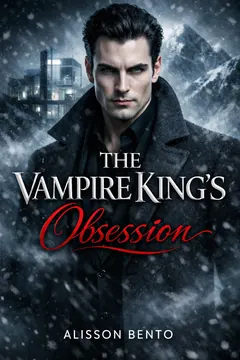
From Alisson Bento’s books
Romantasy
A vampire romance about a hero who claims her and never lets anyone forget it.
Kindle edition · Check Kindle Unlimited availability on Amazon.
Separate the words from the interpretation
A useful way to follow a prophecy is to keep three things distinct: what has actually been conveyed, what someone says it means, and what they want others to do because of it. Those layers may align, but they do not have to. The romantic stakes often emerge in the gap.
Who gets to explain the prediction?
A ruler, scholar, rival, or supposed subject of the prophecy may have different access to its wording. Someone might possess an old version; someone else might rely on a public retelling. Ask whether the viewpoint has seen the evidence or is being asked to trust an interpreter.
Authority can make an interpretation influential without making it correct. An official reading might guide marriages or appointments in an invented court. The adults’ response then concerns more than personal belief: challenging that reading may threaten the institution that made it public.
Who benefits if everyone accepts that reading?
Follow the practical advantage. Does the interpretation preserve a family’s influence, silence an opponent, or move a dangerous responsibility onto someone else? Benefiting from a claim does not prove dishonesty, but it gives you a motive to examine. Accurate information can still be presented selectively.
This distinction keeps intrigue readable. You do not need to solve the entire prediction to understand why a character wants a particular alliance now. For a closer look at public power and private loyalty, see court intrigue fantasy romance.
Can a foretold outcome still leave room for agency?
Yes. Even when a story makes a future event certain, the route, cost, motive, or response can remain open. Knowing that two adults will meet does not decide whether they will confide in each other. Knowing that an alliance will form does not establish its terms or how the people affected will be treated.
Agency becomes visible when a character understands a meaningful option and acts on it. The choice need not overturn destiny to matter. Someone might accept a responsibility while refusing a cruel method, or carry out a predicted journey while bringing a person the interpreters expected them to abandon.
Refusal is one possible expression of agency, not its only form. A character who welcomes the prophecy can still think carefully, set limits, seek evidence, and choose what to sacrifice. Conversely, declaring rebellion means little if every subsequent action simply happens without deliberation or consequence.
As a reader, ask what changed because of the adult’s decision. Did someone gain information, safety, or the freedom to decline? Did the cost shift? Those observable changes give the relationship substance even if the forecast remains intact.
An invented alliance puts destiny under pressure
Consider this invented example, not an actual book plot. An old prediction says that a threatened city will endure when its guardian joins the keeper of its gates. Talia, an adult appointed guardian, is told to marry an adult official whose family controls the gate office. Ren, an adult engineer she trusts, maintains the gates but holds no title.
The council reads “joins” as marriage and “keeper” as an inherited office. That interpretation supports an existing political arrangement. Talia wants the city protected, yet she doubts whether the predicted roles have been identified correctly. Her attraction to Ren makes her judgment easier for opponents to question.
Several tensions now overlap. Talia must distinguish her personal desire from evidence about the gates. Ren must decide whether to share a discovery that could cost him his post. The proposed official may sincerely believe the council’s reading and have responsibilities of his own. No one needs to be foolish for the conflict to bite.
What would a meaningful refusal look like?
Talia could refuse the marriage while committing to investigate the threat. That choice might cost her appointment or public confidence, so it has weight. Simply ignoring the city’s danger would be a different decision. The distinction lets the reader assess what she values rather than equating resistance with automatic wisdom.
She could also accept a temporary working alliance while requiring independent examination of the evidence. A different response can preserve her agency if the limits are real and understood. The key is whether the narrative makes room for her reasoning and its consequences.
Where does the romance earn its place?
Ren’s appeal should extend beyond fitting a possible interpretation. Perhaps he respects Talia’s request for evidence or admits that his discovery remains uncertain. She can value him for those choices regardless of whether the prediction eventually names him. The romantic question becomes who they choose to be together under pressure.
Is prophecy the same as a magical bond or chosen-one story?
No. A prophecy predicts or frames events. A magical bond creates some present connection under an invented system: shared warnings, linked power, recognition, or another effect. A chosen-one role singles out a person for a task or status and may be established by prophecy, inheritance, circumstance, or some other mechanism.
These devices can coexist, but one does not supply all the others. Two adults might be named in a prediction without feeling a supernatural connection. A bonded pair might receive no forecast about their future. A person chosen to resolve a crisis might have a romance with someone entirely outside the prediction.
Keep the relationship’s choices separate from each device. A predicted union does not demonstrate affection; a felt connection does not settle consent to intimacy; a heroic role does not explain why another adult should trust its holder. Fiction can explore those pressures, but the pressures still need to be identified.
For the mechanism of a supernatural connection and room to refuse its implications, see magical bonds versus chosen love. This article stays with the uncertainty created by a claim about the future.
Does knowing the prediction spoil romantic suspense?
It can change the kind of suspense without removing it. Instead of wondering only whether an event will happen, you may wonder how, why, and at whose expense. A forecast that two adults will unite can leave plenty unresolved about whether that union begins as convenience, mutual conviction, or a costly compromise.
A conditional prediction creates another experience. If a particular decision must occur first, the reader watches whether the condition will be met. An ambiguous prediction invites interpretation. A disputed one creates tension about whether characters are allowing an unreliable claim to govern their lives.
A self-fulfilling possibility adds a useful question: does fear of the forecast drive the very behavior that seems to confirm it? For example, in an invented adult romance, forbidding a meeting might cause both people to investigate why it was forbidden. The restriction becomes part of the path to contact without proving that all later choices are predetermined.
Choose the uncertainty you enjoy. Some readers want the comfort of an apparently inevitable destination with surprises along the route. Others want genuine doubt about whether the prediction deserves belief. Neither preference tells you anything automatic about heat or the final romantic resolution.
How do you follow clues without turning every line into a puzzle?
Record the prediction’s actual wording only if doing so adds pleasure. Then note one or two assumptions characters make about it. The difference between “must marry” and a character interpreting “must join” as marriage may be central. A list of every possible metaphor usually becomes less useful than tracking the decisions the interpretation produces.
Distinguish a clue from a conclusion. A repeated symbol may invite attention without proving the identity of a predicted figure. New evidence should change your level of confidence, not force an instant answer. The same detail can mean something different once you learn who supplied it.
If a revelation surprises you, look back at what information was available. Were important limits or alternative readings present? Did an interpreter’s confidence conceal uncertainty? That helps you understand the reveal’s logic. It does not require you to predict the ending to deserve enjoying it.
Avoid checking a prophecy’s meaning online unless you want spoilers. Search results may reveal the final interpretation in a heading. You can ask a narrower question about structure, such as whether the central prediction resolves in the current volume, without asking what its answer is.
Choose a prophecy romance by what fate makes difficult
Look past the word “destined” in the premise and identify the pressure it creates. Are the adults expected to unite for public reasons? Are they afraid affection will trigger a dangerous condition? Does one trust the prediction while the other questions the interpreter? Those setups offer different forms of romantic conflict.
A useful description connects fate to an immediate choice. You should be able to say what the adults risk by following, challenging, or reinterpreting the claim. If the prediction concerns only the external adventure, check separately how central the relationship is; the guide to romantasy and fantasy romance explores that balance.
Then verify your remaining preferences: the scale of the world, any continuing series arc, heat, ending information, and relevant content notes. Fate is a story mechanism, not a promise about these features. Your best match may be a clear prediction with difficult consequences or an uncertain prediction with a deeply grounded relationship.
The forecast can make the meeting feel enormous. The adults’ choices make it intimate. Follow the moments when they question a convenient interpretation, tell a costly truth, or allow each other a real option, and destiny has more to offer than an answer printed before the first kiss.