A dark romance can make you laugh without giving you a gentler story. The pleasure may come from an outrageous internal monologue, an argument with unexpectedly good timing, or a narrator treating something alarming as an ordinary inconvenience. None of those choices tells you how much violence, coercion, grief, or explicit material the book contains. They tell you how the story invites you to experience a particular moment.
That distinction matters when you want funny narration rather than a conventional romantic comedy. You might enjoy a character’s wit while finding their actions disturbing. You might love flirtatious exchanges but dislike jokes that accompany suffering. Or you might want the full collision: a lively voice in a story whose events remain genuinely dark. Those are different reading preferences, and a recommendation that only says a book is hilarious cannot separate them.
The useful question is where the comedy lives. Is it in what the narrator notices, how two people answer each other, or the contrast between a casual delivery and a serious event? Start there, then decide whether the surrounding material belongs within your boundaries.
Three sample-tested starting points
Leather & Lark by Brynne Weaver: a playful narrator during violence
Weaver’s official description positions this as a dark romantic comedy: contract killer Lachlan Kane and singer Lark Montague enter a marriage bargain amid mutual hostility and danger. That describes the relationship setup. The stronger evidence for comic narration comes from the prologue itself, rather than the genre label.
In Lark’s prologue, mock-sweet address, self-aware commentary, and an interest in theatrical presentation accompany lethal revenge against a predatory ex. The comic effect does not depend on a flirtatious partner answering her. Her own presentation supplies it, while the scene remains violent. Try this sample for comic narration beyond couple banter. It may also be an immediate mismatch if playful delivery during harm is your boundary.
The same official Piatkus extract includes warnings for bodily mutilation, drowning, terminal illness, explicit sexual material, religious trauma, and death. Its references to child abuse and child sexual assault are marked as not depicted. Those qualifiers should stay attached. The eleven-page PDF contains front matter and the prologue, not the complete novel; its 2024 edition bears ISBN 9780349441580. This reading does not establish identical text or extras in other editions.
Lights Out by Navessa Allen: teasing that remembers intrusive behavior
Zando’s description pairs comic banter with a dark-romance premise involving trauma nurse Aly and masked online creator Josh. The publisher identifies the US paperback as ISBN 9781638932239, released August 6, 2024. The narrative material examined here, however, is a separate bonus, not an opening sample of that paperback.
Allen identifies her publicly posted bonus scene as the one from the Barnes & Noble paperback special edition, released online after its exclusivity period. In its opening, Josh’s teasing narration meets Aly’s pointed replies. When he challenges her doubts about his surprises, she inventories earlier intrusions, puncturing his self-flattering view. The exchange creates comedy through disagreement about how to describe their shared history. It does not remove that history. This is evidence of a comic voice in this particular bonus scene, not proof of the main novel’s sustained tone or a promise that every edition includes the scene. The source also contains explicit adult material and relationship-status spoilers; only its non-graphic setup is discussed here.
Allen’s title-specific warning list includes stalking, privacy invasion, home invasion, hidden cameras, hospital blood and gore, and death. It separately identifies a mention of off-page rape, mention of past domestic abuse, and memories of experienced child abuse. The distinctions matter: the list does not place every troubling event off-page. Its sexual-content warnings also extend beyond the general presence of explicit scenes.
Caught Up by Navessa Allen: deadpan delivery around mob violence
Caught Up is the second Into Darkness book. Zando’s synopsis follows Nico “Junior” Trocci’s renewed fixation on Lauren Marchetti, including online watching and a developing connection. The publisher calls it dark romance and directs readers to the warnings inside the book. Its listed English ebook is ISBN 9781638932260, released June 10, 2025.
The permission-reprinted first chapter places Junior amid mob violence. Deadpan sibling exchanges and birthday complaints accompany a murdered man’s disposal; his online monitoring of Lauren also appears. Ordinary conversational rhythms sharpen the contrast. Victim identity and previous-book outcomes are omitted here.
A detailed, title-specific warning inventory was not independently obtained for this guide. Do not borrow the Lights Out list for its sequel. The authorized prepublication excerpt also does not establish exact parity with every final edition. Readers with a firm boundary should resolve it through the book’s own warnings before treating this as a suitable choice.
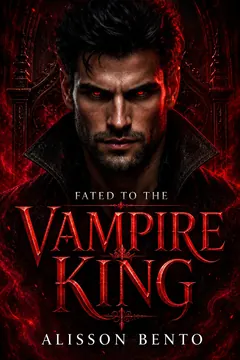
From Alisson Bento’s books
Vampire
A vampire romance about a captive bargain that turns into the only place she wants to be.
Kindle edition · Check Kindle Unlimited availability on Amazon.
Separate three kinds of comic pleasure
The narrator’s company
Sometimes the appeal is spending time inside a quick, irreverent mind. You are entertained by what a narrator notices, the comparisons they make, and the order in which they reveal information. Another character need not be present. A private correction of an exaggerated thought can be funny before anyone speaks aloud.
To test this preference, imagine removing all dialogue from a sample. Would the account still have personality and comic timing? If your enjoyment disappears with the exchanges, you may be seeking banter rather than comic narration. Neither is the more sophisticated preference. They simply provide different companionship between the major romantic scenes. A book with excellent flirting may still feel solemn when its viewpoint character is alone.
Pay attention to the narrator’s relationship with their own performance, too. Self-mockery, smug certainty, and deliberate exaggeration create different kinds of intimacy. A narrator who notices their own absurdity invites you to laugh alongside them. An obliviously confident narrator may invite you to see more than they do. Decide whether you enjoy that gap or would rather feel that the person telling the story shares your assessment.
The pleasure of an answer
Banter depends on another person’s response. The first remark creates an expectation; the reply redirects it. For a reader drawn to romantic chemistry, the pleasure may be that both people keep up, remember each other’s habits, or recognize the invitation to play. A clever line alone cannot demonstrate that exchange. The receiving character’s reaction matters.
Consider a deliberately invented, ordinary example: one partner confidently promises a flawless dinner, and the other quietly moves the smoke alarm closer. The joke depends on shared knowledge and the second person’s answer. Now imagine that the first partner is genuinely distressed and the other keeps making the same joke after being asked to stop. The wording could remain witty while the relationship experience changes. Timing includes permission to continue.
That makes reciprocal play a useful reading preference to name. You may want evenly matched sparring, affectionate teasing, or one person’s dry reactions to another’s extravagance. You may dislike humiliation even when it is written with excellent timing. Asking for funny dialogue without specifying the kind of exchange can group together relationships that feel very different to inhabit.
The mismatch between scale and delivery
A third pleasure comes from an event and its telling operating at different scales. An alarming situation might receive the vocabulary of a scheduling problem. A minor inconvenience might receive an elaborate internal speech. The surprise lies in the mismatch, not necessarily in a character making an identifiable joke.
As a hypothetical contrast, picture two accounts of a dangerous escape. One dwells on fear and uncertainty. The other gives equal attention to a ruined coat and the narrator’s irritation about replacing it. Both accounts can contain the same danger. The second redistributes attention, which may make the narrator feel entertainingly unflappable, absurdly vain, or emotionally distant. Your response to that emphasis helps explain why two readers can disagree about whether a voice is fun or alienating.
Look for the detail that receives the final beat of a paragraph. Is it a consequence, a complaint, an unexpected comparison, or someone else’s reply? That small choice can tell you more about the comic experience you are being offered than a broad label such as dark romcom. It is also something an opening sample can genuinely demonstrate without needing to reveal the ending.
Ask what the laugh is aimed at
The presence of humor is only the first question. Its target may determine whether you want to keep reading. A joke aimed at a powerful person’s vanity can feel different from one aimed at someone’s fear. A narrator mocking their own elaborate plans offers another experience again. These distinctions remain useful even when you are comfortable with the same broad content categories.
Try separating the character who speaks from the person who pays for the joke. If one character makes a cutting observation and another becomes the object of it, who gets to answer? Does the scene give that second person a perspective, or only use their reaction as a comic prop? You can enjoy uneven, abrasive, or deliberately uncomfortable exchanges. Naming the arrangement simply makes your preference more precise.
Also distinguish laughing at an event from laughing at the way someone talks about it. A narrator’s inflated self-image may be ridiculous even when the event itself is not. Conversely, an apparently light conversational rhythm can make the event feel trivialized to you. You do not need to prove a single correct response before deciding whether the effect works for your reading mood.
A helpful personal boundary can therefore concern treatment rather than subject matter. You might accept fictional violence but prefer the narrative to pause for its emotional consequences. You might tolerate a particular subject in a serious passage yet dislike it becoming a punchline. Those are coherent distinctions. A list of events can help identify the material, while a sample helps you assess the attitude surrounding it.
Comic momentum and emotional weight are separate questions
Fast, funny prose can make a scene feel easy to move through. That ease concerns reading momentum, not the seriousness of everything happening. A sharply placed response may carry you into the next paragraph before you have decided how you feel about the preceding action. If you enjoy that speed, it can be part of the attraction. If you prefer more room to sit with consequences, the same momentum may work against your enjoyment.
One useful experiment is to stop after an entertaining scene and describe its events in plain, neutral language. Leave out the jokes, attractive characterization, and dramatic adjectives. Then ask whether the underlying event still fits the experience you wanted. This is a reading exercise, not a demand to reject a fantasy. It helps separate enjoyment of delivery from comfort with content.
The reverse experiment can be revealing as well. Suppose a scene’s subject would normally interest you, but the telling feels too solemn. You may be looking for distance, momentum, or irreverence rather than less darkness. A recommendation for a milder plot might miss the point entirely. Asking for a more playful narrative stance addresses the actual preference.
Humor can also coexist with emotional seriousness within a single reading experience. You may want jokes in transitional scenes and quieter attention when a character is vulnerable. Another reader may prefer tonal collision precisely when events become intense. Neither preference can be settled by counting funny lines. What matters is their placement and whether the transitions feel satisfying to you.
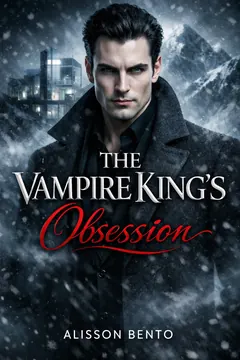
From Alisson Bento’s books
Vampire
A vampire romance about a hero who claims her and never lets anyone forget it.
Kindle edition · Check Kindle Unlimited availability on Amazon.
Keep relationship boundaries distinct from narrative charm
A charming narrator has privileged access to the reader. Their explanation arrives from the inside, complete with desires, excuses, and selective emphasis. That closeness can be a major attraction of morally complicated fiction. It also means that understanding why a character wants something and approving how they pursue it are separate responses available to you.
When consent or privacy is important to your choice, follow the specific interaction rather than the character’s comic confidence. Who understands the situation? What has been agreed to? Can an objection alter what happens next? A later affectionate exchange may be enjoyable in its own right without answering every question about an earlier act. Keeping those moments distinct makes your judgment more useful than treating charm as a blanket assurance.
Likewise, enjoying a fictional fantasy does not obligate you to enjoy every variation of it. You might welcome negotiated role-play and reject deception about what is happening. You might enjoy a possessive internal voice but dislike public humiliation. You might want both partners to joke about a situation while finding an outsider’s joke intrusive. These are differences in the arrangement, not contradictions in your taste.
If a recommendation promises a funny, protective, or devoted hero, translate those impressions into observable preferences. Perhaps you want him to listen when corrected, be funny at his own expense, or acknowledge another person’s competence. The descriptive adjectives may be accurate for a recommender and still leave your actual question unanswered. Ask about the behavior that would make the description meaningful to you.
Choose a sample for the question you need answered
For immediate narrative voice during violent events, the Leather & Lark prologue is the most direct test here. For established-couple teasing, the named Lights Out bonus offers a different entry point, with its spoiler cost clearly attached. The Caught Up opening tests deadpan delivery. None supplies a complete safety or compatibility assessment.
Read for your preferred comic mechanism before deciding whether a title belongs on your list. If you want entertaining internal commentary, notice the stretches between spoken lines. If you want reciprocal teasing, watch what the second person contributes. If you want a contrast between danger and casual delivery, examine how the narration apportions attention. These questions produce a more discriminating choice than simply asking whether you smiled once.
Be especially deliberate about bonus material. A scene written for readers who already know a couple can assume familiarity and reveal a relationship stage. That can make it a good demonstration of a particular exchange while making it a poor first encounter for someone protecting surprises. You are allowed to decline that evidence and choose a different title’s opening instead. More available text is not automatically the better sample for your purpose.
After sampling, a useful verdict has two parts: what you liked about the telling and what remains unresolved about the book. For example, you might enjoy an irreverent internal monologue while still needing a precise answer about one content boundary. Keeping both parts visible prevents a promising voice from becoming an accidental promise about the entire story.
A more useful way to ask for funny dark romance
Try asking for the comic experience and the boundary in the same sentence. You could want self-aware narration with serious treatment of grief, affectionate sparring without humiliation, or deliberately outrageous delivery while still excluding a particular kind of harm. The request need not become an exhaustive questionnaire. One preference about voice and one important limit can substantially improve the answer.
For a reading group, allow those answers to differ. Someone can admire a joke’s construction and dislike its placement. Someone else can enjoy the tonal collision without claiming the underlying conduct is harmless. Discussing timing, target, and viewpoint gives the conversation more substance than arguing about whether the book is simply funny or simply dark.
The goal is a good match, not a toughness test. Comic narration can be the exact quality that makes a dark story appealing, and it can be the exact quality that makes a particular passage unsuitable for you. Treat that response as useful information. The best next read is the one whose voice you want to spend time with and whose material you have chosen knowingly.