Frat Row here means Krista Turner Clark’s book and continuing trilogy, not a general name for a campus neighborhood. The identified route is Frat Row, then Out for Blood, followed by the author-announced final installment Paid in Blood. Cassidy and Tyler continue across this project. The title of the finale is important: it is Paid in Blood in the author’s own announcements.
This is an adult discovery guide to the reading project, not a completed-novel review. Clark labels her catalog for audiences aged eighteen and over and positions these stories through dark romance, horror and suspense. Frat Row carries an author-linked warning document with substantial coercion and violence categories. A college-sounding title should not be mistaken for a promise of a light social or campus romance.
The continuation sections below discuss the author’s advertised sequel setup, which reveals the direction after the first book. If you want to preserve even that level of discovery, begin with the first-book identity and content sections, then leave the later-volume discussion until afterward. No ending assessment, scene-level account or clinical explanation of the characters is claimed here.
The three titles and their different statuses
The author’s official catalog identifies Frat Row through kidnapping, secret-society and suspense markers. Her August 2026 newsletter explicitly identifies Out for Blood as book two in the Frat Row trilogy. That primary statement makes it a continuation rather than an unrelated novel sharing a dark cover.
In the September announcement, Clark names Paid in Blood as the final installment and says Cassidy and Tyler’s story is approaching its end. Her newer October update still describes that final book as in progress and available for preorder. A named trilogy and a fully released trilogy are therefore different claims.
For a reading note, keep this short sequence: Frat Row introduces the project; Out for Blood is the confirmed second book; Paid in Blood is the announced final title whose current release status needs checking. This distinction lets you choose whether to begin an ongoing arc without pretending that a future title is already available to finish tonight.
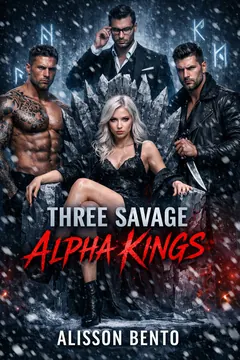
From Alisson Bento’s books
A shifter romance about one heroine, more than one devoted hero, and no choosing.
Kindle edition · Check Kindle Unlimited availability on Amazon.
The campus association does not describe the whole invitation
The ordinary phrase frat row can suggest fraternity houses, parties or student social life. Those associations may explain what caught your attention, but they do not replace Clark’s actual framing. On her site, the first book’s specific identifiers are kidnapping, a secret society and suspense. Those are much more consequential reading signals than an imagined calendar of college activities.
If what you want is the ordinary work of student life, an academic rivalry or a playful social arrangement, do not assume this title supplies it. The checked description does not establish a timetable of classes, a named fraternity hierarchy or the amount of campus routine on the page. Its confirmed invitation points toward danger and secrecy. Choose by that evidence rather than by filling the setting with familiar college scenes.
The same caution applies to romantic structure. A fraternity-related title does not establish a why-choose relationship or tell you how every person belongs to the romantic cast. This guide follows the author’s named Cassidy and Tyler continuity. It does not invent additional partners from the title or treat the number of people in a warning label as a final relationship configuration.
Clark’s eighteen-plus statement concerns intended readers. It is not, by itself, a census of every character’s age across every period depicted. That is a useful distinction if you have a specific cast-age requirement. A prospective reader can recognize the adult audience while leaving any more exact age condition unconfirmed rather than inventing an answer.
Dark romance, horror and suspense overlap in this catalog
Clark’s site presents her work through dark romance and horror, and the Out for Blood page explicitly uses an erotic-horror label. It also supplies suspense and revenge framing. These are the author’s catalog signals, not a claim that every installment has an identical balance of romantic development, threat and horror material.
For a reader, the useful choice is what kind of intensity you want to accompany. You may be interested in a dangerous relationship within an equally dangerous world. You may be especially interested in the continuing conflict and a move toward revenge. Or horror may be outside your present preference even when dark romance is not. Those are different responses to the same book information, not different levels of reading courage.
A romantic thread does not tell you where an individual volume’s emotional stopping point lies. The author’s general language about her work cannot establish that book one supplies every resolution you want. Because Cassidy and Tyler’s story continues, separate the question of a volume’s immediate ending from the endpoint of the entire project. Neither can be settled by a familiar genre label alone.
This also means the guide does not promise that later revenge makes earlier difficult material comfortable. A later direction can be a reason to continue, but it does not erase what the first-book warnings say. Choose the opening because its actual invitation fits your interests, rather than treating an anticipated final payoff as a guarantee about the experience along the way.
What the first-book warning document actually identifies
The Frat Row link under the author’s warnings leads to a two-page title-specific document. Its complete text was checked for this guide. The following groups summarize decision-relevant categories without reproducing the document’s long sexual checklist or describing individual scenes. Read the original if you need a narrower subject checked.
One group concerns captivity and coercion. The document includes kidnapping, confinement and control against a person’s will. These are not equivalent to simply sharing a room or being unable to avoid a classmate. If the appeal of forced proximity depends on a low-pressure arrangement, the author’s own list gives you a reason to distinguish that preference from this book.
A second group concerns sexual violence and exploitation. The warnings include sexual assault, rape and sex trafficking. Those are direct labels in the author-linked material, not conclusions drawn from a dark cover. They should not be softened into a vague promise of a possessive hero, nor converted into assumptions about the identity of every participant or the outcome of particular events.
A third group concerns severe physical and psychological harm. The list includes torture, physical and mental abuse, deprivation and lasting physical injury among its subjects. Those categories are broader than a general mention of danger. They identify reasons a reader might need more information even if fictional crime or morally ambiguous characters are normally acceptable reading material.
The document also identifies suicidal thoughts. This is a content label for the novel, not a diagnosis of a character and not a claim that the story provides mental-health guidance. The presence of that subject can matter independently of the other violence categories. A reader interested in revenge suspense may still want a precise answer about this particular theme before beginning.
These groups are not an exhaustive replacement for the original list. They also do not specify where each item appears, who causes it, who experiences it or how directly it is depicted. If one of those distinctions determines your choice, seek that answer rather than treating a broad warning as either a complete plot summary or a reassurance. The author’s document provides a concrete starting point, not permission to invent the missing detail.
A title-specific warning is more useful than a borrowed one
Clark links different warning material for Frat Row, No Service and Out for Blood. That organization matters because an author’s general catalog notice and an individual book’s list do different jobs. The first establishes broad positioning; the second gives you subjects attached to one named work. Neither should be silently transferred to all neighboring titles.
For Frat Row, keep the first-book document attached to the first book. When considering Out for Blood, use its own author-linked information as well. The shared protagonists and ongoing project establish continuity, but do not prove that the content inventory stays identical. Likewise, a warning not quoted in this short guide is not therefore absent from the novel.
The site’s guide to checking content notes explains the broader screening method. Here the useful new information is Clark’s actual source and the first book’s named categories. There is no need to reproduce a general checklist before every volume; identify the exact work and check only the subjects that affect your decision.
Out for Blood continues Cassidy and Tyler’s project
The official sequel description moves to a revenge-focused setup two years later. It describes Cassidy and Tyler pursuing the people behind the harm, with Cassidy training and Tyler working through coding and surveillance. These are advertised fictional roles, not practical instructions. They establish a changed direction for the continuing plot without requiring an account of the first book’s ending.
That time shift makes the sequel more specific than another campus story with a fresh couple. The author’s August newsletter calls it the second book and names the same continuing characters. A reader can therefore understand why starting there would mean entering an established history. A new title and a new cover do not erase what the earlier installment supplies.
The attraction to investigate is the transition from the first book’s kidnapping and secrecy framing toward an active revenge pursuit. Some readers may want precisely that continuation. Others may be more interested in a contained first-book premise and prefer not to commit to a wider arc. The verified description gives you enough to recognize those different preferences without asserting how satisfying any stage proves.
Do not turn the time gap into a clinical story of recovery or assume that skills described in the sequel prove every emotional issue resolved. The sources advertise actions and a revenge objective. They do not establish a therapeutic model. Staying with the fictional goal preserves what is actually distinctive about this continuation.
Paid in Blood is the announced finale, not proof of completion
The author’s 21 October 2026 update identifies Paid in Blood as her current work in progress and again describes the approaching end of the Frat Row trilogy. It is the newer primary statement located for this guide. The safe reading-plan entry is the announced final title with that dated status, not an invented finished ending.
If you prefer a continuous read through a completed relationship arc, this is the point to pause and check current author information. If you enjoy following installments as they appear, you can begin while recognizing the remaining commitment. Neither preference requires treating a trilogy announcement as a promise that all three copies are already on sale.
The distinction between title identity and availability is practical. We can identify Paid in Blood from the author’s own words even while leaving its final publication date unasserted. Do not substitute another title merely because an unofficial list offers a cleaner-looking order. A correct name with an honest status is more useful than a confident but unsupported complete set.
Text, audio and other titles are separate choices
Format announcements should not add extra novels to the sequence. In September, Clark announced an Out for Blood audiobook date in November; the October update moved it to 25 November 2026. That is a dated author announcement about audio, not evidence that the audiobook is already available on the day you read this guide.
If audio is your preferred format, check the author’s current update and the actual edition before planning a continuous listen. A released text edition and an announced audio edition can coexist. The story’s position remains book two; a different narration date does not make it book three. The final-title question still belongs to Paid in Blood.
The catalog also lists No Service. Its presence on the same website is not a reason to insert it into the three-title route established above. Use the author’s explicit trilogy statements rather than arranging every book on the page into a single series. This guide likewise retains original titles where a particular translated book edition has not been verified.
Two different roles in the advertised pursuit
The sequel description pairs Cassidy’s training with Tyler’s coding and surveillance. This division is a more specific point of interest than simply calling the couple dangerous. It places different kinds of activity inside one advertised pursuit: preparation associated with Cassidy and information work associated with Tyler. A prospective reader interested in partners contributing differently to an ongoing conflict has something concrete to investigate in an authorized preview.
That description still leaves the relationship between those contributions open. It does not tell us who makes every decision, how disagreements develop, or whether the narrative gives equal space to each person’s work. Those are useful questions for the actual novel, rather than gaps to fill with a familiar protector-and-protected formula. The attraction supported here is the paired pursuit itself. If that is what draws you, the second book’s premise helps clarify why the trilogy represents more than three interchangeable dark-romance titles. The changing objective, continuing characters and remaining finale together shape the commitment.
Choose the commitment you actually want
Begin with Frat Row if the author’s adult horror-and-suspense positioning, kidnapping and secrecy premise, and a continuing Cassidy and Tyler story match the project you want. Check the title-specific warnings before treating the college association as the decisive attraction. The question is the actual content and arc you wish to read, not whether a familiar setting looks inviting.
For general help distinguishing a continuing relationship from interconnected standalones, the series reading-order guide develops that distinction. Clark’s named trilogy belongs on its own list, with a dated note about the finale. The Alisson Bento catalog offers a separate author’s independent reading paths if another premise fits your current mood better. No shared characters or continuity are implied.