
Mutual pining is a romance trope in which both characters want a relationship with each other and neither realizes the feeling is returned, or neither feels able to act on it. The reader often gets enough information to see the attraction from both sides before the characters can. A quick example: two friends keep saving each other a seat on the train. Each thinks the other would do the same for anyone. Both spend the days they travel apart reconsidering what that empty seat means.
The pleasure of a good mutual pining romance is seeing the same small act carry two different meanings. An offer to walk someone home can feel like a risk to the person making it and basic courtesy to the person hearing it. When the book gives both readings their due, the eventual admission can reorder everything that came before. The chapter in which almost nothing seemed to happen turns out to be the one in which both people made their first real attempt.
What does mutual pining mean?
To pine for somebody is to long for them. The English word pining sounds like “PIE-ning,” with stress on the first syllable. In a romance, the feeling is mutual when both people experience it, even if one falls sooner or reaches a point of honesty first. The emotional symmetry comes from the direction of desire. The characters can have different reasons for keeping it private, show it in radically different ways, and take very different risks when they finally name it. Cambridge Dictionary
Imagine a violinist who has taken work in another city and asks a longtime friend to help move some boxes. The friend clears the entire day. The violinist notices the care that goes into wrapping a chipped cup and wants to ask if there might be a reason to come back more often. The friend remembers the violinist spending months trying to leave and chooses to talk about traffic instead. Each person can explain the other’s actions as friendship. The attention readers see in both directions makes a brief scene feel like an exchange.
Some books show that exchange explicitly by alternating points of view. Others spend the whole story with one lead and let the second character’s choices accumulate. A public kindness can be part of someone’s ordinary character. The ability to remember an obscure preference or a private anniversary can carry a different weight once the story establishes how the other person acts elsewhere. The reveal may come late, so readers who want certainty early should look for a dual point-of-view sample or a synopsis that names both characters’ stakes.

From Alisson Bento’s books
Vampire
A vampire romance about a captive bargain that turns into the only place she wants to be.
Kindle edition · Check Kindle Unlimited availability on Amazon.
How is mutual pining different from unrequited love?
In an unrequited love story, one person wants a relationship and the other person does not share that feeling at the point in time the story depicts. Some romance plots begin there, then allow the second person’s feelings to change. Mutual pining describes the period during which both people already want each other and the desire stays concealed, unacknowledged, or out of reach. “They both think it is unrequited” describes a common version of the trope and explains why the two search phrases so often lead to each other.
If you’re looking for a heroine with an unrequited crush, decide which part of the arc you want to spend time in. You might want her to discover that her best friend was holding back for a reason that makes sense. You might want him to see her differently after she leaves town. You might also want her to lose interest in her first love and be seen by someone new. Each premise gives the longing a different direction. If the hero starts to fall after she has stopped waiting, the overlap may be short. If both were making room for each other for years, earlier scenes can gain new meaning after the confession.
Look for the difference between pain and humiliation when you want an angsty read. In a life already crowded by obligations, a missed invitation can hurt without anyone trying to make it hurt. A story about being repeatedly belittled or taken for granted creates a different repair burden. If an apology matters to you, read for a specific wrong and a changed decision. A big speech may confirm affection. The evidence of repair usually comes from what a person gives up, says aloud, or does differently when the same choice returns.
Is mutual pining the same as slow burn or friends to lovers?
Slow burn describes the pace at which intimacy develops. Friends to lovers describes the relationship the characters start with. Mutual pining describes what the leads feel and the distance between that feeling and what they can say. A novel can use all three. It can also open with friends whose desire has been mutual for years and let them make a decision over a single weekend. The emotional wait happened before the book began. A long novel in which two people learn to trust each other may spend most of its pages in slow burn, then give mutual pining only one chapter. How to choose between slow burn and low spice
The friendship version works well when the leads have routines worth protecting. Try picturing one person who knows exactly which cupboard the other keeps the spare coffee in. They can let themselves in, cook a meal and leave a note. A confession could change something as practical as where they spend Sunday mornings. The stakes come from what they stand to lose from the life they enjoy now, as well as what a relationship would add. As a reader, check whether the book shows that existing life before it asks either character to risk it. Friends to lovers and childhood friends
Mutual pining can also underpin a workplace romance, a second chance, or a fake relationship. In a pretend relationship, one lead may interpret a genuine touch as sticking to the plan. Former sweethearts might be certain of their shared history and unsure whether it can survive a second attempt. Two people in a workplace with a reporting relationship may know exactly how the other feels and wait for the power dynamic to change. The obstacle affects the flavor of the yearning. A missed signal feels different from a boundary both people are consciously respecting.
Which mutual pining romance books should I start with?
Choose by the kind of distance between the leads. The following books give different ways into reciprocal longing. The comparisons describe how their published premises support each reading and avoid the outcome of individual scenes.
- People We Meet on Vacation by Emily Henry suits readers who like years of friendship revealed through shared memories. Poppy and Alex spent annual vacations together before things fell apart. The new trip offers a chance to see what was lost alongside the earlier trips that made losing it matter. Read it for the gap between familiarity and what both friends can bring themselves to talk about. The British title is You and Me on Vacation, so compare the author and edition if the covers in your library look different. Berkley’s edition and Penguin’s UK edition sample
- Love and Other Words by Christina Lauren adds the ache of a second chance. Macy and Elliot, childhood sweethearts, meet again after roughly a decade apart. The past and present give each other context as the book makes room for the closeness they once shared and the distance that followed. Pick it when a book about people with shared history feels more appealing than a story about two friends on the verge of a first confession. Christina Lauren’s book page
- We Could Be So Good by Cat Sebastian puts Nick and Andy in the world of a New York newspaper in the 1950s. Their friendship and shared domestic time give ordinary gestures weight. It is a good place to start if you want M/M romance with yearning and care shown through routines, or if you want the time period to shape what the leads think they can say in public. Cat Sebastian’s book page
For sapphic science-fiction romance, our guide to shared quarters and mutual pining in space gives the much narrower version of this reading experience. For a sports variation in which both men have an established relationship, Rachel Reid’s The Long Game shifts the question to whether Shane and Ilya can imagine a shared public life. Start with Heated Rivalry if you want the beginning of their story. The distinction matters when you’re borrowing from a library: a book centered on admitting attraction promises a different arc from a sequel about making an existing relationship sustainable. Rachel Reid’s series notes
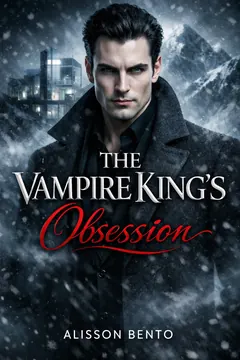
From Alisson Bento’s books
Vampire
A vampire romance about a hero who claims her and never lets anyone forget it.
Kindle edition · Check Kindle Unlimited availability on Amazon.
What is mutual pining in fanfiction?
On Archive of Our Own, often called AO3, tags tell readers what a fanwork contains and can be used to filter a fandom or pairing. “Mutual Pining” gives you a way to look for characters longing for each other in stories where you may already know their personalities and history. With a pairing that spent a whole season arguing about whether to stay or go, a writer can focus the story on a look at the door. A published novel that introduces an original couple has to build the significance of that look on its own pages. Archive of Our Own’s tags FAQ and Fanlore’s mutual pining entry
“Pining,” “Slow Burn,” and “Friends to Lovers” often make useful adjacent searches. Include the pairing or fandom if you want characters you already know. You can also narrow by rating, length or completion status. If you want the feeling explicitly confirmed, check whether the work is complete and read the other tags or summary before starting. How much a creator reveals in tags is an editorial choice. The same label can take you to a three-page scene about a realization, a long story about choosing a relationship, or a piece that ends at the moment somebody knocks on the door.
The trope crosses media as easily as it crosses subgenres. A film can let you watch both characters look back as they leave by different exits. A novel can write the same encounter twice and reveal that one person was rehearsing a question while the other thought they were bored. If you came here from a film or series, identify what kept you watching. Some readers want the almost-confessions. Others want to feel that the characters already function like a couple before a relationship has a name. Those priorities will lead you to different samples even when the novels share a label.
How do you find the level of angst and spice you want?
Search with one reason for the silence and one preference about the reading experience. “Mutual pining best friends banter” points toward familiarity and levity. “Mutual pining second chance angst” points toward history someone may have to revisit. “M/M romance with yearning” can bring up quieter books as well as high-conflict ones; adding “historical,” “hockey,” or “friends to lovers” helps the results reflect what you want. If you like heroines who believe they are the only ones in love, search for “heroine thinks love is unrequited” and look for a blurb that gives clues to the second perspective. Searching for the exact reason for the silence often gets you farther than adding the word “best.”
Heat is a separate choice. A book full of longing can stay closed-door throughout. Another can show physically intimate scenes well before either person feels ready to say what the intimacy means. In a sample, notice whether the scene foregrounds safety, emotional risk, flirtation, touch, or explicit desire. A scene can have more than one of those, but what the narrator pays attention to is a reasonable indication of the voice you will spend the book with. A cover or a list title can only get you so far. If there is content you specifically want to avoid, look for notes from the author or publisher and check the edition you’re planning to read.
Ask what changes during the wait. In a first scene, one person might show up because that is what a friend does. Two chapters later, the same gesture costs them an evening they wanted for themselves. Later still, the person on the receiving end may ask for help directly. The action looks similar, but the motivations, conditions and willingness to be seen have changed. When a sample offers that kind of movement, it gives some reason to expect a longer separation to hold your interest. When every scene resets to the same misunderstanding, choose it only if you enjoy the characters enough to spend a while in that pattern.
Google also surfaces “Out For You” beside this trope. When a book uses that phrase for a character’s decision to come out, read the synopsis for who gets to make that choice and what support they have. That story can overlap with mutual pining, and it adds a question about being seen openly. For a writing prompt, place both characters in a familiar kitchen and let each mistake the other’s effort to stay late for simple politeness. Change one fact in the next scene, such as the news that one of them is moving, and see what each is finally willing to ask.
What makes the confession worth the wait?
A satisfying confession makes a specific private truth shareable. Maybe the person who always claimed to be passing through admits they took the longer way home in case they could walk together. Maybe someone who insisted a kiss was for appearances explains why they did not want to move away afterward. By the time that detail is spoken, readers can recognize its history. The phrase “I love you” can matter very much. Knowing which confession the character could not have made in chapter one gives it a second source of power.
A second scene can make the payoff last. Imagine that the friend on the train finally asks whether they can sit together even on a day when the carriage is nearly empty. The other says yes and sends a message about their next trip. It is a small choice, and it changes something concrete about the future they are willing to plan. A private admission and a practical next step can do different work. If the book has spent time on a family obligation or a job that makes a relationship difficult, the practical part may be what you most want to see.
For a quick reading test, pick up a sample and ask these questions after the opening encounter. What does each lead have at stake? What action could look ordinary to one of them and loaded to the other? What would have to change for them to say the quiet part in front of each other? You only need one small signal in the early pages. The full pleasure is remembering that signal at the end and seeing why both characters were so careful with it.