
No, You Hang Up is a standalone adult dark romance by AJ Merlin, built around a prank call that stops being safely distant. After a difficult week with her family, the protagonist joins two best friends for a movie night and a return to an old prank-call habit. The man who answers seems to understand more than the callers expected. When the friends leave, the supposed joke has consequences in her private space. Choose this premise if the attraction of an unsettling stranger and a breached boundary is what interests you.
The verified publisher description calls it an MF dark romance for mature listeners. That is a more useful starting point than reading the title as a promise of a sweet telephone courtship. This guide uses the author’s catalog and official audiobook records; it does not pretend to assess the complete novel after reading or listening to it. Its purpose is to identify the book, explain the distinct reading invitation and help you select an edition without inventing translations or later events.
A familiar social ritual creates an unfamiliar opening
The movie night matters because the announced contact begins inside a recognizable friendship ritual. The protagonist wants relief after family strain. Her friends propose an activity remembered from their teenage years. That is not the same starting point as someone deliberately seeking a dangerous relationship. The initial intention is shared amusement, and the premise changes its meaning when another person refuses to remain a harmless voice at the other end.
For a reader choosing a story, the interesting question concerns the distance between intention and interpretation. The callers think they know what sort of game they are playing. The recipient appears to claim a different understanding. An ordinary form of contact becomes unsettling because the two sides do not possess the same information or make the same assumptions. You can be curious about that mismatch without accepting the stranger’s interpretation as the truth about the protagonist.
This gives the novel a specific doorway. A first encounter need not happen in an unfamiliar place to disturb the familiar. It can begin while someone is with trusted people and expects the activity to end when the call ends. If that reversal interests you more than a meeting at work, an arranged alliance or an old enemy’s return, the prank-call setup offers a concrete reason to investigate No, You Hang Up.
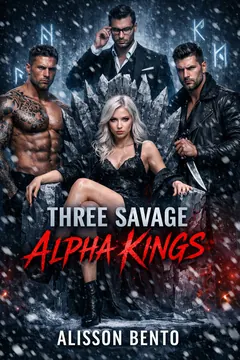
From Alisson Bento’s books
A shifter romance about one heroine, more than one devoted hero, and no choosing.
Kindle edition · Check Kindle Unlimited availability on Amazon.
The telephone separates voice from access
The official Podium presentation moves from the call to the protagonist’s expectation of being alone after her friends depart. That transition is the most revealing part of the announced mechanism. Contact that appears limited to a device reaches the setting in which she expects privacy. The premise changes both the meaning of the voice and the meaning of home.
The attraction here may lie in the collapse of assumed distance. A caller can hear another person while knowing little about their identity, intentions or location. That combination creates an uneven exchange: conversation feels immediate while knowledge remains partial. A stranger who seems to understand the situation can therefore become frightening before any elaborate criminal world has been introduced. The specific tension comes from what one participant appears able to know and do beyond the conversation.
Do not confuse that reading interest with a promise about a particular technical explanation. The available official summary does not establish how the man acquires information or reaches the protagonist. The novel can answer that in its own way. For choosing it, the useful distinction is between enjoying remote, anonymous flirtation and wanting a story in which remote contact fails to remain remote. No, You Hang Up announces the latter kind of disruption.
Wanting attention is not the same as choosing its terms
The man’s interpretation of the call includes a claim about the protagonist wanting attention. That makes a useful question for the reading: who gets to define what the contact means? A person can want company, distraction or a reaction without agreeing to someone else’s version of the exchange. The blurb’s tension depends partly on that difference. It should not be smoothed into a harmless misunderstanding merely because the book is marketed as romance.
For readers drawn to morally difficult attraction, this is a more precise invitation than a generic dangerous-man label. The uncertainty concerns whether being noticed also means being understood, and whether a claim of understanding gives someone power. Those questions can be compelling in fiction without becoming an endorsement of the character’s conduct. They are interpretive interests raised by the premise, not an assertion that the book resolves them in a particular way.
This may also explain why the initial family difficulty matters to your curiosity. The protagonist does not enter the evening without an emotional context. She is looking for a change of mood, and the encounter appears to answer that desire on terms she did not choose. The official description gives that starting pressure, while leaving its history and later effect to the novel. There is no need to invent a diagnosis or a detailed traumatic past to make the contrast meaningful.
Dark romance and outside-threat suspense offer different choices
A romance in which two people form a team against an unrelated threat gives a different reason to hope for intimacy. Here, the announced stranger’s own conduct creates the unease. The potential romantic connection and the source of the problem are entangled. That is the important selection detail, even though suspense may also be part of your experience.
If what you want is someone helping the protagonist escape a separate pursuer, seek that premise explicitly. If you want attraction complicated by the very person crossing the boundary, this title’s setup is more closely aligned with that interest. Neither request needs a competition over how much darkness a reader can tolerate. The relevant difference is where you want the danger to sit within the relationship you are reading.
Standalone describes the commitment, not every feature
Podium’s publisher description identifies No, You Hang Up as a standalone. You therefore have a clear starting title rather than a verified requirement to begin with another volume. Keep the author’s official bibliography as a place to identify other work, without turning every neighboring cover into the next installment of this story.
That distinction matters in an author catalog containing separately named books and collections. An author can return to similar motifs without continuing the same plot. A familiar tone, a stalking tag or the recurring interest in unsettling attention does not itself establish shared characters or chronology. For this guide, the confirmed commitment is one standalone; no sequel route or complete series order is invented.
A structural designation also cannot settle your response to the ending, your desired amount of aftermath or whether you will find the relationship satisfying. Those are different questions. The sources used here do not support an ending verdict, so the guide does not supply one. If a particular form of closure is essential to your next read, establish that specifically while leaving the events that produce it unspoiled.
Compare Scaredy Cat when public attention interests you
Another Merlin book gives the attention theme a different shape. The official Scaredy Cat description introduces a horror blogger and creator whose public identity depends on being difficult to frighten. A follower’s challenge turns that identity into the center of the threat, while her audience encourages him. This is a useful comparison because the first point of contact is public performance rather than a private evening with friends.
In No, You Hang Up, the protagonist initiates a prank under assumptions about distance and temporary amusement. In Scaredy Cat, a public persona attracts a challenge that the surrounding audience misreads as entertainment. Both premises invite curiosity about another person’s attention, but the pressure comes from different places. You may prefer the breach of a private boundary or the collision between an online identity and an audience watching the interaction.
Choose between those invitations before assuming the shared author makes the books interchangeable. Someone specifically interested in a horror creator’s work and public spectators has a reason to investigate Scaredy Cat. Someone intrigued by a single phone call changing an ordinary night has a reason to investigate this title. These comparisons concern officially announced setups, not claims that either novel feels a certain way throughout or contains the same difficult material.
Compare Better Watch Out when a shared past matters
The publisher’s Better Watch Out page describes a different arrangement again: a Christmas lodge, a snowstorm and the return of Fletcher and Boone, the protagonist’s stepbrothers. It identifies the book as a standalone MMF dark Christmas novella. Its initial pressure comes from known people, an unwanted return and an environment that restricts departure.
That differs from the unfamiliar recipient in No, You Hang Up. One premise begins with existing history and a place made isolating by weather. The other begins with a call whose apparent limits do not hold. If you are choosing by the emotional source of tension, ask whether you want the past arriving at the door or a new contact changing the meaning of safety. The difference is more helpful than treating all threatening games as one experience.
The relationship configurations also differ: MF in No, You Hang Up and MMF in the publisher’s description of Better Watch Out. These labels name different arrangements without explaining every scene. Keep them attached to the correct titles. You do not need to prefer one configuration permanently; you only need enough accurate information to choose the story you want now. A comparison becomes useful when it preserves differences instead of promising that every book scratches exactly the same itch.
The verified audio record is English and has one performer
Podium lists No, You Hang Up as an English audiobook released on 17 February 2026, performed by Rylee Kuberra. The publisher categorizes the production as single narration and gives a duration of approximately six hours and thirty-six minutes. These details identify an audio edition; they should not be treated as the original publication date of every format.
Single narration describes the performance arrangement. It does not establish whether the novel contains one viewpoint, two viewpoints or a particular narrative person. Likewise, one performer can voice multiple characters. Avoid turning a production credit into an unsupported claim about the written structure. If viewpoint matters to your reading choice, that needs evidence from the book or a source that identifies it directly.
The publisher provides a sample. Use it to assess the performer’s articulation, pace and distinction between speech and narration before deciding whether listening suits you. That is a way to test your own preference, not a claim that this guide has listened to the complete production. A sample can answer a voice question more directly than a cover or a review score while still leaving later story developments unknown.
Keep the original title when searching across languages
The confirmed title retains its comma: No, You Hang Up. Pair it with AJ Merlin to distinguish a book search from the common telephone phrase. Retailer interfaces may render the author’s initials differently, but the official author and audiobook pages connect the work clearly. A brief search without the author can produce unrelated conversations, other media or ordinary definitions rather than an edition of this novel.
The audio edition verified here is English. An Italian, French, Portuguese, German or Spanish interface does not turn an English recording into a translation. Read the language field of the particular edition rather than relying on the language of the shop around it. This guide keeps the published English title in every language because no translated title is established by its primary sources.
Format choice can remain separate from the reason the premise attracts you. Someone comfortable reading English may prefer print for controlling pauses, while another may want to try the audio voice. Those are personal choices, not statements about which version is better. First identify the same work through title and author; then match the edition’s actual language and format to the way you want to encounter it.
Make one focused content decision before beginning
The publisher’s mature-audience note and dark-romance classification provide useful broad information. They are not an exhaustive title-specific list of difficult subjects. This guide does not borrow a detailed warning list from another Merlin book or treat silence about a subject as proof of absence. If a specific boundary matters, check the notes in the edition you intend to read or obtain a narrow answer for this exact title.
The guide to checking dark romance content notes explains how to ask about presence and presentation while limiting plot detail. That is a separate decision from enjoying the prank-call mechanism. A reader can be interested in the opening and still need more information about the route the relationship takes. The available evidence should help you choose knowingly, without replacing unknown details with reassurance.
Choose No, You Hang Up when the familiar movie night, the stranger’s different interpretation and the collapse of distance together make you curious. Compare Scaredy Cat for public attention and Better Watch Out for an unwanted return shaped by prior history. For another reading direction, explore Alisson Bento’s standalone book catalog. Your useful next step is a specific premise in an accurately identified edition, with the questions that matter to you answered before you begin.