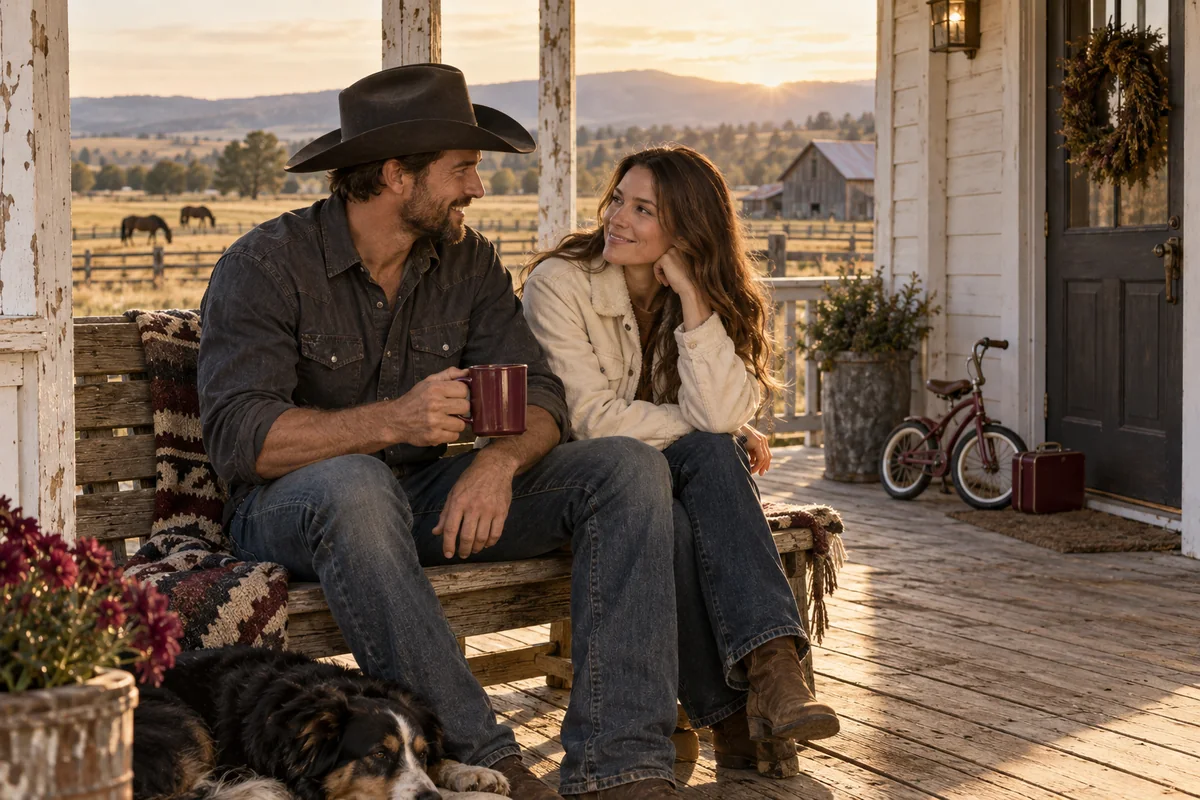
Wild Side is for readers who want a marriage of convenience driven by a child’s place in his community, with a wary heroine and a husband whose work takes him away for weeks at a time. The urgency comes from a guardianship challenge rather than from publicity or money, which makes it a different kind of arrangement from most fake-relationship setups.
A wedding made to keep a child in Rose Hill
The publisher’s description is narrated by a heroine who always dreamed of her wedding day, but not like this, not looking into the eyes of a man she says betrayed her. Listings for the book name her Tabitha. When her nephew’s guardianship is contested, she decides to do whatever it takes to keep him in Rose Hill, even if it means marrying the enemy, Rhys Dupris. Her feelings about him are plainly hostile at the start.
The blurb calls Rhys secretive, broody and completely infuriating. His work takes him away for weeks on end and brings him back covered in bruises he will not talk about. The two barely talk, but when he is not talking, he is staring. The tension between them has always been palpable, and living under the same roof is, in the narrator’s words, a dangerous temptation. She swore she would never forgive him, but that was before she knew the man behind the mask: fierce, protective, gentle and patient. That makes hating her husband much harder.
The description does not name the nephew, explain the court dispute, say what Rhys does during his absences or say how he betrayed her. Those are details the book keeps for itself.
You’re on the list. Your free stories are waiting in the Reader Vault. Where the Summer Holds
Does the arrangement earn a found family?
The question for this book is whether a marriage of convenience can earn the found-family payoff it implies. The setup has the right ingredients: a child whose home is at risk, two adults who have to share a house, and a man whose absences hint at a life she cannot see. In the best version of this trope, practical cooperation turns into a household. The risk is that the payoff arrives faster than the trust, or that the child becomes a device for the couple’s reconciliation.
What the premise gets right is putting a dependent at the center. Tabitha’s motive is not romantic; she is trying to keep her nephew in Rose Hill, which gives her a reason to stay in a situation she might otherwise leave. That makes the shift in her feelings more interesting, because the arrangement matters too much to blow up. A reader will want to see whether the nephew has his own presence in the story, with needs and reactions, or whether he stays a plot reason. That is a fair test for the first chapters.
The bruises and absences set up a second question that has nothing to do with the child: what is behind them. The blurb leaves it a secret, and its description of him as fierce and protective suggests the book wants the answer to change how Tabitha sees him. Whether the secrecy is handled as a plausible reason for distance or as a barrier that only the plot can lift is something only the book can show.
A marriage made for a legal reason also raises a practical question the blurb does not answer: what the two of them have agreed about the marriage itself. Shared homes in this trope often come with unspoken terms about privacy, distance and intimacy, and readers differ on whether they want those terms stated or discovered. In the opening chapters, notice whether Tabitha and Rhys discuss the arrangement plainly or let silence do the work, since that sets the tone for how the relationship will be negotiated later.
Tone, setting and Elsie Silver’s world
Rose Hill is the setting named in the blurb, and the publisher describes the Rose Hill books as set in the same universe as Silver’s Chestnut Springs series. The UK publisher’s page lists the ebook with an on-sale date of 4 March 2025 and a romance genre label, calls the Rose Hill books “four addictive love stories” about the single dads of Rose Hill, and says Wild Side was an instant No. 1 Sunday Times bestseller in the second week of March 2025. Retailer listings describe it as Rose Hill book three, and the publisher’s series list shows Wild Card, Wild Eyes and Wild Love alongside it. Our Wild Eyes review describes the preceding book’s different family situation.
The page does not state a point-of-view structure, a page count or a tone beyond the premise itself. The copy suggests an emotionally charged romance in which proximity does much of the work, with a hero who shows more than he says. That is an inference from the blurb’s details.
What readers praise about Tabitha and Rhys
Readers who love Wild Side often single out the chemistry and banter between Tabitha and Rhys, calling the tension electric and enjoying how teasing turns into affection. Many appreciate the slow burn, with the heat tied to emotional development, and the marriage-of-convenience setup and Rhys’s bond with his nephew are frequent highlights.
Found family is another favorite: reviewers like the community of side characters and the sense of a household forming around the boy. Several say the book moved them to tears with its handling of grief, healing and loss. Tabitha is described as strong, protective and funny, and Rhys as guarded but tender once his walls come down. Listeners praise the two audiobook narrators, and some fans call this their favorite installment in the series.
From Alisson Bento’s books
Marriage of Convenience
A mafia romance about a wedding she did not choose to a man she cannot escape.
Kindle edition · Check Kindle Unlimited availability on Amazon.
Content notes and a caution on the guardianship plot
No author-published content-note list turned up for Wild Side. The description itself points to a contested guardianship, unexplained injuries and a protagonist who is married to a man she says betrayed her. Anything beyond that, including intimate content, the nature of Rhys’s work and the specifics of the legal fight, should be checked against the current edition’s notes, which are the fuller source. The fictional guardianship dispute should not be read as legal guidance about how marriage affects custody.
Who will like it, who may skip it
The best match is readers who like a hostile first judgment eroding through shared routines, a hero whose protectiveness the blurb says she comes to see and a story in which a child’s needs set the stakes. It may be a poor fit if you dislike marriage-of-convenience plots that begin with resentment, if you want the central relationship to start warm, or if you prefer romances with no child at the center. As you start, look for:
- Tabitha’s reasons: whether her dislike of Rhys is specific enough to feel earned.
- The nephew: whether he appears as a person with his own responses.
- Rhys’s absences: how the book builds curiosity without making her passive.
- The court challenge: how clearly the stakes are laid out, since they justify the marriage.
Reading alongside
Jennifer Probst’s The Marriage Bargain is described as following bookshop owner Alexa Maria McKenzie, who tries to save her family home with a love spell and ends up with her best friend’s older brother, billionaire Nicholas Ryan. He needs a wife quickly to inherit his father’s corporation, and offers a one-year marriage in name only with rules against falling in love. It is also a marriage of convenience between people who already have history, but the motive is an inheritance and a business, not a child’s home, and its world is wealthy rather than rural. These are advertised premises only; neither promises the other’s tone or heat.
A caregiving job and a free family story from Alisson Bento
Heartless Cowboy by Alisson Bento follows nanny Kay taking a trial at Iron Heart Ranch with widower Conrad and his son Davy. It connects through caring responsibilities and proximity to a guarded man, but differs through employment and grief rather than Tabitha’s marriage in response to a contested guardianship. Browse the cowboy romance shelf to compare. The free story Where the Summer Holds pairs Ada Mercer and single father Jonah Bell around a workshop and a fair pony halter. It is an original adult M/F story that precedes The Cowboy’s Sunshine, with kisses and closed-door intimacy. Read online; email access opens later chapters.
Sources checked 20–21 October 2026. Reading suggestions compare advertised premises; they promise no matching heat, consent dynamics or endings.