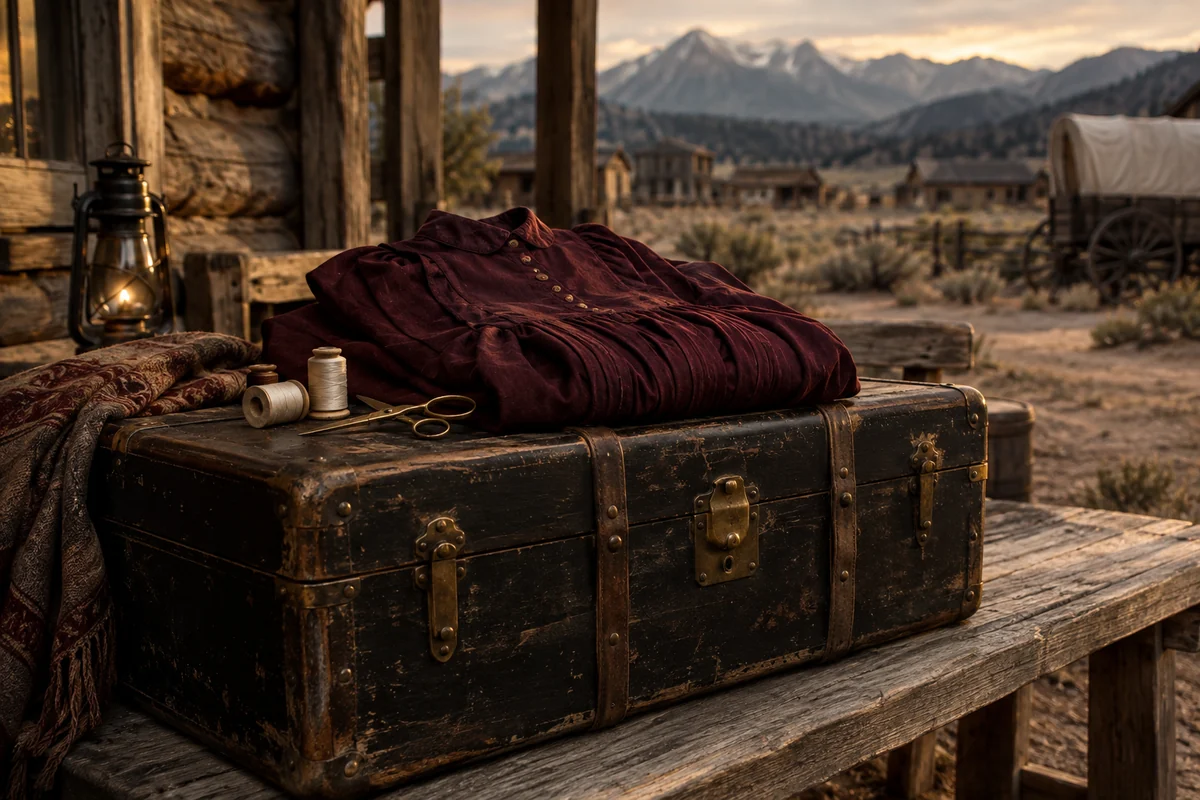
Marriage-advertisement Western romance is especially compelling when arrival reveals a household different from the one the heroine imagined. Alisson Bento’s Wed to the West begins with Willa Greer traveling from Saint Louis after answering an advertisement. The opening sets up a historical Gold Rush polyamory premise and makes the journey’s practical limits part of her first decisions.
The important difference is between agreeing to pursue a possibility and knowing the full arrangement that awaits. A marriage advertisement can offer a reason to travel before the prospective partners have met. Readers may enjoy the uncertainty of that passage from words to people, especially when arrival supplies information that changes the question the heroine thought she was coming to answer.
The opening shows Willa’s journey and discovery, not a complete transcript of the advertisement or the final household agreement. It does not confirm how the legal marriage is ultimately arranged, the eventual romantic outcome, or every relationship among the men. The reading path follows the change in information at arrival and the practical resources available for responding.
The written invitation is only part of the information
Willa reaches Larkspur Bend carrying family keepsakes and too little money for a return ticket. Postmistress Hattie Doss explains that the invitation’s single signature concealed three men: Beckett Carrow, Levi Thorn, and Tate Halloran. They share a mining claim and wrote the proposal together.
That discovery gives the opening a particular shape. Willa has accepted a journey toward a prospective marriage, but she learns something consequential about the proposed household only after traveling. Choose this premise if you like the gap between a written invitation and an encounter in person, especially when the new information requires the heroine to reassess what she agreed to pursue.
The single signature is a particularly useful detail because it governs the scale of Willa’s expectation. Three people wrote the invitation behind it. A reader can understand why the number of prospective partners matters without inventing exact promises the advertisement made. The description shows concealment through the signature, while leaving other wording unquoted.
Hattie provides the explanation at Larkspur Bend, so information reaches Willa through a local intermediary. That gives the first encounter a different shape from the men simply introducing themselves and stating the terms. Readers interested in community knowledge may enjoy the postmistress’s role in making the discrepancy visible before the prospective household is entered.
The mining claim gives the men’s connection an existing practical basis. They are partners in work as well as authors of the invitation. The opening does not describe every domestic responsibility or personal bond among them, but it shows that Willa is approaching an arrangement whose members already share something. That differs from meeting three unrelated suitors in turn.
For a reading choice, ask whether you want the heroine to encounter an established group or watch a group form around new relationships. The description here supports an existing shared claim and jointly written proposal. It does not prove the whole later romantic configuration beyond the stated polyamorous premise, so finer preferences need separate confirmation.
The discovery also changes what an ordinary introduction must do. Willa now needs to learn not only about individuals but about the proposed household. A reader may enjoy the wider set of questions that creates: how decisions are made, what arrangement is proposed, and what expectations differ among the participants. Those are questions to follow in the novel, not facts already supplied by the description.
If long written correspondence is the main pleasure you want, confirm it independently. Answering a marriage advertisement sets up a written invitation, not a book told through letters or an extended exchange before travel. This premise is especially concrete at the point where the invitation becomes an encounter and its concealed scale becomes known.
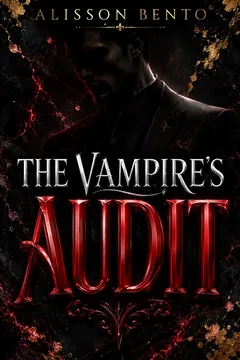
From Alisson Bento’s books
A vampire romance about a slow burn that makes every touch count.
Kindle edition · Check Kindle Unlimited availability on Amazon.
Travel money makes questions urgent
The limited return fare matters because it changes the available choices without answering them. Willa cannot easily treat the arrival as a casual introduction and leave if surprised. The loss of her father’s shop and her own employment has already made the journey urgent. Her circumstances give the advertisement practical appeal before the household is revealed.
A reader can therefore assess two forms of pressure together: what Willa wants to know about the men and what resources she has for acting on that knowledge. This is a useful starting point for readers who want historical courtship to include work, distance, and money as concrete concerns rather than only a picturesque western setting.
Travel gives the new information a cost. Had Willa learned about the three men before leaving Saint Louis, she could have considered it from a familiar place. She instead discovers it after a journey undertaken with limited money. That order makes the surprise consequential without proving that she has no possible response.
Too little money for a return ticket is a specific restriction. It is not the same as a legal inability to leave or a confirmed statement that departure will never be possible. Readers can follow the practical pressure precisely: returning is not an easy immediate fallback. The distinction leaves room for later choices the opening does not settle.
Both her father’s shop and her own job are already gone. The advertisement therefore speaks to a situation made urgent before romance appears. If you enjoy historical courtship tied to earning and household security, this is a real premise detail to consider. Attraction is not the only reason the journey has practical significance.
The keepsakes carry another part of that previous life. Willa does not arrive without history simply because she has moved west. Family objects can keep the past present within a new setting, while the loss of work creates pressure to find a future. The description identifies those keepsakes without listing or assigning invented symbolism to each one.
A reader may be most interested in the outward journey or in the negotiation that begins after it. The opening starts with arrival and its consequences. If you want extensive travel scenes, ask how much the novel follows the route itself. If the threshold of a new household is the attraction, the discovery on arrival directly supports that reading mood.
Distance also affects how a proposal can be reconsidered. A familiar friend can often be approached again without rebuilding a life around the conversation. Willa’s introduction instead joins prospective marriage to relocation. That makes the meaning of the arrangement larger than a single romantic decision, while leaving its eventual terms to be discovered.
Watch a trade become a way of reading the situation
Seamstress experience gives Willa habits rather than a universal solution. The description mentions careful counting and methods learned through her trade. Readers may enjoy a protagonist who brings a practiced form of attention into unfamiliar circumstances. Her work history matters because it shapes how she examines what is proposed, not because it automatically supplies money or certainty.
That distinction is important when choosing a capable historical heroine. You might want practical judgment expressed through questions and observation rather than public confrontation. Willa asks about the marriage of record before following the wagon. The opening makes inquiry itself an action taken at a consequential moment.
The question’s timing matters. She has already traveled, but has not yet followed the men into the proposed household. Readers can locate a threshold at which she seeks more information. That is more precise than describing her as simply cautious throughout the book. It gives you a particular decision scene to test in the sample.
A marriage of record is also different from the complete emotional arrangement. The description confirms that Willa has questions about it, but not which person signs, how rights are structured, or what everyone ultimately agrees. If those details are essential to your preference, ask for a spoiler-light account of the framework without inventing an answer from the number of prospective partners.
You may enjoy a romance where ordinary work remains part of the heroine’s future. In that case, ask whether sewing or other practical contributions continue to matter after arrival. The opening supplies her background and habits of judgment; it does not prove a later business, employment arrangement, or domestic division of labor.
Distinguish surprise from a completed agreement
A proposal changing meaning on arrival does not by itself tell you how the adults handle the change. Readers may want a careful discussion, an emotionally messy adjustment, or a more immediate attraction. The description leaves that development open. Ask about the handling if one version would strongly affect your enjoyment.
Information and resources can change at different speeds. Willa learns something quickly from Hattie, while the money needed to act on an alternative is not instantly available. That mismatch is part of the opening’s tension. You might enjoy seeing a heroine think under material pressure, or prefer a premise with a clearer initial ability to decline and return home.
The stated polyamorous framework also does not answer every configuration question. It identifies the broad premise, while relationships among particular adults and the eventual agreements require further confirmation. If a specific inclusion or absence matters, ask directly rather than treating the single signature or shared claim as proof.
Three prospective partners can make differentiation part of the reading pleasure. You may want distinct priorities and separate conversations, or prefer the household as an ensemble. The description names Beckett, Levi, and Tate but does not supply full personality sketches. A full-book reader can describe how individually the men are developed without revealing the final negotiations.
Choose the kind of Western story around the invitation
The Gold Rush framework gives this example a historical Western context. The description does not state an exact year, so the period should stay at that confirmed level unless other information supplies more. A reader can choose a mining-claim household premise without turning every costume or wagon detail into a precise chronology.
Historical atmosphere and practical constraint are separate pleasures. You might love the sense of entering a new western community, or be most interested in fare, work, and the household’s terms. This opening combines both through a particular arrival. Ask which continues to receive attention if you want more than a picturesque setting.
A marriage-ad journey also differs from an arrangement between known adults. Willa must assess people she has traveled to meet, while an existing acquaintance would bring another kind of prior knowledge. If you prefer discovery alongside the heroine, the unfamiliar household is a useful feature. If established trust is essential, seek a different starting relationship rather than assuming correspondence has supplied it.
For a focused request, try: “Historical Western marriage-advertisement romance where the proposed household changes meaning on arrival. I want travel money and a heroine’s work experience to matter, with room to discuss the arrangement. Please describe the household framework without revealing its final agreement.” Add your preference for individual or ensemble relationship attention.
Within this catalogue, Wed to the West offers that threshold through Willa’s limited fare, the three mining partners behind one signature, and her question before following the wagon. Choose it for the encounter between a written possibility and a practical new life. The future remains something to discover through the story, rather than a promise supplied by the advertisement label.
Read another angle: Librarian-heroines in romance: archives, threatened collections, and a private future · Maritime archaeology romance: expedition work, evidence, and protection at sea · Arranged marriage vs forced marriage romance: read the choices behind the match
Explore the wider romance catalogue. The catalogue groups books by genre and trope; it does not confirm every preference discussed in this guide.