Halloween falls on Saturday 31 October 2026, and the last weeks of October are when many small towns hold their harvest suppers, school fundraisers, pumpkin patches and hayrides. For readers of small-town and cowboy romance, that seasonal schedule is more than decoration. Autumn events pull a whole community into one place, which is exactly where a love story gets tested: who belongs, who talks, and who shows up when something goes wrong. This guide explains why those events work so well on the page and how to choose a seasonal read.
Why autumn events suit small-town romance
A small-town romance depends on a community that notices everything. The diner owner knows the heroine’s usual order, the neighbour remembers the summer she left, and the whole street has an opinion about the newcomer who bought the old feed store. Autumn festivals make that network visible all at once. A dozen characters can share one hayride, one queue for pie or one raffle table, and a single conversation can carry a town’s history, its rivalries and its quiet affection.
Festivals also come with a schedule that the author does not have to invent. The gates open at a set hour, the hayride leaves before dark, and the pie judging finishes before the band starts. Those fixed moments give a scene urgency without extra plot machinery. They also explain why two people end up in the same place. A romance does not need a contrived meeting when the whole town is standing in the same queue for cider.
The season changes the stakes, too. In a city, a turned-down invitation is a private disappointment. In a small town, the same refusal is noticed at the church supper and repeated by Thursday. That visibility is part of the appeal for many readers, because it turns a private feeling into something a community can see, judge and sometimes help with.
You’re on the list. Your free stories are waiting in the Reader Vault. One Night at Silver Creek
Hayrides, pumpkin patches and the logic of the wagon
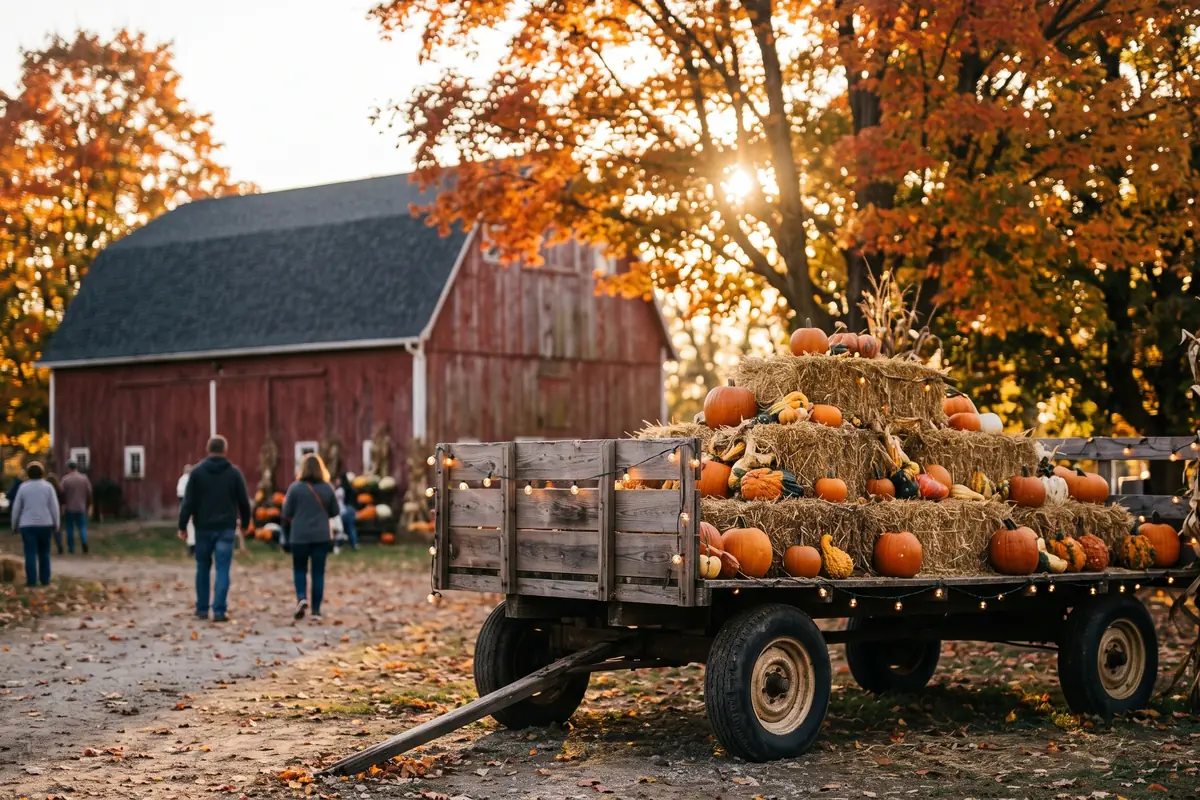
The hayride is probably the most romantic set piece of the season, and it works because of its physical arrangement. A wagon is slow, crowded and open to the sky. Passengers sit close because there is nowhere else to sit, and everyone within earshot can overhear the conversation. A cowboy who offers a hand up onto the bales is performing a small kindness in public, so each gesture carries a second meaning for the people watching from the road.
Writers use that exposure to control pace. A hayride can hold a conversation that would feel forced in a quiet room, because the bumps of the wheels interrupt sentences and the lantern light makes faces hard to read. Scenes of this kind often rely on the pause between two remarks, and a wagon supplies that pause naturally. The reader feels the distance between the characters shrink one bump at a time.
The pumpkin patch is quieter and more practical. It offers rows of heavy gourds, a wheelbarrow that will not steer straight, and a debate over which pumpkin is ripe enough to carry home. Those are working details, and they belong to the characters’ competence. Two people lifting a pumpkin that is too heavy for one of them make a small, honest picture of partnership. The task also gives their hands something to do, so the talk can move from the harvest to a harder subject without an abrupt change of tone.
Cowboy romance adds a second calendar to the first. Autumn is when many ranches gather their herds from the high pasture, sort the cattle and prepare animals for the winter, and that work usually depends on neighbours who arrive with their own horses and trucks. A gather scene can carry the same community energy as a festival, but it asks the characters to cooperate rather than simply attend. Who rides the far fence, who opens the gate and who is trusted with the difficult animal all become small public statements about reputation. For readers who want the season to feel practical as well as pretty, a ranch story set around the gather offers both the sense of place and the sense of obligation that small-town fiction does so well.
Community, gossip and belonging
Gossip in small-town fiction is rarely idle. It tells the reader who has a stake in the outcome and who is watching for a mistake. The woman running the cake stall may be the heroine’s first ally, or the first person to misreport a kiss. The retired farmer judging the pumpkins may remember the hero as a boy and refuse to let him forget it. Each voice gives the reader another way to measure the couple’s progress.
Festivals also show what a town values. Farming communities have marked the end of harvest for as long as there have been harvests, and many autumn events still gather people around a common meal, a common task or a common worry about the weather. When a romance places its hero in the middle of such a gathering, the question is no longer only whether he and the heroine like each other. The question becomes whether he can be trusted by the people she has known all her life.
That makes belonging a useful lens for choosing a book. If you want the community to become a character in its own right, look for recurring side figures who appear across several events, shared tables and rituals that the characters take seriously. If you prefer a tighter focus on two people, look for a book whose town stays in the background and only occasionally intrudes. Both are valid choices, and it helps to know which you want before you start.
Halloween traditions and where they come from
Halloween has more than one root, and the older ones deserve accuracy. Parts of the modern holiday are usually traced to Samhain, the Gaelic festival around 31 October and 1 November that marked the end of the harvest and the start of the darker half of the year. Over centuries those customs met All Hallows’ Eve, the Christian evening before All Saints’ Day. The version most small towns know now, with carved pumpkins, costume contests, apple games and trick-or-treating, grew out of that long mixing.
For a romance writer, that layered history offers atmosphere without needing anything supernatural. A carved pumpkin on a porch, a costume contest in the community hall and a bonfire at the edge of a field all signal the same thing: the normal rules of the street are loosened for one evening. Readers who love folklore can enjoy the older roots as part of the setting, while recognising that the modern celebration belongs to the people who keep it alive in their own towns.
Good seasonal fiction avoids turning local customs into props. If a scene uses a tradition, it should show what that tradition does for the characters: it gathers them, gives them a task, or gives them an excuse to speak. The festival is most convincing when it changes what people do, not when it is simply a pretty backdrop for a kiss.
Three small-town and ranch novels where community shapes the romance
These picks are here for their towns and households rather than for a Halloween plot, so read them as autumn company, not as festival stories. If you want a book where the town is part of the emotional story, start with Sweeter Than Maple. Holly Maple returns from Manhattan to her grandmother’s inn and finds cracked columns, a sagging porch and a kitchen that needs far more than cosmetic repair. Marigold Pratt, her grandmother’s longtime friend, supplies coffee, pie and a firm introduction to Jude Callahan, the only contractor within forty miles. Holly answers the inheritance with a permit binder and a running inventory of work, which makes this a good choice for readers who enjoy restoration projects as much as romance.
The Little Bookstore in Cedar Hollow takes the same idea in a different direction. Charlotte Monroe returns to Cedar Hollow after leaving her job, ending an engagement and losing the grandmother whose letters she left unanswered. Waiting for her is The Reading Nook, the bookstore that anchored her childhood, and an inheritance that asks her to spend a year in the town she has avoided. Eli Hayes, a firefighter and widowed father, has his own connection to the shop and the woman who ran it, so two different kinds of loss meet in one small community. It suits readers who like a bookshop setting and a slow-burn romance.
For a more practical romance, A Farrier for the Cowboy puts work at the centre. Wren Calloway arrives at the Colane ranch to trim and shoe horses, expecting her work to speak for itself. Bridger Colane, dealing with the ranch’s immediate demands, needs another capable pair of hands even if his curt welcome barely admits it; it was his father who arranged the visit. A small child changes the rhythm of the household, and a cattle-sorting problem shows that Wren understands far more than hoof care. Choose it for a single-parent household and a heroine with a skilled trade.
All three are Alisson Bento’s own novels and each is a standalone. Read the blurb and content notes before you buy, because a gentle setting does not always mean a gentle story.
How to choose a seasonal small-town read
Start with the setting you want. If you prefer a festival-heavy town where the neighbours are always within earshot and the mood stays warm, look for a cosy small-town romance. If you want the same community with more emotional weight or heat, look for a contemporary small-town romance with a sharper conflict. Small-town romance vs cozy romance: choose setting, comfort, and heat separately explains how to separate setting, comfort and heat, which helps when a cover promises one thing and the blurb suggests another.
Then check the household. A single parent, a family business or an inheritance will shape the seasonal scenes more than a festival does. A ranch with children has different autumn chores from a shop run by a grieving owner, and both differ from a romance about two strangers who meet by chance at a fair. Single-dad cowboy romance: finding love inside a full family life covers how single-dad cowboy stories balance work and family life, which can help you judge whether a book’s pace suits your own schedule.
Finally, read the content notes. Small-town romances often sound gentle, but grief, illness, financial strain and workplace conflict can sit close to the festival lights. Choose books whose warnings you are comfortable with, and treat the autumn setting as a reason to slow down rather than a guarantee of a light read.
Quick answers
Do small-town Halloween romances always include a costume party?
No. A festival, hayride or pumpkin patch can carry the same warmth without costumes, and many small-town stories keep the season in the background. Judge the book by its setting and blurb rather than by a theme event.
Do I need to read a series before a seasonal small-town book?
Not for the three named here: each is a standalone, so you can start with whichever setting appeals most. For other books, check the listing for a series name and number before you begin.
What should I check first in a small-town romance?
Start with the setting, then the household, then the content notes. Those three checks show whether a book’s pace, emotional weight and atmosphere will suit you before you spend an evening on it.