Choose a wildfire cowboy why-choose romance when animal peril is part of the suspense you want to feel. In Three Cowboys, One Way Home, eight horses depend on transport while an independent hauler is trying to understand what returning to one ranch could mean. The reading choice is unusually specific: do you want the fear attached to living animals, the pressures of a business that travels, and attraction that has already spent months finding its way into ordinary work?
Tess Morrow is twenty-nine and owns her hauling business. She knows Rafe Caldwell, Eli Navarro and Jon Mercer before the wildfire forces the premise’s urgent journey. She wants all three men, but she also wants paid work away from Juniper Draw. The story promises an original adult why-choose quartet and a complete relationship arc. Its kisses and sensual tension lead to later intimacy off page, without graphic sexual detail.
Decide whether animal peril belongs in tonight’s reading
A horse-centered emergency can create a different reading experience from danger that falls only on the romantic adults. The animals cannot explain what they understand or agree to the risks. A reader may therefore stay anxious about a mare in the background even while enjoying a flirtatious exchange in the foreground. If that divided attention sounds absorbing, the premise gives you a clear reason to try it.
If animal peril is a firm limit, the same feature is a reason to seek a specific content note before choosing. A complete romantic ending does not by itself describe every animal’s experience along the way. Nor does non-graphic intimacy make the suspense mild. Ask about the material that matters to you without requesting the entire escape or final household arrangement.
The opening supplies warmth before its threat becomes immediate. Junebug has opinions, Tess is distracted by desire, and a delay can still be funny. That mixture suits a reader who wants familiar daily life placed under pressure. It offers a different mood from relentless catastrophe, where every conversation arrives after the characters have already lost the possibility of an ordinary afternoon.
You’re on the list. Your free stories are waiting in the Reader Vault. Three Cowboys, One Way Home
Junebug begins as a horse, not as a suspense counter
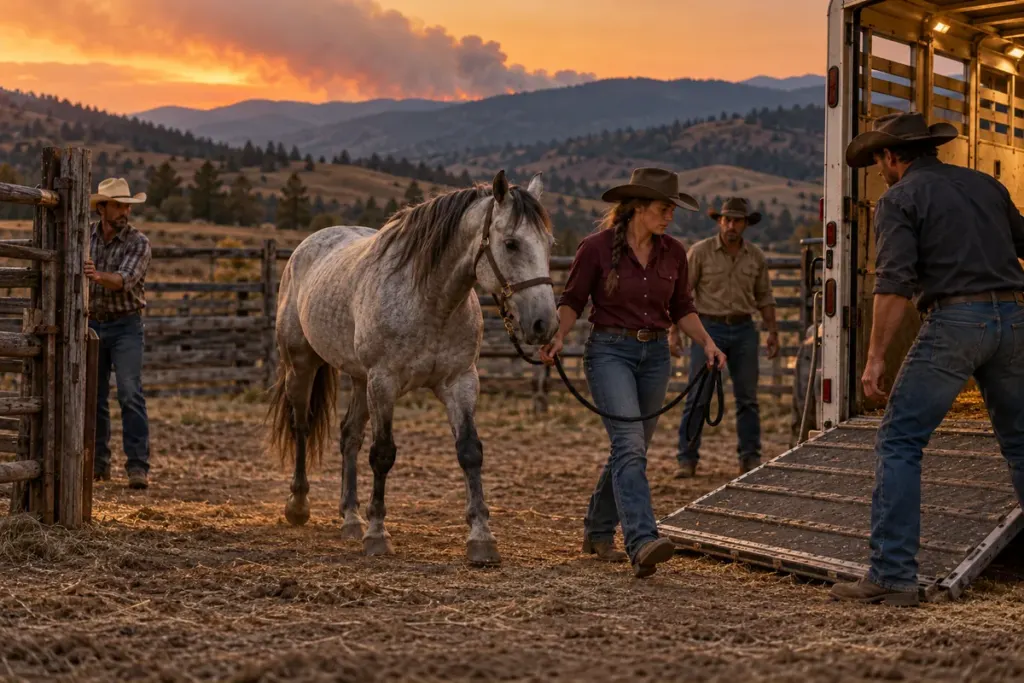
The opening of Three Cowboys, One Way Home starts with Tess’s gray gelding declining to advance into a trailer. She has a schedule; Junebug has found a reason to distrust the invitation. The scene is comic, but the comedy depends on the animal having a response that matters. Tess cannot complete the moment merely by announcing that she is busy.
A folded edge of mat changes the encounter. Eli notices it, and Junebug’s behavior becomes intelligible in another way. For reading purposes, the interesting turn is from apparent stubbornness to an overlooked detail in a familiar task. The episode gives the horse an immediate presence before the larger premise asks the reader to worry about eight animals. This is close reading of a fictional scene, not a loading demonstration or a method to copy.
Junebug also belongs to Tess’s working plan. She brought him because she expected him to help demonstrate calm loading, an expectation he has just complicated. That detail prevents him from becoming an interchangeable pet attached to a heroine for sympathy. He participates in her livelihood, and she knows him well enough to be irritated, amused and affectionate in the same short encounter.
Later in the opening, he breathes into her hair while she is thinking about the men and her next trip. The gesture has no strategic importance. It lets the animal remain part of a private pause. If you want horses to matter beyond the size of a transport problem, these ordinary moments are useful evidence. You have met one before being asked to follow a number.
Four months have already changed an ordinary visit
Tess has spent four months accepting coffee, working nearby and staying longer in the kitchen than the job strictly requires. Her attraction therefore has a history of repeated afternoons. The wildfire does not introduce three strangers and ask the reader to accept an immediate bond. It interrupts a pattern Tess has been enjoying while trying to avoid naming it.
Jon’s biscuit joke belongs to that familiarity. He can make a complaint about his own missing treat while Junebug delays the work, and Tess hears the flirtation without needing it explained. Later, when she worries that she has made things awkward, his surprise changes the scene. The man who has been joking does not accept her assumption that her interest is an embarrassment. That shift matters more here than assigning him a permanent role as the funny partner.
Rafe has already argued with Tess about working decisions, including a client’s discount. She remembers those disagreements while noticing how much she wants him. This is a useful detail for a reader interested in an established business owner: their history includes different judgments about the cost of work. Attraction has developed alongside conversations that neither person could replace with a flattering speech about capable women.
Eli’s later question concerns whether Tess will come back after her booked run. She initially answers as though he were asking about mileage. The reader can recognize a habit formed over weeks: she has been using the vocabulary of her business to avoid hearing an increasingly personal invitation. The exchange gives the opening a different tension from a first meeting. The adults have to change how they interpret words they have already been using.
An invoice asks a different question from a place at supper
Tess’s current contract is limited work at the ranch, with a client journey beyond it. She also has a longer run booked for the following week. That upcoming job means good money, several nights away and customers she knows how to deal with. Leaving is a professional future she wants, not simply an empty direction supplied so the romance can call her back.
The complication is that the same booking also gives her distance from three men who make ordinary kindness difficult to ignore. Tess recognizes both motives. She can want the work and feel relieved that it takes her away from a frightening conversation. This is a particularly useful distinction if you enjoy mobile working heroines: a real ambition can become convenient emotional cover without ceasing to be real.
That makes the central place question more precise than whether a woman should give up independence for love. Tess already has a life made of departures and returns. Her vehicle and bookings connect places rather than tying her to a single property. A romance built around that life can make returning meaningful without assuming that all worthwhile work must eventually happen beside one ranch house.
Compare two reading moods. In one, a heroine arrives hoping to exchange an exhausting life on the road for permanent residence. In another, she enjoys her business and wants to discover whether affection can have a place inside it. Both are plausible fictional desires, but Tess’s opening gives specific support to the second question. Her later choices remain for the story to disclose.
The existing guide to shared land and separate relationships in cowboy why-choose considers winter employment and temporary ranch assignments. Here, follow the difference between being paid to visit Juniper Draw and wanting to return when there is no invoice to explain it. The ranch is already familiar; the unsettled issue is what another visit would mean.
Read the eight names beside the two working vehicles
Eight horses and two rigs give the premise an immediate scale. The opening then names the animals rather than leaving them as a total: Junebug, Aster, Copper and the others each occupy the same threatened afternoon. Tess notices differences among them, including age, nerves and confidence. The passage does not turn eight into an abstract obstacle that disappears when a vehicle becomes available.
For a reader, this creates a sustained kind of attention. A number can be counted once; named living responsibilities remain in the imagination. The suspense can therefore continue during a pause in conversation or a change of focus. If you prefer danger concentrated entirely on the romantic protagonists, this wider field of concern may feel more demanding than the cowboy label alone suggests.
Tess also carries a memory of an earlier journey when a sick mare had to wait while the adults struggled to get away from a locked gate. The opening links that remembered delay to what she notices now. This gives animal peril a personal history without requiring a new threat in every scene. A reader who shares her sensitivity to something living being kept waiting may feel tension before anyone raises a voice. The suspense can come from time passing around an animal’s need, rather than only from a dramatic confrontation.
Other owners matter, too. Jon’s conversation with an absent owner gives someone outside the quartet a stake in what is happening. Tess wants more than a general reassurance passed along. The narrative effect is to let responsibility travel beyond the ranch’s fences: people who are not present are still waiting for news about an animal they care about.
These details also change the appeal of Tess’s occupation. Hauling is not merely a way to give the heroine a truck and an attractive destination. Her work connects a person, an animal and somewhere else they need to be. Under the wildfire premise, that familiar connection acquires urgency. The reader’s interest can lie in what the business now means emotionally, without treating the fiction as real transport or emergency guidance.
The smoke reaches an afternoon that was already full
Smoke is visible while the adults are still working and flirting. Tess notices it beyond the ridge before the day becomes the emergency promised by the description. That placement matters to pacing. The reader gets a sense of what could have happened without the interruption: a completed job, an awkward conversation, perhaps supper and another excuse to linger.
When the smell changes, the sun is still shining and Junebug is still drinking. The ordinary world has not vanished, yet its details acquire another meaning. A joke stops. A conversation that might have waited becomes vulnerable to delay. The suspense comes partly from watching an afternoon turn, rather than beginning inside a disaster where every character has already adopted an emergency role.
Choose that rhythm if you like looming danger making familiar scenes feel temporary. If your preferred suspense begins at full speed, you may want a more immediate opening. Neither preference requires a judgment about how a real fire should develop. The question is how long you want to know the daily world before the story threatens it, and whether those earlier minutes deepen your attachment.
Coming back becomes a personal question before anyone says home
Eli’s question about the next run begins with a route Tess can correct: east first, then north. When she answers in terms of bookings, he asks again in personal terms. Work will exist whether she returns or not; he wants her company because he misses her. That exchange removes the useful excuse that another visit would only be about a customer needing a hauler.
Tess does not answer by canceling the job on her phone. She puts the phone away without letting either the booking or her urge to escape decide everything. The small action holds two futures open long enough for her to think. Readers who dislike a career opportunity conveniently disappearing may find that moment more persuasive than an early speech about keeping her business.
The supper invitation approaches from another direction. Rafe initially phrases it as though attendance were settled. Tess questions the wording, and he calls it a badly expressed invitation. The moment belongs to a man she knows in the role of ranch manager, with a day of work still around them. He has to change the meaning of his sentence, not simply make it sound more romantic.
Jon enters after finishing the owner calls, and the invitation becomes explicitly from all three. Tess’s answer is a question about food. In this scene, appetite, embarrassment and wanting can coexist without a formal declaration explaining the entire future. The men have not offered identical speeches in turn. A question about a return journey, a corrected invitation and a shared meal move the afternoon toward something Tess can no longer describe only as work.
Keep the quartet promise clear and the suspense choice specific
This is why-choose romance: Tess’s continuing romantic promise includes all three men. They share a house and a long friendship; the opening explicitly says they are not brothers. It does not establish whether the men have romantic or sexual bonds with one another, so a firm preference about male-male intimacy needs a separate relationship note. Group size does not establish explicitness; the stated band is kisses, sensual tension and later off-page intimacy.
For your own decision, name what would hold your attention during a quiet chapter. Perhaps it is knowing the horses remain present, hearing Tess consider the next paying journey, or watching a familiar visit become something she wants to choose again. Those wishes identify this premise more clearly than asking for three protective cowboys. The fire supplies urgency to a working life and a set of desires that were already there.
Follow a different question when the horses are not the draw
If what interests you is uncertain information changing an urgent decision, the related article on why-choose storm-rescue romance with an expert heroine follows a different pressure. Tess’s premise instead invites sustained concern for animals and the meaning of a hauler’s return. Choose between those sources of suspense rather than treating every rescue setting as the same experience.
For a place assessed through loyalty and professional judgment, working-class why-choose homecoming romance considers a returning heroine and a working place she cannot preserve through affection alone. Tess is already making repeated visits through her business. Her uncertainty concerns the personal reason to come back after a departure she still wants.
Three Cowboys, One Way Home is an exact companion prequel to Her Three Cowboys. Tess and the men are an original adult quartet in the county-rodeo and foothill world, four years earlier. The paid book follows a different heroine and three protective men; the Wild Hearts Ranch collection does not make Tess’s story the earlier romantic history of those leads.
Explore Tess’s story for named horses, paid journeys and an invitation that means more than another job. Read the opening free in your browser, then confirm your email to continue the story. Browse the free-story collection for other moods if animal peril is not the suspense you want tonight.