Start with The Duke and I and follow the eight main novels through On the Way to the Wedding. That is the clearest first-reading route into Julia Quinn’s Bridgerton family. The Rokesby prequels, second epilogues and other companion titles are separate choices; a catalogue containing more than eight Bridgerton-related books does not mean you have missed several siblings’ novels.
Keep the television sequence alongside your reading list rather than using it to number the books. Colin and Penelope provide the simplest demonstration: their novel is fourth, although their relationship leads the third television season. This guide uses original English book titles as identifiers. A translated edition may have a different published title, so match the couple and series position as well as the wording on the cover.
The eight Bridgerton novels in the official order
Julia Quinn’s official reading-order answer gives this sequence. Use the couple names beside each title to find the story you want, especially when a new cover looks unfamiliar.
- The Duke and I — Daphne Bridgerton and Simon Basset.
- The Viscount Who Loved Me — Anthony Bridgerton and Kate Sheffield.
- An Offer from a Gentleman — Benedict Bridgerton and Sophie Beckett.
- Romancing Mister Bridgerton — Colin Bridgerton and Penelope Featherington.
- To Sir Phillip, With Love — Eloise Bridgerton and Phillip Crane.
- When He Was Wicked — Francesca Bridgerton and Michael Stirling.
- It’s In His Kiss — Hyacinth Bridgerton and Gareth St. Clair.
- On the Way to the Wedding — Gregory Bridgerton and Lucy Abernathy.
The siblings’ alphabetical names are useful for remembering the family, but not for sorting the novels. Daphne comes before Anthony in the reading sequence; Hyacinth comes before Gregory. Reading Anthony first because he is the eldest, or Gregory seventh because his initial precedes Hyacinth’s, creates a different route from the official eight-book list.
The list also gives you a stable reference when covers change. A photograph from the adaptation, a decorative hardback and an older paperback can all represent the same numbered novel. Count stories, not cover designs. If your shelf contains two editions of the fourth book, you still have one of the eight main stories represented twice.
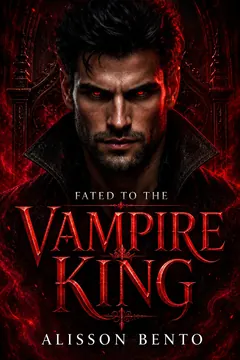
From Alisson Bento’s books
A vampire romance about a captive bargain that turns into the only place she wants to be.
Kindle edition · Check Kindle Unlimited availability on Amazon.
What changes as you move through the main sequence
Books one and two: two different public courtships
The description of The Duke and I establishes a pretend courtship between Daphne and Simon. Use that premise to decide whether you want to enter through a deliberately staged social performance. For a first read, this starting point also lets you meet the family through the story placed first, without asking an adaptation to supply all the connections for you.
The next novel changes the romantic question. In The Viscount Who Loved Me, Anthony’s marriage plans encounter Kate’s opposition. Comparing these starting situations is more useful than assuming that a shared ballroom setting makes them interchangeable. One begins with a cooperative arrangement; the other gives you an obstacle inside a prospective courtship. If Daphne’s premise is not your preferred dynamic, Anthony’s can still be a reason to continue rather than abandoning the whole family after one book.
Books three and four: recognition takes different forms
An Offer from a Gentleman links Benedict and Sophie through a masquerade and a difference in social position. Its fairy-tale-shaped starting point offers a different selection criterion from birth order: are you drawn to the gap between a magical encounter and the practical conditions of someone’s life? That is the question to carry into a sample, rather than expecting every detail remembered from the screen to arrive in the same place.
In Romancing Mister Bridgerton, Penelope’s long attachment to Colin changes the point of entry again. Put the third and fourth novels next to one another when choosing a reread: Benedict’s starting situation turns on an extraordinary encounter; Colin’s involves someone already familiar. Neither distinction is a quality ranking. It helps identify whether your current interest lies in discovering a person or reconsidering a person who has been nearby.
Books five and six: leave room for a change of emphasis
To Sir Phillip, With Love begins from correspondence between Eloise and Phillip before they meet. That makes it a useful contrast with Daphne’s public arrangement. An impression built through letters has to encounter an actual person. A reader choosing specifically for an exchange of letters should go to this fifth novel rather than expecting the family name alone to guarantee that device throughout the sequence.
When He Was Wicked centres Francesca and Michael, whose attachment is complicated by her connection to his cousin. For selection purposes, distinguish this premise from the earlier pretend-courtship and masquerade routes. You are choosing a different relational starting point, not simply a new name in the same plot. Keep the novel’s own description close if you have particular subjects you need to assess; a position on a reading list cannot replace that decision.
Books seven and eight: the last two siblings are easy to reverse
In It’s In His Kiss, an Italian diary brings Hyacinth and Gareth into a shared task. That provides a concrete reason to choose this volume for a reread: you want a relationship with a text to decipher together. It is still book seven, even though Hyacinth is the youngest sibling. The diary is part of this novel’s premise, not a separate companion you need to locate before starting.
On the Way to the Wedding pairs Gregory with Lucy in a situation involving his initial interest in her friend. It closes the numbered sequence at eight. If you are collecting only the sibling novels, this is the last title to tick off. If you want to revisit their later lives, that is when the next category becomes useful. Finishing eight main novels and deciding to stop is also a complete, coherent reading project.
Where the second epilogues fit
The Bridgertons: Happily Ever After gathers eight second epilogues and Violet’s story, Violet in Bloom. Treat it as later material about an established family. It is not a ninth sibling’s courtship, and the extra story about Violet should not be mistaken for another full-length novel in the original sequence.
For a first pass, reserve the collection until after book eight. We recommend waiting because the later-life material is more inviting once you know the couples, and it keeps those glimpses of their futures away from your first introductions. On a reread, you might prefer to follow a particular couple’s novel with its corresponding second epilogue, because you are deliberately returning to that relationship rather than protecting every first discovery.
Distinguish an ordinary epilogue inside a novel from a second epilogue. The presence of an epilogue heading at the back is not, on its own, evidence that you already own the later additional text. Conversely, do not buy a collection solely because you assume your editions contain none of its contents. Check the exact contents page and any publisher note about bonus material. Your task is to identify texts, not accumulate versions of the same text.
For example, imagine that you own Daphne’s novel in print and discover a separate ebook labelled as her second epilogue. Before adding it, check whether the print edition already identifies that additional piece. Then decide whether you want just Daphne’s continuation or the wider collection including Violet. Check which formats your local bookseller or library actually offers before deciding. A quick look at your own contents page can save you from buying the same extra twice.
The four Rokesby prequels form their own sequence
The official Rokesby page places these stories in the late eighteenth century, a generation before the familiar siblings. Their order is:
- Because of Miss Bridgerton — Billie and George.
- The Girl with the Make-Believe Husband — Cecilia and Edward.
- The Other Miss Bridgerton — Poppy and Andrew.
- First Comes Scandal — Georgiana and Nicholas.
There are two practical ways to use this branch. For a newcomer attracted by Daphne, Anthony or another sibling, keep the main eight together and visit the Rokesbys afterward. You reach the people who prompted your interest immediately. For a reader deliberately interested in the earlier generation, begin with the four prequels in their own order, then move to The Duke and I. You are choosing an earlier family setting, not unlocking a compulsory preliminary course.
Avoid alternating the two sequences simply because both contain Bridgertons. Four prequels followed by eight main novels is a clear project; weaving them between individual sibling novels creates extra switching without following the official numbered lists. It also becomes harder to remember which next book belongs to which family branch. Keep two headings on your list if you want both.
The period distinction matters too. Earlier-generation stories in the late 1700s should not all be labelled Regency simply because they are connected with the adaptation’s brand. If the historical setting is your main attraction, the guide to choosing a historical-romance era offers a broader way to choose the social world you want next.
Queen Charlotte belongs on a separate screen-related branch
Queen Charlotte is a novel by Julia Quinn and Shonda Rhimes inspired by Queen Charlotte: A Bridgerton Story. It is connected with the screen world. That identity matters more for placement than the fact that its premise reaches an earlier date.
If your aim is the original eight siblings, you can leave this branch for another reading project. If Charlotte brought you to the books, choose her novel knowingly, then start the sibling sequence at The Duke and I when you want that project. Placing Queen Charlotte before every other title by date would mix two different organising ideas: the original novel sequence and a screen-related expansion.
This distinction also makes discussions clearer. A book-club member saying they have read “the Bridgerton prequel” might mean Charlotte’s story or the Rokesby sequence. Ask for the title before agreeing on the next meeting’s book. The difference is not an obscure bibliographical detail when it determines which characters everyone will be discussing.
Other companion books answer different wishes
The Wit and Wisdom of Bridgerton is a character-centred quotation collection with Lady Whistledown introductions. Choose it for revisiting voices and favourite characters, rather than for the next continuous courtship. Since collected quotations can come from across a series, leaving a keepsake like this until after the novels is a reasonable way to preserve discoveries.
Miss Butterworth and the Mad Baron is a graphic novel growing out of a fictional book within Quinn’s stories. Its format and function differ from a sibling novel. Reading It’s In His Kiss first gives you one point of connection; the graphic novel is still an optional excursion, not a missing part of Hyacinth’s numbered book.
The Lady Whistledown anthologies are another category. The Further Observations of Lady Whistledown includes Quinn’s 36 Valentines; Lady Whistledown Strikes Back includes her The First Kiss. They are collaborative anthologies, not two more single-author sibling novels. If choosing between them and the second epilogues, ask whether you want other short romances or later material about the eight-book family.
You do not need to assign every companion a decimal number. A separate “afterward, if interested” section communicates the choice more honestly than a long sequence that makes a quotation book look as compulsory as the next novel. That keeps collecting, exploring a connected world and following the sibling romances from becoming one enormous obligation.
Books, television seasons and editions: keep three lists apart
Netflix’s announcement about Colin and Penelope explicitly identifies their third-season story with the fourth novel. Keep that difference in mind when you come from the screen to the page: choose by the couple you want to follow, then use the novel’s number to locate it.
Suppose, hypothetically, you finish watching their season and want to read Benedict next. Find Benedict by his name and An Offer from a Gentleman, book three. Do not search for “the next number after season three” and assume book four will supply an unread relationship. Alternatively, if you want to begin reading from the start, return to Daphne even when you already recognise her from television. Your reading goal determines the route.
For translated copies, use a small matching note: original title, couple, position, edition language. The original titles here are identifiers, not instructions to read in English or literal proposed translations. A local publisher’s catalogue should establish the actual translated title. This is especially useful when a family name dominates the jacket and the individual subtitle receives less space.
Bundles deserve the same attention. A volume number on an omnibus counts packages, which can differ from novel numbers. Open its contents and compare individual titles with the eight-book list before assuming “volume two” is Anthony’s story. For broader collection planning, the romance-series reading-order guide explains how shared worlds and continuing relationships create different sequencing decisions.
Choose the next book for the project you actually want
For a first full visit to the siblings, take the eight novels in order and put Happily Ever After afterward. For an earlier-generation project, take the four Rokesbys in order before turning to Daphne. For a favourite-couple reread, use the couple names above to find the right novel and examine any second-epilogue overlap before adding more material. These are three useful projects, not three levels of reader commitment.
If what you want next is another social setting rather than more Bridgerton material, compare the Regency-romance entry routes. You can also browse Alisson Bento’s romance catalogue for a different reading direction. The useful stopping point is a book you want to open, with a clear idea of its place: main novel, prequel, later epilogue or optional companion.