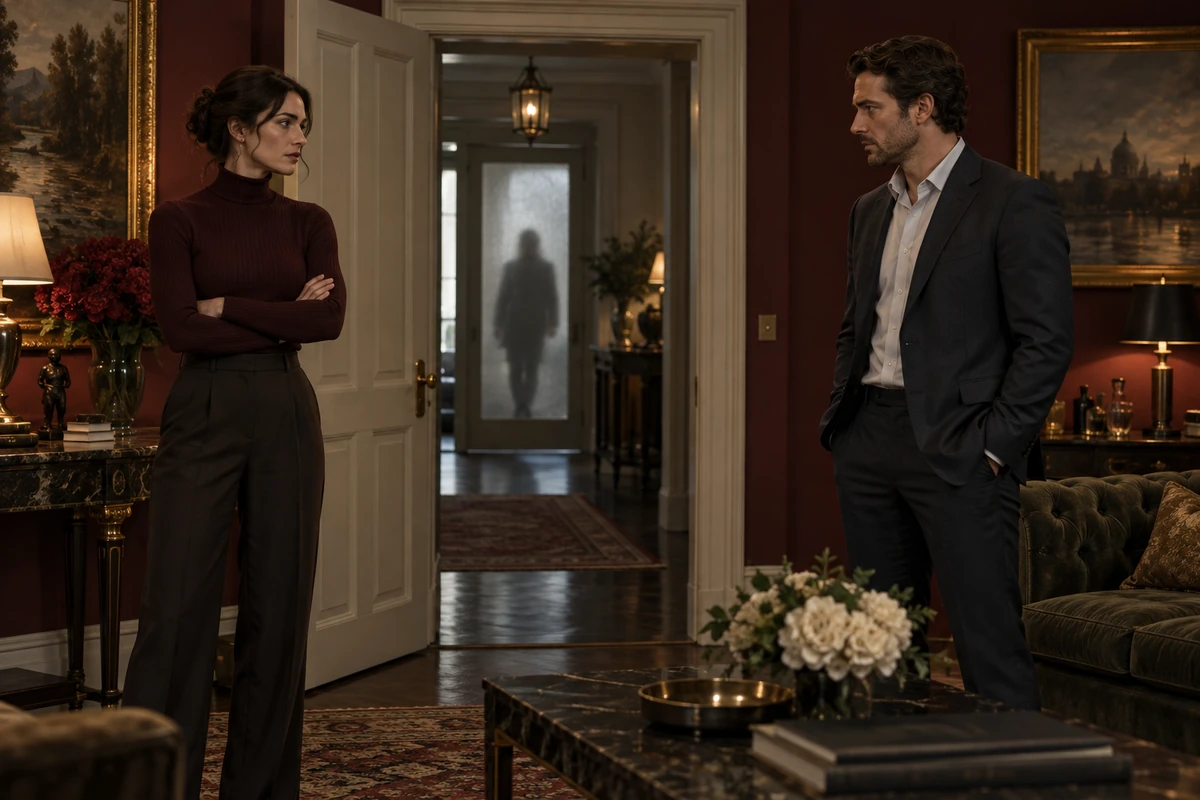
The new academic year and the first cool evenings bring dark academia back into view: libraries lit by lamplight, old stone buildings, ambitious students and professors whose kindness is never quite simple. The mood is especially at home in autumn, when readers are already thinking about term papers, reading lists and the feeling that a campus holds secrets. This guide explains what dark academia means as an aesthetic and a story mood, how it combines with romance, and what to check about power between students and staff before you start a campus novel.
What dark academia means in a story
Dark academia is a name that spread through online aesthetic communities, but the mood it describes is much older. Its ingredients are familiar: scholarship as a vocation, Gothic architecture, rare books, classical reading, rivalry for a prize or a place, and a sense that the institution knows more than it says. Mary Shelley’s Frankenstein, published in 1818, sends Victor Frankenstein to the university at Ingolstadt, where his ambition runs ahead of his judgement. Oscar Wilde’s The Picture of Dorian Gray, which appeared in 1890, turns a cultured young man’s private excesses into a secret that corrodes everything around him. Both stories tie knowledge or refined taste to a hidden moral cost, and dark academia keeps returning to that combination.
In romance, the mood usually arrives with a few specific features. The campus is a closed world with its own rules, traditions and gatekeepers. The heroine is often clever and observant, drawn to research, archives or a subject that rewards careful reading. A secret, a society or a family history sits beneath the routine, and the romance grows alongside the question of what is really going on. Readers who love the atmosphere tend to care less about the actual course catalogue and more about how a place makes people behave.
You’re on the list. Your free stories are waiting in the Reader Vault. Every Letter a Sin
Why the campus makes an ideal secret
A university works as a setting for suspense because it is both public and sealed. Anyone can walk the grounds, but the rooms that matter, such as the archive, the lab or the crypt, have restricted access and their own codes. Students learn to read the institution’s signals: who gets the best office, who is allowed to stay late and whose name appears on the plaque. Romance writers use that knowledge to make a single unexplained detail feel significant.
This is also why secret-protector and reverse harem stories fit the genre so well. A campus can gather several strong personalities into a small space, each with a different relationship to the heroine’s safety or her secret. The academic setting provides a reason for them to be around her, whether through classes, research projects or shared residences, and it gives the reader a natural rhythm of lectures, seminars and late-night work in which the tension can build.
How dark academia romance works in practice
The Ivy League Obsession shows the form at its most intimate. Maren Ashby is a genetics student whose research demands careful claims, and she carries a silver ring engraved by her dead father. The story begins with small disturbances: a recurring dream, a warning from a professor who knew her father, and a man at the back of a bioethics lecture who looks at her with a familiarity she cannot explain. The academic subject is not decoration. That lecture is about consent and coercion, and Maren’s habit of close reading makes her notice when people withhold information.
Sins of the Sodality takes the mood beyond the university and into a cathedral art archive. Clara, an art specialist, notices that a transfer manifest contradicts the holdings record for a painting of Saint Bartholomew, and her expertise turns a deliberate relabelling into a dangerous discovery. The story is built on a heroine who reads religious imagery as evidence, and its gothic secret society gives the scholarly mood a religious and historical weight. It is the kind of book readers pick for the sense of a hidden order, with a heroine who refuses to let a false attribution stand.
The Evidence of You is quieter. Mara Sinclair arrives at a university with a journalism fellowship, a recorder and the habit of keeping a second backup. The opening is built from observation: someone watching her mother unload the car, a prepared name on a mailbox, a lit window across a narrow gap. Mara records these details without pretending they are answers. For readers who enjoy a heroine whose intelligence is visible in how she notices things, the slow accumulation of small clues is the pleasure.
Rivalry, ambition and the price of knowledge
Much of the genre’s energy comes from competition. Scholarships, fellowships, lab positions and prizes give characters something to fight over, and the romance often begins when two people who should be rivals discover that their goals overlap. Here dark academia borrows from enemies-to-lovers stories: the tension between competitors gives the romance a sharp edge, and the heroine’s ambition becomes part of her attraction rather than a distraction from it.
The moral question sits underneath. Academic life rewards people who find things out, and some characters will bend rules to do it. A dark academia story asks what knowledge costs and who pays for it. An archivist who hides an inconvenient record, a researcher who states a claim with more confidence than the data allows, or a student who trades loyalty for a place in a society each show a different price. Readers who enjoy this theme tend to appreciate heroines who weigh that price aloud, and who refuse to let a convenient answer end the investigation.
Rivalry works best when it has rules. A rival who is simply rude is tiring, but a rival whose ambition is visible and whose methods are questionable can make a story memorable. Look for a romance in which the characters respect each other’s intelligence before they trust each other’s hearts. That respect is often the bridge between competition and attraction.
Power between students and staff: what to check
Dark academia is often at its most unsettling when it treats the institution’s authority as glamorous. A professor who controls grades, funding or references holds real power over a student, and romance stories sometimes use that power to create heat rather than to examine it. Readers who care about consent should look at that dynamic before they begin, and the check is simple. Ask whether the story acknowledges the imbalance, and whether either person can still say no without risking a grade, a reference or a place on the course.
Look for signs in the blurb and the content notes. Does a character hold authority over the heroine’s academic future? Is the power difference treated as a problem, a risk or a source of tension that the characters must navigate honestly? Does the heroine have the freedom to refuse, to report and to seek help outside the institution? A story can be intense and still treat those questions seriously. A story that presents the imbalance as romantic without consequence is one to approach with caution.
The romances discussed here are about adults, and a well-made dark academia romance usually finds its tension in rivalry, secrets and loyalty rather than in a teacher’s hold over a student. If a book’s description leans heavily on authority over a student’s future, read the content notes before you commit, and check whether the story gives the heroine real choices.
Choosing dark academia by the kind of secret you want
Dark academia covers several kinds of mystery, and the type of secret you enjoy is the best guide. A research mystery focuses on data, labs and suspicious results. An art or archive mystery follows records, provenance and visual clues. A secret-society mystery emphasises rituals, loyalty and a hidden order. A surveillance story builds tension from being watched on campus and not knowing by whom.
- Research and science: careful claims, unexplained lab hours and a heroine who trusts evidence over reputation.
- Art and archives: provenance, catalogue records and a painting that tells more than its label.
- Secret societies: ceremonies, loyalty tests and a group whose rules shape every romantic choice.
- Surveillance and fellowships: small signs of attention, a heroine who records them and a campus that feels both open and watched.
If you are unsure which type appeals to you, Dark romance content warnings without major spoilers: a practical reading check explains how to check content warnings without spoilers, and Dark romance heroine agency: choices that matter beside a powerful hero looks at heroine agency in dark romance, which matters a great deal in academic settings where the heroine’s own choices can be overshadowed by institutional power.
Atmosphere that carries real substance
The best dark academia romances use setting as evidence rather than wallpaper. A cathedral archive, a locked laboratory and a hall full of portraits can each shape the plot: who can enter, who is watching and what can be proved. When you choose a book, look for settings that serve the story. A campus described only through candles and autumn leaves may be pleasant, but it will not satisfy a reader who wants the mystery to carry weight. A setting that restricts access, creates routines and hides records gives the characters problems to solve.
Pacing matters too. Dark academia often unfolds across a term, so the rhythm of seminars, deadlines and holidays provides natural structure. Readers who prefer a slow build will enjoy stories that let the mystery develop through repeated encounters in the same places. Readers who want faster momentum should look for novels that move from a discovery to a confrontation within a few chapters, even if the campus remains the backdrop.
Quick answers for dark academia readers
Is dark academia the same as a college romance?
No. A college romance usually focuses on young adults discovering love at university, often with a lighter tone. Dark academia adds a mood of secrecy, intellectual ambition and moral risk, and its campuses often hide institutions with their own unsettling rules.
Which kind of dark academia should I start with?
Start with the mystery you find most absorbing. If you like evidence and careful reasoning, begin with a research or archive story. If you prefer ceremony and loyalty, look for a secret society. A first book that matches your favourite kind of clue will tell you quickly whether the wider genre suits your reading habits.
Do I need to know classical literature to enjoy it?
No. Familiarity with the period helps readers enjoy the atmosphere, but the stories carry their own clues. A curious reader can follow the mystery without any background, and a reference to an old text is usually explained in the story itself.
How can I tell if a campus romance treats power responsibly?
Read the blurb and the content notes for references to grades, funding or professional authority. Then check whether the story acknowledges the imbalance and gives the heroine real options to refuse or seek help. Those signals usually show the book’s attitude before you start reading. If a blurb skips the question entirely, that silence is worth noticing, and a sample chapter can tell you more about the tone than the description does.