Debt-bargain cowboy romance is easier to choose when the financial pressure has a specific object: land, water, work, or shelter. Start with what someone can lose and what the proposed agreement changes. An emotional obligation to a powerful person is different from a stated debt with identifiable terms.
If you want rural stakes with texture, look for the resource that makes the property usable. A deed alone may not supply water or access. Two catalogue openings make those constraints tangible, though neither opening confirms a complete debt-for-romance bargain; their value lies in showing what the initial land pressure actually is.
Loss of water can threaten a home before a bargain is explained
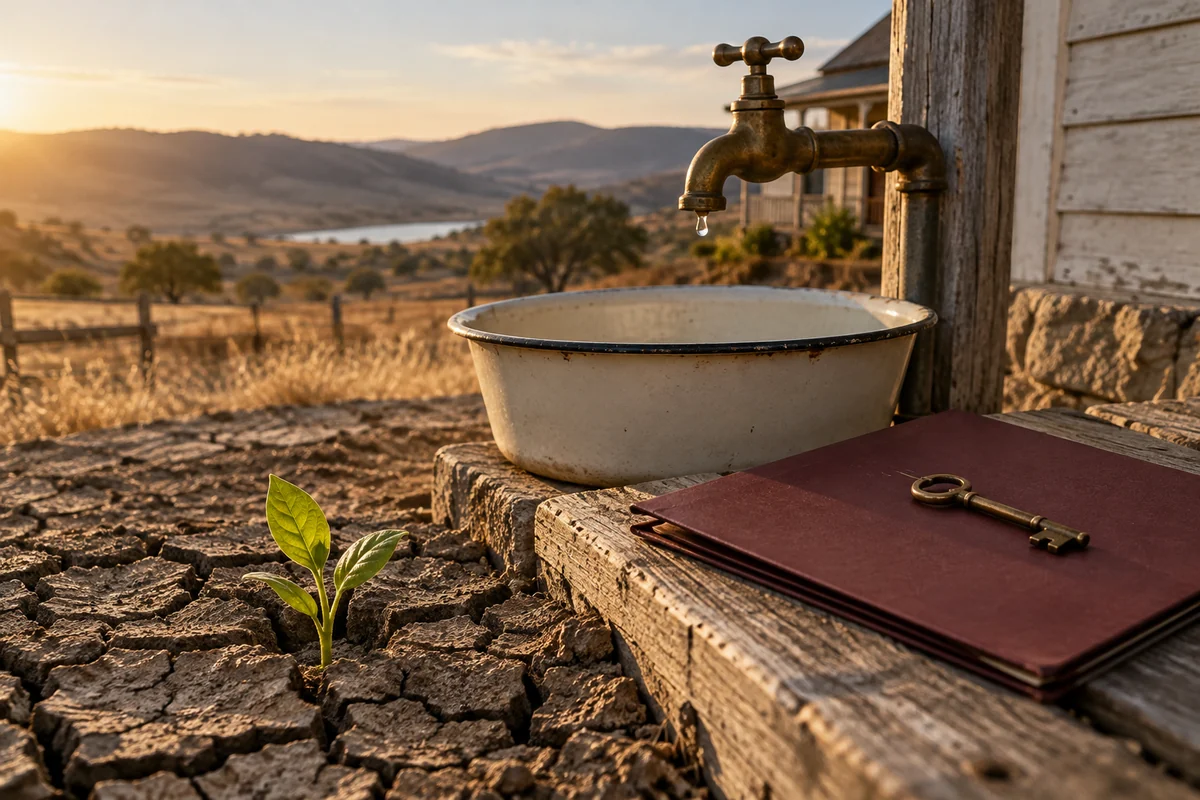
In Sold to the Immortal, Honora Gentry struggles to grow a last crop in Devil’s Basin after three years of ruined harvests. Jericho Calderon arrives saying her father sold the water rights and abandoned her. She resists his authority over her land and body with unstable earth magic.
The opening offers a supernatural frontier conflict grounded in failing food production and a claimed family betrayal. It does not state a debt amount or confirm a consensual exchange. Choose this if you enjoy a heroine fighting an outsider’s account of what she has lost. Keep his claim about the water distinct from a fact she has already accepted.

From Alisson Bento’s books
A vampire romance about a hero who claims her and never lets anyone forget it.
Kindle edition · Check Kindle Unlimited availability on Amazon.
Inherited acreage can have value on paper and limits in practice
The Bodyguard’s Shadow begins with laid-off planner Celia Ortega inheriting Montana acreage while facing personal debt. The parcel lacks legal road access and clear water rights in its file. Rancher Luke Ward has grazed cattle there through an undocumented handshake with her great-uncle.
This mafia-western opening suits readers who want land records and local arrangements to make financial pressure concrete. Celia cannot simply assume a sale will solve her problem. Compared with Honora’s dying crop, her immediate obstacle is the difference between an inherited asset and something she can readily use or sell.
A useful bargain needs identifiable benefits and remaining options
A financial agreement should let you understand what is supplied, what is demanded, and what remains possible after refusal. In romance, dependence may be part of the tension you actively want. Naming its mechanism helps distinguish that preference from a generic promise of a wealthy man fixing everything.
Find the resource that makes the land usable
Financial pressure on rural property can concern an asset that looks valuable while lacking something needed for use. Water, access, equipment, or working agreements can change what acreage actually provides. A debt-bargain premise becomes more intelligible when the threatened resource is named. If you enjoy concrete land problems, ask what the heroine can do with the property now and what the proposed agreement would alter. A large number of acres is not an answer by itself.
Celia’s inherited parcel makes that distinction explicit. Six hundred forty acres initially look like a possible response to her sixty-one-thousand-dollar debt, but the file lacks legal road access and clear water rights. The description also says a quick sale is unlikely. This is not a confirmed debt exchange with Luke. It is an opening grounded in the description, where an asset’s apparent promise meets practical constraints, giving a planner something specific to investigate.
Honora’s immediate problem is use rather than sale. Three years of ruined harvests have reduced her homestead’s resources, and earth magic cannot sustain a new shoot. Jericho arrives with a claimed explanation about sold water rights and abandonment by her father. The opening presents his claim and her resistance, not a completed agreement on its truth. Readers who enjoy contested accounts of family loss can follow that uncertainty alongside the failing crop.
The two examples therefore offer different land pressure. Celia confronts records and access around an inherited asset; Honora confronts failed production and an outsider’s account of why it happened. Both are adjacent to the financial-bargain preference, while neither opening states the complete romantic exchange. The distinction lets you choose a rural problem worth reading about without pretending that a debt label or a demanding stranger supplies confirmed terms.
Separate an existing debt from a proposed solution
A heroine can owe money before any romantic bargain appears. A powerful adult can offer resources without explicitly tying them to repayment. Another can claim ownership or authority without presenting a financial exchange at all. These are different structures. If your desired trope is a debt-for-marriage, debt-for-work, or debt-for-residence bargain, ask for that exchange directly. General financial vulnerability does not confirm it.
Celia has a stated personal balance and a newly inherited property, but the opening does not say Luke offers to settle that balance. His existing grazing use and the lawyer’s careful treatment of his name create questions about local arrangements. A reader may find that interesting for property suspense while still finding nothing that points to a romantic debt contract. Keep the precise preference unconfirmed until a fuller description explains what is demanded and supplied.
Honora’s confrontation similarly should not be turned into a consensual transaction. Jericho’s account of the water and his assertion of authority meet her refusal and a thorn barrier. His effortless passage through it, followed by the silver pendant burning him, introduces supernatural danger. These facts support a frontier confrontation with unequal power. They do not state a debt amount, an agreed payment, or the terms of a later bargain.
A useful recommendation distinguishes the cause of pressure from the offered response. Ask who originally owes, what resource is threatened, and whether the romantic lead proposes a specific solution. Then ask what participation is expected in return. A finished reader can usually answer the form of that exchange without revealing whether the heroine ultimately accepts it or how the relationship develops.
Read informal use as a question of history and power
A working arrangement can predate the new owner. Another household may rely on use that has become routine while the documents leave its status unclear. That creates conflict between inherited expectations and a present decision. Readers who enjoy local history can ask how the story makes those expectations understandable. An informal promise can matter emotionally without its consequences being fully confirmed by an opening description.
Luke’s grazing arrangement rests on a handshake with Celia’s great-uncle Amos, as reported by lawyer Del Hutchins. The lawyer’s careful handling of Ward’s name adds unease to the information. This does not prove every local rumor or motive. It shows that Celia has a reason to question both the property file and the social context around its use. The mafia-western framework makes that guarded setting part of the premise.
A heroine’s professional knowledge can help identify what is missing without immediately solving the problem. Celia’s planning background and attention to routes make the access issue consequential. Her limited fuel adds an immediate practical constraint to the larger property question. Readers who enjoy competent characters under financial pressure can appreciate this combination. Knowing how to ask the right question and having resources to act on the answer remain different things.
Honora brings another kind of knowledge through her unstable inherited gift and experience of failing harvests. The supernatural frontier framework makes a material resource problem coexist with magical uncertainty. If you want ordinary contemporary ranch finance, this is an adjacent crossover rather than an exact setting match. If you enjoy land and magic intertwined, the opening offers that specific combination while the later exchange remains unconfirmed.
Choose the kind of dependence you want to read
A finite debt gives an apparent endpoint; an ongoing need for water, shelter, or access can keep dependence active after one balance is addressed. Those structures create different romantic tension. If you enjoy a defined bargain, request a measurable obligation and clear completion terms. If you enjoy continuing entanglement, ask for resources the heroine needs repeatedly. The word debt does not show whether the practical relationship can ever be considered finished.
Resources may also be distributed across several people. One can own land while another controls a road or understands a record. That can make negotiation more nuanced than one wealthy person supplying everything. Readers who like complementary knowledge can ask for a heroine with something useful to contribute even under pressure. Readers who seek a stronger dependency fantasy may prefer the imbalance to remain central. Naming the mechanism makes either request more precise.
Refusal can have different costs. Declining an offer might leave the original debt unchanged, accelerate a deadline, or remove access to a resource. Those are general possibilities rather than confirmed outcomes in the examples. Ask what alternatives exist at the beginning. A heroine can bargain assertively while still facing an imposed situation, so the tone of her dialogue is less informative than what she can actually choose.
Family history can complicate willingness to accept help. An inherited obligation or a parent’s prior decision can affect the heroine’s present resources without her having made the original choice. Honora’s outsider account and Celia’s old handshake create different versions of that question. If transferred responsibility is your interest, ask how the story distributes knowledge and decision-making across generations rather than assuming the heroine personally incurred every problem.
Keep practical shelter distinct from romantic belonging
A place to stay can be part of a bargain, a temporary practical need, or a separate act of assistance. Living on a property does not automatically create a relationship agreement. Readers who enjoy forced proximity may want the financial terms to explain why the adults remain together. Readers who prefer more independent contact may want separate housing. Ask about that arrangement specifically; neither example’s opening confirms a complete residence-for-romance exchange.
The guide to ranch work and proximity explains how practical tasks can create contact. A debt-bargain request should add what financial or resource condition keeps that contact necessary. This distinction helps locate the story mechanics you want instead of treating every rural inheritance or poor heroine as evidence of a bargain with the romantic lead.
The strongest spoiler-light request names the threatened resource, the original obligation, and the proposed exchange. You might ask for a heroine who needs access to usable land rather than simply money, or a finite debt repaid through a defined task. Add the setting tone: ordinary ranch work, mafia secrecy, or supernatural frontier conflict. Those choices identify a reading experience much more clearly than a general rescue by wealth.
Use adjacent examples accurately while the strict match is unconfirmed. Honora’s failing harvest and contested water claim show material need in a magical frontier; Celia’s access and file problems show an inherited asset that cannot readily solve personal debt. They help you decide which pressure interests you. A fuller description must set out the actual bargain before either becomes a confirmed recommendation for the exact exchange you requested.
Documentation can also affect the form of the conflict. A missing record invites questions about what can be confirmed; a known agreement invites questions about how its terms should be understood. Celia’s file gives her gaps to investigate, while Honora receives an account from an interested stranger. Neither description confirms a complete bargain, but each offers a different kind of uncertainty around the resource.
If that investigative distinction matters to your reading, request either contested documents or contested testimony alongside the rural financial pressure. It gives the story something specific to uncover before a proposed exchange can be assessed.
Ask for “a rural debt bargain where the threatened resource and the heroine’s alternatives are clear.” These two openings provide adjacent starting points in water loss and inaccessible land, rather than proof of the exact exchange you requested. For a strict debt-bargain match, obtain the actual terms from a fuller description before assuming either title supplies them.
Read another angle: Secret-baby cowboy romance: reunion with an existing family · Morally grey cowboy romance: when rural competence carries a cost · Ranch romance and forced proximity: how shared work builds the spark
Explore the wider romance catalogue. The catalogue groups books by genre and trope; it does not confirm every preference discussed in this guide.