Source-snapshot study, 22 October 2026. These measurements cover verified complete English source texts corresponding to the catalogue, not an independently verified current Reader Vault edition. WordPress becomes the editing authority after import; later changes to gated text were not compared. Public titles, contents lists and available narrative were checked separately. “Novella” follows the site’s catalogue label, rather than imposing a universal length definition.
The shortest source edition in this study contains 14,705 narrative words; the longest contains 29,781. Between them sit 126 other stories with different chapter structures and different demands on a reading session. That range is more useful than treating every free novella as the same size, or assuming that a long public opening necessarily belongs to a long story.
Across all 128 English story families, the verified sources contain 2,448,315 narrative words in 1,025 chapters. The median story length is 20,137.5 words, while the arithmetic mean is approximately 19,127 words. Those are measurements of the supplied complete source versions. They give a defensible basis for comparing lengths without claiming to have measured text that may have been revised inside the current gated edition.
The directory below lists every title, its source word count and its chapter count. Before choosing from it, there are three distinctions worth understanding: total words versus chapter units, complete source text versus a public sample, and a calculated reading-time scenario versus the time a particular reader will actually need.
Where the lengths cluster
The largest single band contains 51 stories between 20,000 and 22,499 words, representing 39.8 percent of the catalogue studied. Another 54 stories fall below 17,500 words. At the longer end, 17 reach at least 25,000 words. These concentrations explain why one headline average cannot describe every browsing choice particularly well.
The middle of the ranking deserves a little explanation. With an even number of stories, the median is the average of the two central counts. Here those counts are 20,133 and 20,142, producing 20,137.5. No story contains half a counted word. The decimal belongs to the summary calculation, not to any individual measurement.
The mean is lower than the median because it reflects all the shorter entries as well as the longer ones. Neither statistic is an error, and neither should replace the actual count when you have a specific title in mind. For a rough catalogue-level reference, “about twenty thousand words” is reasonable; for choosing tonight’s reading, use the individual row.
A broader cutoff offers another useful view: 111 sources, or 86.7 percent, are shorter than 25,000 words. The remaining seventeen account for 13.3 percent. Someone looking for the larger reading commitment within this collection can start with that smaller group, while a reader seeking a compact option has many choices rather than only the single shortest entry.
The bands are descriptive bins chosen for readability. A story at 19,999 words would not offer a fundamentally different experience from one at 20,001 merely because they occupy different rows. The distribution shows the shape of this particular collection, not a quality hierarchy or a rule about what fiction must weigh to qualify as a novella.
| Narrative words | Stories | Share of 128 |
|---|---|---|
| Below 15,000 | 22 | 17.2% |
| 15,000–17,499 | 32 | 25.0% |
| 17,500–19,999 | 3 | 2.3% |
| 20,000–22,499 | 51 | 39.8% |
| 22,500–24,999 | 3 | 2.3% |
| 25,000–27,499 | 13 | 10.2% |
| 27,500–29,999 | 4 | 3.1% |
| Total | 128 | 100% |
Percentages are rounded independently, so displayed bands may not sum to exactly 100 percent.
You’re on the list. Your free stories are waiting in the Reader Vault. The Bratva Doctor
The shortest and longest stories, by name
The Bratva Doctor is the shortest measured source at 14,705 words across seven chapters. The Lieutenant’s Captive follows at 14,728 words across eight chapters, and Before the Glass Went Dark contains 14,766 across seven. The first three differ by only 61 words from shortest to longest, so their placement should not be mistaken for a meaningful difference in reading commitment.
Other compact options include Marked Before Moonrise at 14,801 words, The Boat in the Granite at 14,851, and Cold Iron, Warm Hands at 14,925. All three have eight chapters. Blood Oath at Midnight is slightly longer at 15,171 words but has seven chapters, already demonstrating that a lower chapter count does not necessarily mean less narrative.
At the opposite end, The Duke’s Lessons contains 29,781 words in ten chapters. Sworn to the Consigliere has 29,139 in nine, Saddled With Both has 29,006 in ten, and Seventy-Two Hours of Shore Leave has 28,399 in ten. The longest source is just over twice the length of the shortest, a substantial difference concealed by the shared catalogue label.
The next comparisons also resist a simple chapter-count ranking. On Call with Dr. Vance has 27,198 words in ten chapters; Close Protection has 26,252 in nine. In My Ear stretches its 25,030 words across eleven chapters, the highest chapter count in this inventory, without being the longest story. These examples make the table useful as a planning aid rather than just a leaderboard.
A chapter is a stopping point, not a fixed quantity
Eight chapters is the most common structure: 78 of the 128 sources use it. Thirty have seven chapters, ten have nine, nine have ten, and one has eleven. Those counts describe the organization of the stories. They do not tell you how much text lies between any two stopping points.
Across the 1,025 individual chapters, the median is 2,456 words and the mean is 2,388.6. The smallest chapter contains 353 words; the largest contains 5,075. A reader setting aside time for “one chapter” could therefore encounter very different amounts of prose, even before differences in attention, rereading or reading pace enter the picture.
The contrast occurs inside individual stories, too. In The Duke’s Lessons, chapter six contains 5,075 words and chapter ten contains 525. In The Masked Patron, chapter six contains 4,859 words while chapter nine contains 353. These are source chapter measurements, not claims about how much of those chapters is publicly unlocked or about what their scenes accomplish.
Even equal chapter totals conceal substantial variation. Among eight-chapter sources, The Lieutenant’s Captive has 14,728 words while The Night Clause has 21,848, a difference of 7,120. Dividing both books into eight reading sessions would not produce equal workloads. For a reader with a firm stopping time, total length and the size of the next chapter are more useful together than either number alone.
The downloadable measurement file also records each story’s shortest and longest chapter. Those limits help identify whether a book has particularly uneven chapter sizes without reproducing its narrative. They remain descriptive measurements: a short final chapter does not, by itself, establish a rushed ending, an epilogue, a cliffhanger or a missing scene.
What was counted, and what was left out
The count follows the narrative through every listed chapter in each verified source. It excludes title and author metadata, chapter headings, standalone viewpoint labels, access markers, nonword scene separators, and promotional material for other books. When the same narrative appears in more than one representation, it is counted once. This avoids inflating a story’s length with the surrounding publishing material.
The method treats sequences of Unicode letters or numbers as word tokens, retaining an internal apostrophe or ordinary hyphen within a single token. Thus a contraction or hyphenated compound can count as one, while punctuation separating otherwise independent words does not become an extra word. Numbers count. These choices are applied consistently rather than adjusted to make a particular title longer or shorter.
That consistency matters more than pretending there is only one possible definition of a word count. Another application may split a compound differently or include headings. The figures here are exact under the stated counting method, but approximate publishing and reading lengths in the broader sense. Small disagreements with a word processor need to be investigated at the method level before being treated as textual changes.
The audit did not rely on prewritten word-count labels. Narrative tokens were compared between source text and formatted narrative for all 128 stories. A separate character-by-character recount reproduced every story total; chapter totals also summed to their corresponding story totals. Standalone labels removed from the narrative were checked against the explicit viewpoint labels, rather than assuming every short bold line was expendable.
Structural checks established that each listed source chapter contains narrative, including the final listed chapter. They also matched titles and chapter lists to the public entries. Those checks support the completeness of the measured source structure. They are not a substitute for literary reading, and this numerical study does not infer relationship outcomes or the resolution of external plots from its counts.
Why the public opening is a different measurement
The companion chapter-by-chapter availability report records 287 public chapter sections across the 128 English entries. It deliberately calls them sections rather than certifying that every visible excerpt is an entire chapter. A heading with readable narrative establishes access to that section, but not necessarily its original ending boundary.
Comparison with the complete sources now gives a more specific result: 276 of those sections match whole source chapters, while eleven match only opening portions of their source chapters. All 287 match after whitespace and typographic normalization. This strengthens the connection between the catalogue and the measured sources without turning partial excerpts into full chapters.
It still leaves a separate version question. The live WordPress text can be edited after the source has been imported. Agreement in the public opening and contents list cannot establish that every gated paragraph remains unchanged. Accordingly, the directory reports source-edition lengths, not certified word counts for the current Reader Vault. No registration or gated access was used for this comparison.
For practical browsing, do not multiply an opening chapter’s length by the number of chapters listed, or assume that two visible chapter sections represent two equal shares of the book. The chapter variation measured here shows why that shortcut can mislead. To decide what is immediately readable, consult the availability report; to compare the verified source lengths, use this study.
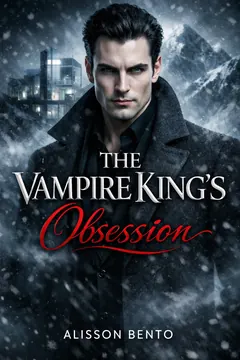
From Alisson Bento’s books
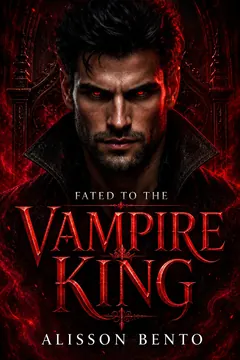
Vampire
A vampire romance about a hero who claims her and never lets anyone forget it.
Kindle edition · Check Kindle Unlimited availability on Amazon.
Reading-time scenarios, with the assumptions visible
A word count can support a calculation, but it cannot promise a finishing time. The scenarios below divide narrative words by three chosen rates: 200, 250 and 300 words per minute. These are illustrative inputs, not measured speeds for this site’s readers or claims about what a reader should achieve. Times are rounded upward to the next whole minute.
At the middle scenario of 250 words per minute, the shortest source requires about 59 minutes of continuous reading, the median length about 81 minutes, and the longest about 120 minutes. At 200 words per minute, those figures become 74, 101 and 149 minutes. At 300, they become 50, 68 and 100. Changing the assumption changes the result substantially.
| Source length | 200 words/minute | 250 words/minute | 300 words/minute |
|---|---|---|---|
| Shortest: 14,705 words | 74 minutes | 59 minutes | 50 minutes |
| Median: 20,137.5 words | 101 minutes | 81 minutes | 68 minutes |
| Longest: 29,781 words | 149 minutes | 120 minutes | 100 minutes |
These calculations exclude breaks, navigation, access steps, interruptions, rereading and time spent thinking about a scene. They are not audiobook durations, since spoken delivery is a different activity. They also describe the measured source versions rather than guaranteeing the length of a later revision. A useful estimate keeps those limits attached to the number.
You can make the calculation more personal by estimating your own pace from a section you actually read. Divide the section’s word count by the minutes spent actively reading it, then use that rate cautiously for another section. A single sample is only a starting point: familiarity, language, fatigue, screen settings and the kind of passage can all change how the next session feels.
For a twenty-minute slot at the illustrative rate of 250 words per minute, the arithmetic budget is 5,000 words. That is slightly shorter than the longest measured chapter, which has 5,075. Even an apparently generous chapter-sized slot can therefore run over. Choosing a stopping point in advance is sensible; treating a rounded estimate as a deadline is less helpful.
The same formula can work backward from a longer session. One hundred uninterrupted minutes at that assumed rate gives a 25,000-word budget. In this snapshot, 111 source editions fall within it and seventeen exceed it. That is a catalogue filter under a declared assumption, not evidence that 111 stories will fit every reader’s evening.
One English edition per story family
The unit of analysis is one English source edition for each of 128 story families. Alternate-language listings are not added as extra stories. Otherwise a multilingual catalogue could appear much larger simply because the same narrative has several language destinations, and its aggregate word total would mix different texts without a clear comparison rule.
The evidence consists of 115 English source documents and thirteen compiled English translations paired with Portuguese source records. All thirteen translations are included once in the English measurements. Their inclusion is not a claim that every story was originally composed in English, nor is the presence of a Portuguese-looking address proof that an English page belongs in a different language count.
These provenance distinctions do not rank translation quality. No paired-language length comparison or translation review was performed here. A longer English text would not automatically be more faithful, more complete or better edited than a shorter version in another language. Readers choosing a different edition should use that edition’s own text and chapter structure rather than transfer these English word counts to it.
All 128 titles: the source-length directory
The tables group titles into broad length bands, then alphabetize each group, retaining each public story title and a link to its page. “Narrative words” means the complete verified source count under the method above; “chapters” means its listed chapter units. Every table uses the same dated scope, regardless of how many opening sections the public page exposes.
Use the directory in either direction. Start with a title to see its length, or use the accompanying CSV to sort by words and find a length range that suits your available time. The CSV contains title-level measurements, public story links and the snapshot date, plus shortest and longest chapter counts. It contains no manuscript passages.
A book promotion on a story page can point to a separate paid novel. The counts here belong to the novella title in the row, not to a related book advertised beside it. Likewise, an entry’s position in this directory says nothing about recommended reading order. Choose length here, then check the individual description for the story and reading experience you want.
Under 15,000 words: 22 titles
| Story title | Narrative words | Chapters |
|---|---|---|
| A Baby in the Boardroom | 14,852 | 7 |
| A Lantern Takes Three | 14,943 | 7 |
| Above the Snowline | 14,833 | 7 |
| Before the Glass Went Dark | 14,766 | 7 |
| Cold Iron, Warm Hands | 14,925 | 8 |
| Every Letter a Sin | 14,972 | 8 |
| Halfmoon Winter | 14,958 | 8 |
| Look Without Knocking | 14,999 | 7 |
| Marked Before Moonrise | 14,801 | 8 |
| Paid in Full | 14,794 | 7 |
| Six Winters of Almost | 14,929 | 7 |
| Snow in the Desert | 14,867 | 8 |
| Tackling the Nurse | 14,927 | 7 |
| The Boat in the Granite | 14,851 | 8 |
| The Bratva Doctor | 14,705 | 7 |
| The Enforcer Who Stayed | 14,819 | 8 |
| The Last Lit Window | 14,917 | 7 |
| The Lieutenant’s Captive | 14,728 | 8 |
| The Pakhan’s Voice | 14,924 | 8 |
| The Story She Couldn’t Kill | 14,833 | 7 |
| Three Days a Week | 14,987 | 7 |
| Wait for Me, Beta | 14,791 | 8 |
15,000–19,999 words: 35 titles
20,000–24,999 words: 54 titles
25,000 words and above: 17 titles
| Story title | Narrative words | Chapters |
|---|---|---|
| After Hours at Halvorsen | 25,533 | 9 |
| Claimed by the Bear Clan | 26,242 | 10 |
| Claimed by the Warlord of Vex | 25,614 | 10 |
| Close Protection | 26,252 | 9 |
| In My Ear | 25,030 | 11 |
| On Call with Dr. Vance | 27,198 | 10 |
| Saddled With Both | 29,006 | 10 |
| Seven Nights with the Unseelie | 26,001 | 9 |
| Seventy-Two Hours of Shore Leave | 28,399 | 10 |
| Spurs and Satin | 27,201 | 9 |
| Strangers on the Night Train | 26,648 | 10 |
| Sworn to the Consigliere | 29,139 | 9 |
| The Duke's Lessons | 29,781 | 10 |
| The Masked Patron | 25,447 | 9 |
| The One-Bed Rule | 25,375 | 9 |
| The Velvet Hour | 25,961 | 9 |
| Winner Takes Her | 25,380 | 10 |
Use the numbers for the question they answer
The strongest result is straightforward: this source collection does not have one uniform reading length. It spans roughly fifteen to thirty thousand words, with a pronounced group just above twenty thousand and considerable variation in chapter size. That makes a title-level count a useful improvement over either a shared novella label or a guess from the visible opening.
A future current-edition comparison would need the then-current WordPress narrative, matched story by story and chapter by chapter against this dated baseline. If a count changes, the next step would be to distinguish revised prose from a changed counting rule or a different edition. Until that comparison exists, keeping “source snapshot” visible preserves the value of the measurements without overstating them.
For now, pick a title whose measured length fits the reading space you have, check its access conditions, and leave room for your own pace. The table can help you budget time. Whether you want to linger, reread a conversation or keep going past your planned stopping point remains a decision the word count cannot make for you.