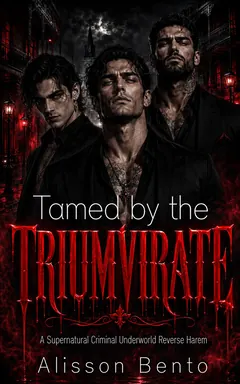
Six Names in a Drawer
Mirren
The sixth name came up at 3:07 in the morning, and I knew before I opened the file that he was gone.
YBARRA, RUBEN. Age thirty-four. Emergency visit for a broken left wrist. Blood type O-negative. Discharged on a Thursday with a cast and a prescription for pain pills.
And in the corner of the screen, in a small gray box where no flag should be, the same three letters I had seen five times before.
PRV.
I sat back in my chair and listened to the basement of Seattle Grace breathe. The vents hummed. A printer somewhere down the hall woke up, thought about it, and went back to sleep. Above me were nine floors of beeping machines and tired nurses and people trying not to die. Down here there was only me, a cold cup of coffee, and the records of everyone who had ever been carried through those doors.
I was the night analyst for Health Information. That is a long way of saying I fixed mistakes. A wrong code on a bill. A chart filed under the wrong birthday. A claim the insurance company denied because somebody typed a seven instead of a one. Nobody noticed me unless a payment bounced. I liked it that way. Invisible people see a lot.
I opened the flag. The system asked for a password I did not have. I closed it again.
Then I pulled a fresh index card from my drawer and wrote his name in block capitals with the date he walked out of this building.
I had five other cards in the drawer, held together with a green rubber band. Winnie Lowe, retired bus driver. A college kid named Dominic Pryce. A cook. A grandmother. A man who sold umbrellas at the market. All of them O-negative, like me. All of them flagged with three gray letters. All of them discharged, and then, within a week, gone.
Not dead. Dead people have death certificates. I would know. I file them.
Gone.
I knew about Ruben because his wife had called at eleven that night. The phone at the records desk almost never rang after dark, but she had been bounced from department to department until somebody gave up and sent her to the basement. Her name was Graciela. She had two kids asleep in the next room, and she was trying very hard not to cry on the phone with a stranger.
“He got a call,” she told me. “A private trial. They said his blood was special. They said they would pay. He said it was a few nights, baby, just a few nights, and then we can fix the roof.” A breath that shook. “That was nine days ago. Nobody at that hospital will tell me anything. Please. Is he there?”
He was not there. I had checked everything I was allowed to check, and then a few things I was not.
I promised her I would call her back. I did not know yet that it would be the most important promise of my life.
I tucked Ruben’s card into the stack and snapped the band around it. Then I did the thing I had been doing every night for two weeks. I sent the flag list to the old printer in the back room, the one that was not connected to the main network, because I had a feeling that anything I printed on the main network got noticed.
Paranoid, my grandmother would have said. Then she would have handed me a flashlight and told me to go look anyway.
I took the flashlight. The back room lights had been broken since spring.
The records room at Seattle Grace is a long, low cave of metal shelves that nobody has needed since the hospital went digital. Paper charts from the nineties. Boxes of X-ray film. A dead fern. The air smells like dust and toner and the cold sweat of old pipes.
I heard the printer before I saw it. It was already running.
I had not reached it yet.
I stopped between two shelves. The flashlight beam shook. Somebody was standing at the old terminal by the printer, with his back to me, in a black hoodie. The screen lit his hands. Long fingers, pale as candle wax, moving across the keys so fast they blurred. A cable ran from the terminal into a small silver drive in his palm.
He was copying my list.
Not my list. The list. The one I had built by hand, name by name, over two weeks of nights.
“Hey,” I said. It came out as a croak. I tried again. “Hey. That terminal is for staff.”
He did not turn around. “Then you should probably stop using it to print evidence,” he said. “Anyone with half a brain can see what you’re doing. Unfortunately for you, the people watching have whole brains.”
His voice was young and dry and a little bored. He pulled the drive. The printer kept spitting out my pages.
I had a stapler in my left hand. I do not know when I picked it up. I raised it anyway.
“I’m calling security,” I said.
“Security is a sixty-year-old man named Lloyd who is asleep in the lobby with a crossword on his chest.” He finally turned. “And you’re holding a stapler like it’s a gun.”
He looked about twenty. Black hair that fell into his eyes. A sharp jaw, a sharper mouth, and dark circles under his eyes like he had not slept since the last century. Chipped black polish on his nails. A camera on a strap around his neck, an old one, the kind that still used real film.
But it was his eyes that made me take a step back. They were brown, and then, as my flashlight hit them, they flashed. Red, for half a second. Like a cat’s eyes on a dark road.
“What are you?” I whispered.
“Late,” he said. “And you’re in my way.”
Then he was not by the terminal anymore.
He was right in front of me.
I did not see him move. One moment there were ten feet of dusty floor between us, and the next there were none, and the air his body had pushed aside hit my face like a slap. The stapler was not in my hand anymore. He was holding it. He looked at it, then at me, and set it very gently on the shelf beside my head.
“Your name is Mirren Ashcombe,” he said quietly. “You live alone in a studio apartment on Beacon Hill. You walk home at seven every morning past a bakery where you never buy anything. And for the last two weeks, you have been searching for six people who were taken by something you don’t believe in.”
My back hit the shelf. A box of old charts tipped and fell. Paper slid across the floor like a white tide.
“How do you know that?” I said.
“Because I’ve been watching you watch them.” His jaw tightened. “And tonight, so are they.”
“Who is they?”
He tilted his head. Listening. His whole body went still in a way no living body could go still. Not breathing. Not blinking.
“Dash.”
The new voice came from the dark end of the room. It was low and calm, with a faint French accent. An old voice, I thought. A voice from a black-and-white film.
A man stepped into my flashlight beam. He was tall and lean, wearing a long gray coat over a waistcoat and a shirt buttoned to the throat. Dark hair, with one streak of pure white at his left temple. His eyes were the color of a winter sea. He held his hands slightly open at his sides, the way you would approach a frightened dog.
“There are four of them in the garage,” he said to the boy. “Court men. Armor under their coats. They came down the north ramp two minutes ago, and they are not here for flu shots.” His gaze moved to me. It softened, very slightly. “Good evening, Ms. Ashcombe. I am sorry we meet like this. My name is Severin. I am afraid you have been very brave in a very dangerous direction.”
“I don’t,” I said. “I don’t understand any of this.”
“I know,” said Severin. “You will. But not here.”
Somewhere above us, a door banged open. Heavy boots on concrete. Several of them, moving in step.
Dash swore under his breath. He grabbed the pages from the printer, folded them twice and shoved them into the front pocket of his hoodie. Then he looked at me, and for the first time, something in his face cracked. Not kindness. Something closer to anger, aimed somewhere past me.
“They know who prints the list,” he said. “If you stay, you become the seventh card in your drawer.”
The boots reached the bottom of the stairs.
I thought about Graciela, crying softly on the phone so she would not wake her children. I thought about Winnie Lowe, who had a laugh like a car horn. I thought about my own name in block capitals on an index card that nobody would ever write, because nobody would ever look for me.
“My cards,” I said. “They’re in my desk.”
Dash stared at me. “You want to go back for index cards.”
“They’re not cards. They’re people.”
Something passed between him and Severin. A look. Then Severin was gone, and the boots outside the door stopped, and somebody made a short, surprised sound, and then there was a crash like a body going into a metal cabinet. Ten seconds later, Severin stepped back into the beam of my flashlight, smoothing the front of his coat. He held my stack of index cards in one hand, the green rubber band still in place.
“Your desk was unlocked,” he said, and handed them to me.
I held the cards against my chest. My heart slammed so hard it hurt.
“Back exit,” Dash said. “Now. Bastian’s in the alley.”
“Who is Bastian?”
“The one with the van,” said Severin. “And the only one of us who can cook.”
The fire door opened onto rain. Of course it did. This was Seattle in October, and the sky had been crying for a week.
A battered white van sat in the alley with its engine running and no lights on. The side door slid open before we reached it. The man behind the wheel twisted around to look at me, and the first thing I thought was that he was the biggest person I had ever seen. He filled the driver’s seat like a bear in a phone booth. Broad shoulders, a shaggy brown beard, a flannel shirt with the sleeves rolled up over forearms like tree branches. An old scar cut through his right eyebrow.
He grinned. It was a warm, crooked grin, the kind that belonged on a man handing out free coffee at a fire station.
“So this is the stapler girl,” he said.
“Drive,” said Dash.
“Hello to you too.” But the van was already moving. “Ma’am. Bastian Szabo. Buckle up, please. I drive like my mother.”
“Was she careful?” I asked faintly.
“No,” he said, and hit the gas.
I fell into the seat. Severin climbed in beside me. Dash took the front. Behind us, the fire door burst open, and four men in long black coats spilled into the alley. One of them raised something long and thin that caught the streetlight like a blade.
Then Bastian took the corner so hard that my shoulder slammed into Severin’s, and the alley was gone.
I looked down. My left palm was bleeding. I must have cut it on the fire door. A thin red line ran from the base of my thumb to my wrist, and the blood was dripping onto my index cards.
The van went very quiet.
Nobody moved. Nobody breathed. I realized, slowly, that none of them had been breathing before, either. Bastian’s hands had gone white on the wheel. Dash had turned his face to the window. And Severin, beside me, was holding himself so still that a muscle jumped in his jaw.
“Ms. Ashcombe,” Severin said, very politely, without looking at me. “Would you be so kind as to make a fist?”
I made a fist. The blood stopped dripping.
He let out a long breath he did not need.
“What are you?” I asked again. Quieter this time. Not because I didn’t know. Because I did.
Bastian met my eyes in the rearview mirror. His were gold now, glowing faintly in the dark like coals.
“The good news,” he said gently, “is that we’re the nice ones.”
“And the bad news?”
“The bad news,” said Dash, “is that the not-nice ones just learned your name.”
Behind the Green Door
Severin
The smell of her blood filled the van for eleven minutes, and Severin Thibault counted every one of them.
He counted the way he had once counted pulses in the field hospitals outside Paris, with two fingers on a soldier’s wrist and cannon fire shaking the tent. Numbers were a rope. A man could climb out of almost anything on a rope of numbers. One minute. Two. The red line across her palm, closed now inside her fist. The salt of it. The bright, living iron that his body knew better than any prayer.
Five minutes. Six.
Beside him, Mirren Ashcombe sat very straight with her stack of index cards in her lap. She was trembling, but only in her hands. Her face was pale and freckled and set like a locked door. Her red-brown hair had come loose from its knot, and a pencil was still stuck through what remained of it. She smelled of rain, toner, burnt coffee and fear.
She did not cry. He noticed that. Most people cried, after the first time they saw what he was.
Nine minutes. Ten.
“Here,” said Bastian, and the van rolled to a stop in an alley off Occidental, in the oldest part of the city.
The Vigil had been a chapel once, in the years when Pioneer Square was all sawdust and sailors. Now it was a narrow brick building squeezed between a closed bookshop and a parking lot, with tall windows painted black from the inside and a small door at the side, painted the soft green of old copper. No sign. No bell. A brass plate the size of a playing card, engraved with a crescent and a number only the Council could read.
Dash unlocked the green door with a key, a code and his thumb, in that order. He held it open without looking at her.
“Welcome to the nicest blood bar in Seattle,” he said. “Wipe your feet.”
Inside, the Vigil was warm. Severin had made sure of that, long ago, for the humans. Lamps with amber shades. Old wooden pews pushed against the walls and piled with cushions. A long table where the altar used to be, with a coffee urn, a basket of oranges and a plate of Bastian’s walnut cookies under a glass dome. Behind a curtain at the back were the clean white rooms where the donors lay down, with soft beds and fresh sheets and a framed copy of the rules on every wall.
The rules were simple. Nobody came in who did not want to. Nobody stayed who wanted to leave. Everyone was paid in cash before they bled. Everyone got juice, a cookie and a ride home.
Mirren stood in the middle of the room and turned in a slow circle.
“It looks like a church bake sale,” she said.
“Thank you,” said Bastian, deeply pleased, and went to put the kettle on.
Severin pulled a chair out for her at the long table. “Sit, please. Let me see your hand.”
She sat. She did not give him her hand.
“You’re a vampire,” she said.
“Yes.”
“All three of you.”
“Yes.”
“And this place is where you—” She looked at the curtain, at the rules on the wall, at the oranges. “Feed.”
“It is where people who wish to be fed upon come to be fed upon, safely,” Severin said. “We pay them well. They leave when they like. Some come for the money. Some come for the venom, which feels very pleasant, I am told. Some come because they are lonely and we listen. Winnie Lowe came every second Tuesday for six years. She brought us crossword puzzles and told Bastian his cookies were too dry.”
Mirren went still. “Winnie Lowe is on my list.”
“Yes,” he said quietly. “That is how we found you.”
Dash dropped into the chair across from her and put his boots on the table. Bastian knocked them off on his way past with a mug of tea. Dash put them back.
“Winnie went to Seattle Grace in August with chest pains,” Dash said. “Turned out to be heartburn. A week later, she gets a phone call. Private benefactor. Special trial. Rare blood, generous payment, just a few nights. She tells us about it right there at that table, all excited, because she’s going to buy her grandson a car.” He turned the silver drive over in his fingers. “She never came back. So I went looking for whoever made that call, and every road ended in your basement. Six people. One hospital. One stupid little flag.”
“PRV,” said Mirren.
“Procurement Review.” Dash’s mouth twisted. “Somebody inside your hospital system is reading every blood panel that comes through. O-negative with a certain rare marker? Ding. The file gets flagged, the flag gets sent somewhere I can’t follow yet, and a week later a nice lady with a nice voice offers the patient a lot of money.”
“For what?”
Nobody answered.
She looked at Severin. She had very direct eyes. Hazel-gray, tired, red at the rims. He found that he could not lie to them, which was inconvenient, because he had lied to humans for a hundred and fifty years with great skill.
“For the Court,” he said. “There is a Court of Night in this city, Ms. Ashcombe. It lives beneath the streets. It is old and rich and very hungry, and it is ruled by a Queen Regent named Alodie, who has been bored for three thousand years. Houses like ours exist because the Council allows it. We pay our fees. We follow the laws. We are small, and so the Court mostly lets us be.” He paused. “But the Court has been searching for a certain kind of blood for a long time. I do not know why. I only know that the people they bring below do not come up again.”
Mirren’s fingers tightened on her cards. “And the men in the garage?”
“Praetorians,” said Bastian from the kettle, all the warmth gone out of his voice. “The Queen’s soldiers. Black armor. Silver on their blades. They don’t usually come up to the hospitals themselves. They have people for that.”
“So why tonight?”
Dash looked at the ceiling. “Because somebody printed the same list on the same printer fourteen nights in a row. Because the flag system logs who opens a flagged file. You opened six. Congratulations. You’re a security problem.”
“You opened them too.”
“I’m a security problem with fangs,” Dash said. “You’re a security problem with a stapler.”
“Dash,” said Severin.
“What? She should know.” But Dash looked away first.
Mirren was quiet for a long moment. Then she held out her left hand, palm up, and opened her fist.
The cut had started to bleed again.
The room changed. Severin felt it in his teeth before he felt it anywhere else. A sharp, sweet ache along the gums. The lamps seemed to brighten. Across the table, Dash’s eyes went red and he turned his face away so fast his chair creaked. At the kettle, Bastian set down the mug very carefully, the way a man sets down something he is afraid he will crush.
Severin did not move. He thought of Lyon. He thought of his mother’s garden, and the long white wards of the Hôtel-Dieu, and the boy soldier whose name he had never learned. Numbers. One. Two. Three.
Then he took a clean cloth, a bottle of antiseptic and a packet of thin white strips from the drawer beneath the table, because a surgeon is still a surgeon after he dies.
“This will sting,” he said.
“Do vampires really heal people?” she asked. “When they lick a wound. I read that somewhere.”
“Our venom closes small cuts,” he said, cleaning the line of blood with steady hands. “It would heal this in a minute. It would also make you feel warm and sleepy and a little drunk, and you would like it, and you have known me for one hour.” He laid the first strip across the cut. “I will not do that without a yes. And you should not give me a yes tonight.”
She watched his hands. “Were you a doctor?”
“A surgeon. In France. A long time ago.”
“How long?”
“I was made during the siege of Paris,” he said. “Eighteen seventy-one. A shell hit the field hospital. I was dying in the mud, and something old and kind leaned over me and asked if I wanted to keep working.” He placed the last strip and pressed it smooth with his thumb. Her skin was very warm. “I said yes. I have been working ever since.”
She looked at the neat white bandage. Then at him. Something in her face loosened, just a little.
“Thank you,” she said.
He let go of her hand. It cost him more than it should have.
At four in the morning, Mirren stood up and announced that she was going home.
“I’ll call the police,” she said. “I’ll go to a newspaper. I’ll tell them a hospital is selling patient data and people are disappearing. I don’t have to say the word vampire.”
“You can say it,” said Bastian kindly. “They won’t believe you either way.”
“Then I’ll make them believe me.”
Dash opened his laptop without a word and turned it toward her.
On the screen was a black-and-white video feed. A narrow hallway with peeling wallpaper. A door with a brass number seven on it. The door was open. Two men in long dark coats stood inside, under a bare light bulb. One of them was holding a framed photograph of an old woman in a garden.
Mirren made a small sound.
“Your building has one camera,” Dash said. “I borrowed it on Tuesday. They went in forty minutes ago.”
“That’s my grandmother,” Mirren whispered. “That’s Gran.”
The man in the video set the photograph face down on the table. He did it slowly, almost politely. Then he sat in her only armchair and folded his hands, like a man prepared to wait all night.
Severin watched her understand. He watched her shoulders draw in, and then, a second later, square again. She was frightened. She was also furious. He found he liked her very much, and that was its own small danger.
“The Vigil is a licensed house,” he said gently. “Under Council law, no Court soldier may cross this threshold without a warrant. Getting a warrant takes time. Here, you are safe. Out there, you are not.” He spread his hands. “Stay three nights. Let Dash follow the flag. Let us find out where they have taken Winnie and your Mr. Ybarra. Then, if you still want to walk out that green door, I will hold it open for you myself.”
Mirren looked at him for a long time.
“Three nights,” she said.
“Three nights.”
“And I get a lock on my door.”
“There is a room in the old bell tower,” said Bastian. “The lock is ancient, and the bolt is bigger than my hand. Also, the bed is very good. I bought it for myself and then hit my head on every beam in the room.”
Despite everything, the corner of her mouth moved. It was not a smile. It was the place where a smile would go, someday, if she let it.
Dash closed the laptop. “Great. We have a houseguest. I’ll alert the media.”
“Dashiell,” said Severin, mildly.
“Don’t full-name me in front of the hostage.”
“I’m not a hostage,” said Mirren.
Dash looked at her. Something flickered in his eyes, there and gone. “No,” he said. “Not yet.”
The sun rose at seven thirty-one. Severin felt it coming the way an old sailor feels weather. A heaviness in the bones. A pull toward the dark.
The three of them slept below the chapel, in the old crypt, behind a steel door. Bastian was already snoring. Dash had fallen asleep sitting up with his laptop still open on his knees, the screen throwing blue light across his young, unhappy face. Severin pulled the blanket up over him, as he had every morning for twenty-six years, and Dash muttered something rude and did not wake.
Severin lay down last.
He did not close his eyes. Above him, through stone and wood and two floors of old beams, he could hear her. Every vampire could hear a heartbeat in a quiet house. Hers was quick and uneven. She was not asleep. She was pacing the little tower room. Four steps. Turn. Four steps. Turn.
Then the pacing stopped.
A phone buzzed.
He heard her pick it up. He heard the hitch in her breath when she saw the screen, and he knew, without seeing it, what it said. Unknown Caller.
Do not answer, he thought.
She answered.
“Hello?”
The voice that came through the tiny speaker was a woman’s voice. Crisp and low and smooth as cold mercury. Severin had heard it once before, sixty years ago, in a ballroom under the city, and the sound of it lifted every hair on his arms.
“Ms. Ashcombe,” said the voice. “I am calling on behalf of a private benefactor. You have been very diligent. We admire diligence. We would like to offer you a position.”
“I already have a job,” said Mirren. Her voice shook only on the last word.
“You had a job. As of this morning, you have been dismissed for misuse of patient data. It is a very serious offense. There may be charges.” A small pause, like a smile. “Or there may be a car, and a contract, and a great deal of money. That is the choice we offer.”
“And if I say no?”
“Then you may stay exactly where you are, behind Dr. Thibault’s pretty green door, for as long as the Council’s patience lasts.” The voice softened, almost kind. “And while you wait, we will pay a visit to Mrs. Graciela Ybarra. She has two children, I believe. Ages four and seven. Such a small house. Such a thin roof.”
Below the floor, in the dark, Severin was on his feet before the sun could stop him.
Above him, Mirren Ashcombe said nothing at all.
And the voice said, very gently, “You have until moonrise.”
The line went dead.