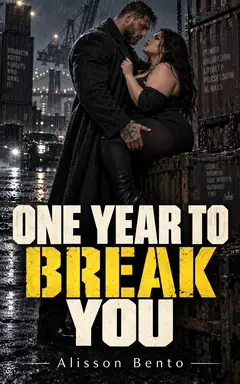
The Case Without a Violin
Mara
The violin case arrived without its violin, which was the first honest thing Pavel Rusan had sent her in eleven months.
Mara Keller watched the deliveryman lower it onto her workbench. Snow melted from his sleeves onto the felt. He wore thin leather gloves, unsuitable for the cold, and kept looking at the back door. People who wanted a repair looked at her tools. People who wanted something broken counted exits.
“Leave it there,” she said.
He did, with surprising care. The case was walnut, reinforced along the lower edge with a brass strip her father had fitted before she was born. She knew the little crescent beside the lock. At twelve she had tried to polish it with something her father used on a bicycle. The stain had survived every later attempt to correct her helpfulness.
“Mr. Rusan expects you at nine.”
“Mr. Rusan can expect whatever improves his evening.”
The man glanced at the clock above the sink. Eight twenty. Outside, Brighton Beach had drawn its shoulders into the early January dark. Cars nosed through ridges of gray snow. A restaurant across the street was bringing out its garbage in black bags that shone under the awning. Ordinary Friday work, ordinary people anxious to finish. Mara had intended to join them. There was soup waiting upstairs, if the pan had not frozen to the window ledge where she had left it to cool.
“You signed for this,” the deliveryman said.
“I signed for the return of a case. Put that on your receipt.”
“There was an instrument.”
“There was supposed to be.”
He did not enjoy the distinction. Neither did she. She opened the case, letting him see the empty green velvet, the indentation where the violin had rested, the separate straps for its bow. Two days earlier, Rusan had delivered something inside it. A brown instrument with careless purfling and varnish made to look old by someone with more confidence than patience. He had expected grief to blind her. Instead it had made her examine every millimeter.
She had taken that violin to Viktor before Rusan could demand it back.
The deliveryman put a folded sheet on the bench. Mara left it folded. Her father’s debt had been paid. The bank records were in a folder beneath the counter, along with Rusan’s own confirmation, delivered with a smile so warm she should have charged for the heating. That had been in November. Two months of delays had followed. Finally there had been the false violin, and now the empty case returned from an inspection she had not authorized.
“My employer believes you are confused.”
“Does he?”
“He says grief makes people hold on to things.”
Mara pressed the case shut before her hands could answer for her. Her father had died the previous spring. He had spent the last year of his life ashamed of a loan he should never have accepted and an illness he had not chosen. She had no interest in defending him to a man carrying another man’s cruelty in a folded piece of paper.
“Tell Pavel I identified the substitute. Tell him someone else has seen it. Then tell him to bring what belongs to me.”
The deliveryman looked at her left thumb. The narrow white scar crossed the joint, an old slip with a cutting tool. She folded her hand against her palm. He might have been noticing a weakness. He might have been noticing nothing. She had grown tired of wondering which.
“Nine,” he repeated.
She waited until the bell above the door had stopped shaking before opening the sheet. There was no explanation. Only a demand for the case and all repair materials relating to the instrument, with the amount of the original debt printed below. Not the remaining amount. Not a plausible new fee. The whole debt, resurrected in black ink.
Her phone lit beside a jar of clamps. Elsa, calling from a kitchen six time zones away. Mara let it ring twice before answering. Her older sister appeared in a blur of lamplight and steam, healthy and annoyed at a kettle. For a moment Mara could not bear how easily a person might be somewhere safe.
“You look terrible,” Elsa said.
“Your camera is flattering you too.”
“Have you eaten?”
Mara glanced toward the stairs. “Soon.”
Elsa began telling her about a neighbor who had mistaken her package for his. The story offered somewhere to rest her attention. Mara listened, laughed once where she should, and did not turn the phone toward the demand. Elsa knew about the debt and the delay. She did not need to be frightened by a threat Mara had not yet understood. Her sister had offered to come. Mara had refused. There was no reason to change that now.
“I may be difficult to reach tomorrow,” Mara said when Elsa finished. “I have an appraisal.”
“Of Papa’s violin?”
“Of the one they sent.”
Elsa’s expression tightened. She understood the difference. Mara gave her Viktor’s name, said she would call after the appointment and ended the conversation before the worry could become a journey. Nothing about Elsa’s life belonged to Pavel Rusan. Mara would not give him a route into it through her own panic.
She put the phone in her coat pocket and turned back to the case.
Her father had taught her to look underneath any repair that seemed too neat. The case lining had been lifted during its unauthorized absence. She could see the place where fresh adhesive had soaked through the velvet. Whoever searched it had known where to look, but not how to leave it as it had been. She took the thin palette knife from its stand and worked beneath the inner pocket.
The rubbing was still there.
Not a secret account. Not a miraculous document. A piece of Japanese repair paper bearing the pattern of an old crack inside the genuine violin’s lower bout. Her father had made it before closing the instrument during a restoration. Beside it lay a small varnished splinter he had removed and kept for matching color. He had preserved fragments the way other people kept photographs. Mara had cursed the clutter while clearing his room. Tonight she bent over this scrap with a gratitude so fierce it hurt.
She slid both items into a paper envelope. There were photographs at Viktor’s, and his inspection would provide another opinion. Rusan could destroy her word only if he destroyed every object that supported it. That was what the demand meant. Case, repair materials, original debt. He was not trying to settle an account. He was trying to erase the return.
She checked Viktor’s last message before putting the phone away. Nine tomorrow, he had written. Side entrance, because the front shutters had jammed again. She sent a confirmation and a photograph of the empty case on the bench. A mundane record, but tonight even the time at which an object stood in her possession might matter. She wished her father had kept fewer scraps and more signed agreements. Then she looked at the envelope beneath the velvet and withdrew the accusation. He had kept what he understood.
The shop bell rang again.
She put the envelope beneath the lifted lining and looked up. Two men stood inside the door. The deliveryman was not among them. One had a pale, shaved scalp. The other wore a red knitted hat pulled down almost to his eyebrows. He locked the door behind him without asking.
Mara’s hand went toward her coat. The bald man moved his head, just enough to say he had seen.
“Don’t make this difficult.”
Her father had used that phrase with glued joints that would not release. Mara had never liked it addressed to a person.
“Take the case,” she said. “Leave the shop.”
“We need to know what you kept.”
The man in the hat crossed toward the filing cabinet. Mara stepped between him and its drawer. He did not hurry. The confidence of being allowed to hurt someone made his movements almost lazy.
“This is private property.”
“So was the violin.”
He caught her wrist when she reached for the drawer. His thumb pressed the joint above her old scar. Pain shot through her hand. She struck his elbow with her other palm, more anger than technique, and he shoved her against the bench. Clamps fell. One bounced off the floor with a sound she would remember long after she stopped wanting to.
The bald man took a small metal flask from his pocket.
For one absurd second she thought he intended to drink. Then he loosened the cap and she smelled fuel.
“No,” she said.
The word came out without volume. Her eyes went to the jars of spirit varnish along the wall, the thin shavings beneath the lathe, the staircase leading to her bed. He did not need much. He would not have to set the whole room alight while he stood in it. A little fire, a delayed explanation, her refusal made to look like carelessness.
The man holding her wrist smiled.
The bell broke before anyone heard it ring. A shoulder drove the locked door against its frame, glass cracked above the handle and cold air struck the workshop. Ilya Orlov stepped through the damage with a pistol held low at his side.
Mara knew him. Not well. Enough to know she should not feel relieved.
He had collected restored cases for Rusan twice during the summer. He had paid in cash, refused coffee and once waited outside while Mara finished a telephone call, watching the street rather than the work. She remembered the weight of his gaze when she finally came to the door. He had looked at her as though a thought had occurred to him that he would rather not have.
Now he looked at the hand around her wrist.
“Let go.”
The man in the hat released her. Not slowly. Mara took a step away and braced against the bench. Her wrist hurt, but she could move her fingers. She kept doing it, quietly, while Ilya crossed the room.
“Rusan sent us,” the bald man said.
“He sent me too.”
“Then you know what she has.”
Ilya put the pistol against the metal flask. Not the man’s body. Against the object, steady enough that the bald man froze.
“Close that.”
Mara watched the cap turn. The fumes remained in her throat. The man set the flask on the bench when Ilya told him to. Somewhere outside a woman laughed, distant behind the broken door. The street had not understood what was happening inside her shop. It could stay that way until everyone here was gone.
“The girl is coming with us,” the bald man said.
“The woman,” Mara said. “The thirty-one-year-old woman whose shop you entered.”
Neither man looked at her. Ilya did. His eyes were hazel, though in the bad light they seemed darker, and his attention landed on her wrist before returning to the men.
“She comes with me.”
Mara reached beneath the bench and found the heavy wooden form used for shaping a case. She could not fight all three of them. She could make touching her expensive. The weight settled in her hand. Ilya saw it and did not tell her to put it down.
“Call him,” the bald man said.
“You call him. Tell him Orlov took possession of the return.”
“Of the woman?”
Ilya moved so suddenly Mara saw only the end of it: the bald man against the cabinet, the flask caught before it fell, a forearm pressed beneath his chin. The pistol remained pointed at the floor. The man in the hat took one step and stopped when Ilya looked at him.
“You will leave,” Ilya said. “You will keep your hands empty. Tomorrow you can decide whether you want another conversation.”
He released the man. The two of them backed toward the broken door. Mara held the wooden form until they were outside, then a little longer. She could hear the false note in her own breath.
Ilya put the flask in a basin, away from the bench, and holstered his gun.
“Coat,” he said.
“You don’t give orders in here.”
He looked at the broken lock. “Not for much longer.”
She hated him for being right. Hated the fact that the shop was still hers and could no longer protect her for a single night. He took her gray coat from the chair and held it out, not close enough to dress her. Mara set down the wooden form and put the coat on herself. Her left wrist protested. She fastened the buttons with her right hand.
“Where?” she asked.
“Somewhere they won’t follow.”
“You work for him.”
“Tonight I’m the reason you still have a staircase.”
That was a fact, not a promise. She could use facts. She crossed to the case, pressed the envelope deeper beneath its loosened pocket and shut the clasps. Ilya waited. His stillness made the room feel smaller. When she reached for the handle, he took the case instead. She caught his sleeve.
“It stays where I can see it.”
“In the car. You can watch me put it in.”
“And my phone stays with me.”
He nodded toward the coat pocket. “Keep it.”
She turned off the bench heater. Checked the jar lids because her hands needed one useful task before leaving. The broken glass by the entrance caught the light. Ilya took a roll of tape from the shelf and covered the exposed edge of the frame so she could pass. He did not mend the door. He had only made leaving less likely to cut her.
Outside, a dark sedan waited with frost along its windows. She watched him set the case in the trunk. She noted the license plate, sent it to Viktor with a short warning that she would call and put the phone back in her pocket before Ilya returned. He had seen. She could tell by the pause before he opened the passenger door.
“Good,” he said.
She got in because the two men were watching from a car across the street. Because she had already made the mistake of believing Rusan would honor a receipt. Because wanting to survive did not oblige her to trust the next man who offered a door.
The drive took less than fifteen minutes. Ilya checked the mirror at each turn. Mara kept her hands in her lap and watched for landmarks. At the apartment building, he brought the case upstairs himself. He walked behind her on the narrow steps, close enough to stop her running back down. She understood that before he opened the apartment.
Inside was warmth, a small table, a radiator ticking beneath a curtained window. No other person. No immediate weapon lying out. Ilya set down the case. Mara turned to ask how long he expected her to stay. He had already stepped into the corridor.
The lock clicked behind her, and the man outside had kept the key.
The Locked Room
Ilya
Ilya gave her twelve seconds before she tried the door. The handle moved at nine.
He stood in the corridor with his phone against his ear and listened to metal strike metal on the other side. Not a fist. Something harder. Mara had found the umbrella stand, then. He had forgotten the walking stick Olya kept inside it. An oversight that would have earned him a beating years ago. Tonight he felt a brief, inappropriate pride.
“You took my property,” Pavel Rusan said.
“Your men were about to burn the place that contains it.”
“They were encouraging cooperation.”
The walking stick hit the door again. Ilya moved farther down the corridor. Behind him a neighbor’s television murmured through plaster. He had chosen this building because people stayed behind their doors, and because Olya had never asked why he paid a year’s rent in cash. Neither fact made it a good place to hold a frightened woman. There was no good place. There was only the one he had used.
“The instrument wasn’t there,” he said.
“Then ask the woman where it is.”
“I intend to.”
Rusan breathed heavily into the phone. Ilya pictured him in the private room behind his import office, a glass balanced against his stomach, fat fingers pulling at the same gold cuff link. Pavel liked to sit beneath a photograph taken near a Volkov donor table at the Brighton Beach recital hall. There were three other men between him and Maksim Volkov in the picture. He had cropped them out. Association became authority if the frame was narrow enough.
“I gave you one task, Orlov.”
One last task. The promise had come wrapped in figures whose meaning changed whenever Ilya approached the end. He had paid his father’s supposed debt three times over. Rusan called the extra payments interest, then penalties, then the cost of keeping certain old accusations buried. His father was dead. The accusations had never been tested. Ilya had learned obedience long before he learned to question a sum.
“You gave me a return to collect. I’ve collected the case.”
“And the woman?”
The door went quiet. That worried him more than the blows.
“She is under my protection.”
Rusan laughed once. “Careful. You sound as though you have something to lose.”
Ilya ended the call. He could still pretend this was professional caution. A valuable instrument, conflicting accounts, an owner too eager to destroy the record. He could use those reasons until they stopped serving him. They did not explain why he had recognized Mara’s coat before he saw her face, or why the print of another man’s fingers on her wrist had made his vision narrow.
He had noticed her months ago. Had gone back once when there was nothing to collect, stood across the street and watched her turn the sign to closed. He had not approached. Wanting her had seemed less dangerous if it remained his private failure.
Now he had put her behind a lock.
He opened the door with his empty hand visible. Mara stood beside the table holding the walking stick like a spear. Her gray coat was still fastened. Green scarf tucked high at her throat. She had pulled a chair in front of the bedroom window; the curtain lay open, exposing a metal fire escape and the blank side wall of another building.
“You told me they wouldn’t follow,” she said.
“I didn’t tell you I would let you leave tonight.”
“Then you should have.”
He had no answer worth insulting her with. He stepped inside and closed the door. Kept the key in his hand this time, where she could see it. Mara’s gaze followed the small piece of metal. The walking stick did not lower.
“There are two men looking for you. One of them brought fuel to your shop.”
“I was there.”
“If you go home—”
“Don’t describe my danger as though that makes your part disappear.”
The words struck cleanly. He set the key on the narrow shelf beside the door. Not within her reach. Not hidden. There would be time later to hate the precision of that distinction.
“You’re staying here until I know where Rusan will send them.”
“And what do you do while I wait? Ask for a better price?”
“I find out why he sent you an empty case.”
She glanced toward it. A fraction of a second. Enough. Ilya had spent years making use of a face before its owner could close it. He wished he had acquired a different skill.
“Sit down,” he said.
“No.”
He took off his overcoat. Slowly. Hung it on the hook and moved away from the door so she would not have to stand cornered between him and the window. His pistol stayed in its holster. There was no honest way to make that disappear, either.
“Have you eaten?”
“Have you finished taking inventory?”
“Not yet.”
She stared at him. He went into the kitchen, where Olya had left bread, eggs and a pot of cabbage soup. He paid her to check the empty apartment once a week. She treated his money as permission to make judgments about his diet. He usually left half of what she brought. Tonight he lifted the pot onto the stove and felt grateful for her interference.
Mara moved when his back was turned. He heard the stick touch the floor, the quick footfalls toward the entrance. The key scraped against wood. He reached the doorway as she fitted it to the lock.
“Stop.”
She turned the key.
He caught the edge of the door before it opened far enough for her to slip through. Did not touch her wrist. Did not have to. His weight held the panel. Mara stood inches away, breathing hard, her fingers clamped around the key as though she could turn it through his body.
“Move,” she said.
“No.”
For a moment neither of them moved. He could smell the cold still trapped in her scarf, something faintly sharp beneath it from the workshop. Adhesive, perhaps. She looked up at him, not frightened enough to hide her fury. That was worse than gratitude would have been. Gratitude could be used to lie to himself.
“I want my phone call,” she said.
“You have your phone.”
“Then understand that I have told someone where I am.”
“Good.”
“Stop saying that as if I passed.”
He stepped back only after she released the handle. She left the key in the lock. He took it, but this time kept the apartment door unlocked while he returned to the kitchen. The building’s outer security door required another key; she did not know that yet. He would have to tell her before the night ended. Every unspoken fact was becoming another wall.
The kettle started to shake. He poured water into a tin cup and a thick white mug, left the mug on the table and set a bowl beside it. No wine. He remembered her leaving a reception at Rusan’s office with an untouched glass in her hand. She had returned it to the tray on her way out. Watching her reject an ordinary social offering had taught him nothing about the right to offer a prison.
“It’s tea,” he said. “The soup is hot. Take it or leave it.”
“You first.”
He drank from her mug, ate a spoonful from the pot, then gave her a clean spoon. She waited another half minute. Finally she sat. Her left hand hovered awkwardly beside the bowl. The wrist had begun to swell slightly where the man had held it. Ilya brought a cloth wrapped around ice from the freezer, set it beside her without reaching for her arm and sat on the other side of the room.
Mara ate as though she resented the need. He knew that form of hunger. It had nothing to do with how much bread remained. You could put food within reach and still make someone pay for taking it, simply by watching too closely. He looked away.
“The violin they sent you,” he said after a while. “Where is it?”
“Where it can’t be returned without someone asking why.”
“I need a name.”
“You want a name. There’s a difference.”
He set the tin cup on the radiator ledge. It rattled as the pipe knocked behind the wall. Mara followed the sound with her eyes, measuring the room by disturbances he had stopped hearing. The apartment looked poorer under her attention. A chipped table. Bare hooks. A blanket folded with the kind of care that came from having very few belongings.
“Rusan claims your father never paid.”
“My father didn’t finish paying. I did.”
“You have proof?”
She laughed without humor. “I have proof that I gave him money. Men like that have an endless supply of reasons money doesn’t mean what it meant yesterday.”
Ilya felt the old pressure behind his ribs. He had come intending to test her story against Rusan’s. Her plain account fitted his own too closely for comfort. He did not want recognition to soften his judgment. Recognition had never made a witness truthful. Neither had a costly office made a liar honest.
“Show me,” he said.
Mara put the spoon down. “Open the door.”
He told her about the outer security lock. Watched her face change as she understood the earlier unlocked apartment had offered less than it seemed. She stood, pushed the bowl away and crossed to the empty case. He stayed seated. The pistol did not move. Neither did the key.
She opened the lid and lifted the lining with her right hand. A small envelope appeared. She held it against her chest, not toward him.
“My father closed a crack in the real instrument years ago. There’s a record of its shape here. The thing Pavel sent doesn’t have that repair. I don’t need to play it to know it isn’t ours.”
“May I see?”
She seemed to dislike the question more than an order. Perhaps because it offered a courtesy inside a condition she had not accepted. Still, she put the envelope on the table and opened it herself. He leaned forward, keeping his hands away.
The paper held a thin irregular impression. Beside it, a varnished sliver. Ilya could not tell a nineteenth-century violin from a convincing copy. He could see the care with which Mara handled evidence she might easily have mistaken for rubbish before this winter.
“This proves the old one existed,” he said. “Does it prove who owns it?”
“Not alone. The photographs, Papa’s records and the payment history matter. Viktor has the photographs. And the false instrument.”
There was the name. She had chosen to give it. Ilya felt the difference with a discomfort he had earned.
“An appraiser?”
“A dealer who isn’t Pavel.”
“That isn’t a qualification.”
“Neither is a gun.”
He almost smiled. It would have been the wrong moment. He looked at the rubbing until he could ask the next question without making it an accusation.
“When does Viktor expect you?”
“Tomorrow morning.”
“I’ll take you.”
“You will let me go to him. Those are different things too.”
“For now, they’re the same journey.”
Mara put the paper away. He expected another refusal. Instead she asked him what Rusan had on him. No cautious approach, no offer of sympathy before the demand. She was negotiating with the only currency left in the room that he had not already taken: the possibility of knowing him.
“A debt,” he said.
“Yours?”
“My father’s.”
“Where is he?”
“Dead.”
Her hand went still on the case clasp. He knew what came next. The apology, the gentleness that made him want to withdraw every useful fact he had given. Mara shut the case instead.
“Then Pavel has a story about a dead man,” she said. “That isn’t necessarily the same thing.”
He looked at her for a long time. She had taken the foundation of his life and called it a story. He wanted to tell her what happened to men who disputed Rusan’s accounts. He had helped make some of those things happen. That was the piece of himself he could not offer as a caution without handing her another reason to fear him.
“I collect what he says people owe,” he told her. “Sometimes they don’t want to give it.”
Mara looked at the gun and back at him. “Did you imagine I hadn’t understood?”
“Understanding isn’t the same as hearing me say it.”
“Then keep saying it correctly. You don’t only collect.”
He accepted the correction. It settled between them with the empty soup bowl and the repair paper, another thing that could not be put back where it had been.
Somewhere below, the building’s outer door opened and shut. Footsteps climbed one flight, stopped, descended. A visitor who had found the wrong apartment, perhaps. Or a man testing a route. Ilya stood and listened until the street door sounded again.
He took his phone into the corridor, called Anton and gave the young driver the building’s entrance to watch from across the street. No explanation about Mara beyond the fact that nobody was to approach her. Anton asked whether Rusan knew. Ilya said that if Pavel called him, Anton should let it ring. The silence at the other end carried the weight of a first disobedience.
When he returned, Mara had taken off her coat. She sat with the ice cloth against her wrist, her scarf folded beside the bowl. A small concession to warmth, nothing more. He refused to turn it into trust.
“Bedroom,” he said, indicating the doorway. “It has a bolt on the inside. Use it. I’ll be here.”
“And the morning?”
“Viktor. As agreed.”
She picked up the case and carried it herself. He let her, though her left wrist made the movement awkward. At the bedroom entrance she stopped and looked back. For a moment he thought she might say his name. Instead she asked whether anyone in the building knew how to repair a door.
Her workshop door. She was still thinking beyond the locked room. He told her he could arrange a temporary board and a proper replacement lock, and that whoever did the work would photograph it and leave her belongings untouched. She considered, then named a local repairman herself. Ilya took the number. He would not send one of Rusan’s men to make the damage look cared for.
Mara shut the bedroom door. The bolt slid home.
He sat down where he could see the apartment entrance. His phone held three missed calls from Rusan and a message he did not open yet. He had found a woman who could look at a false violin and refuse the certainty of a richer man. He had put her inside his safest room and called that an answer. Behind the wall, she moved the case against the bed.
He had brought her somewhere no one could take her, and begun to understand who else that included.