Choose this for palace politics, a fake-marriage royalty premise, and a princess whose public duties exceed her private authority. The reception opening suits readers who enjoy procedural tension, withheld information, and the small acts of allies trying to give a heroine room to respond.
7 books
Royal Romance: Choose the Pressure Behind the Palace
Royal romance places a relationship within a world where private decisions can have public meaning. Titles may affect who gets heard, who controls access and whose future other people believe they may arrange. The appeal is not limited to luxury or formal ceremony. A princess might be excluded from a discussion about her own participation, a researcher might challenge restricted history, or someone fleeing royal expectations might need shelter rather than a throne. This shelf moves between contemporary palaces, snowy Montana and fantasy kingdoms. Begin with the pressure that interests you: public announcement, political evidence, professional trespass, a dangerous assignment, escape or negotiations during war. Then look at what the protagonist can do inside that pressure. A royal setting becomes a more useful selection tool when it names the particular decision a person is trying to keep for herself.
Compare these starting points
Choose this for royal intrigue, a bodyguard romance, and a fake-marriage framework under political pressure. Aurelia's marked affidavit and refusal to accept the chancellor's interpretation suit readers who enjoy evidence-conscious heroines, compressed deadlines, and threats that operate through succession rules as well as personal intimidation.
For readers drawn to an assassin's practical reasoning, dangerous royal ceremonies and magic with binding consequences. Liora questions the assignment rather than treating its enormous payment as reassurance, making the opening especially appealing when a heroine's tactical competence and hunger for freedom drive the tension.
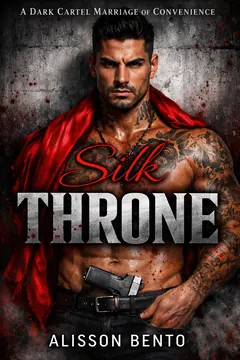
For readers interested in a covert rescue network, cartel family politics, and a marriage alliance opposed by a capable heroine. Ysabel's operational nerve gives her resistance substance, while her father's evasions about her mother connect the proposed ceasefire to a deeply personal family history.
A title can create influence without creating freedom
Royal status may give a character duties, resources or visibility while leaving an intimate decision controlled by someone else. That contrast can be compelling when the opening shows competence in one area and exclusion in another. Readers can ask what the person is allowed to authorize, what information is withheld and who expects obedience. The question makes public authority and private autonomy distinct. A character can know how to administer a project without being invited to discuss a proposed relationship.
The royal label does not itself specify a marriage arrangement, a bodyguard, a fantasy world or a runaway. Those are different routes through the setting. Choose the initial source of constraint rather than treating all palaces as interchangeable. A ceremony approaching in public differs from an accusation delivered privately. A forbidden excavation differs from a negotiated departure after an attack. These situations offer different kinds of attention: reading social cues, preserving evidence, following a research map or putting terms into words before anyone leaves.
Ceremony can move faster than the princess’s information
Conveniently Crowned introduces Princess Sofia approving library restoration accounts and discussing structural repairs, yet unable to discover why her father chose her reception dress. Requests for a private conversation are refused. Her name is absent from the evening's running order, and she is positioned for an announcement she has not been allowed to discuss. Duke Kastel Varr approaches with congratulations already in mind. Sofia's friend Bex tries to get her a chance to speak, while bodyguard Rask is close enough to know her failed attempts to reach the king.
Choose this opening if public presentation and withheld information are the pressure you want. Sofia's ability to handle restoration work makes her exclusion from the personal discussion especially clear. The ceremony organizes other people's expectations before she has an answer to her own questions. A friend and a nearby protector add different kinds of access to the situation: someone trying to find a speaking opportunity and someone able to observe its denial. The fake-marriage royal framework therefore begins with participation itself as a contested matter.
A succession threat turns paperwork into something worth protecting
Shielding the Queen pulls Princess Aurelia from naval committee work into a meeting with Chancellor Cedric Thorne. A ledger accuses her late father of diverting defense funds. Thorne gives her seventy-two hours before hearings could suspend the succession, and proposes burying the inquiry in exchange for a betrothal to Ambassador Fabian Cross. His previous approach to her required Commander Briggs Vance to intervene. Aurelia recognizes the leverage and marks a duplicate affidavit before taking it, so she can distinguish the paper from a later copy.
This is a useful comparison if you enjoy a capable royal protagonist responding to a coercive proposal with an exact action. Where Sofia tries to reach a conversation, Aurelia faces one already arranged around leverage. The ledger, time limit and marked paper make the political pressure tangible. Choose the bodyguard and fake-marriage setup for succession stakes and documentary uncertainty, rather than expecting palace glamour to be its only attraction. Her committee work and handling of the affidavit give the opening a professional dimension alongside the intimate demand.
Restricted history makes the palace an obstacle to a profession
30 Days with the Sheikh begins with academic Lara Adams taking graduate student Charlie Reynolds into a forbidden excavation site on royal property in Zahram. Working against the patrol schedule, Lara uses an archival map to locate a concealed entrance associated with the Obeid Aquifer. The discovery could provide historical proof she has pursued despite debt and damage to her father's reputation. Floodlights then reveal that the Royal Guard has been waiting. Security chief Simon Richardson recognizes her and demands the map while she protects Charlie and the evidence hidden in her boot.
Choose this opening if research, access and preservation of evidence interest you more than a character born inside palace routines. Lara enters royal space through professional trespass. Her map and the patrol timing offer a different form of competence from Aurelia's marked affidavit: she is trying to discover and retain information the palace controls. The fake-marriage framework surrounds a detention that begins with scholarly ambition. Readers can compare whether they want the institution's pressure encountered from within its hierarchy or by an outsider whose work crosses its restricted boundary.
A royal target can make freedom the price of a dangerous job
The Prince She Was Paid to Kill introduces Liora, who knows how the Veiled Hand prices a life but receives an unusually large offer to kill Prince Caelan Ardent. The assassination is specified for Moonwake, at a precise hour in a palace garden. Unreliable wards and masked guests complicate the approach. Accepting would bind the target into her flesh through death magic; abandoning the contract would turn that mark against her. Nera Quill offers the closing of her debt ledger and freedom from the guild, more powerful inducements than gold alone.
This royal opening is distinctive because the protagonist approaches the prince as an assignment. Her desire for independence gives the offer weight, while its unusually exact instructions make it suspect. Compare her planned entry with Lara's excavation: both women have a purpose at a restricted location, but Liora must assess a contract whose magical terms can act on her body. Choose this example if you want trained skill, debt and the cost of accepting a task around the royal romantic setting. The attraction of the premise can lie in a promise of freedom that demands a dangerous decision first.
Leaving the royal world can replace status with immediate need
Heart of Iron follows Princess Julianna after seventy-two hours fleeing diplomatic vehicles and royal expectations. A Montana blizzard turns concealment into survival. Her old Honda lacks fuel and its worn tires cannot manage the winter road. Stranded, she pushes through snow toward a red neon sign. The Iron Elk offers heat, but she collapses soon after entering. Its keeper, Shane Carter, values the quiet he has built since leaving prison three years earlier. Her urgent need for shelter reaches a man guarding a hard-won peace.
This is an alternative if the interesting royal question is what happens when the familiar apparatus is left behind. Julianna's title does not solve fuel, cold or shelter in the opening. Shane also has a life he is trying to preserve, so the meeting places two different histories beside an immediate practical problem. Compare this with Sofia's reception: one princess is surrounded by organized ceremony, the other by an environment that makes concealment physically difficult. The contrast helps you choose between public expectations closing in and escape becoming precarious.
Wartime bargaining can make an intimate departure accountable to others
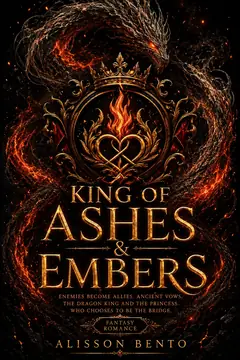
King of Ashes & Embers begins with Princess Elara negotiating with Drakondar's envoys while Ariavel's palace burns. She agrees to leave only after securing food for shelters, freedom for captive artisans and protection for civilians. A Cold Ash bracelet dampens the unusual warmth in her hands, making restraint physically present. In Drakondar, King Kael Drakhar's disciplined rule and recorded promises complicate her expectations of the enemy. Her companion Mira tracks the lists of released people and builds contacts among servants.
Choose this royal fantasy if negotiation matters because ordinary people depend on its terms. Elara asks for specific provisions and witnesses rather than a vague promise of peace. That gives the enemies-to-lovers framework a public responsibility beyond personal opposition. Set it beside Liora's assignment: one weighs a contract offering individual freedom, while the other negotiates a departure tied to civilian needs. Both place the protagonist's choices inside a larger system, but the desired outcome at the start has a different scale. Decide whether you want personal escape or accountable provision to organize the pressure.
Choose the kind of competence you want beside the title
These examples offer a practical way to compare royal stories without relying on the same image of a palace. Sofia manages restoration accounts; Aurelia works with naval matters and preserves a marked paper; Lara reads an archival map; Liora assesses an assassination contract; Julianna seeks shelter under extreme conditions; Elara negotiates provisions during war. The skill or action does not remove the pressure, but it gives each protagonist a position from which to respond. Choose the activity that would interest you even before the romance becomes central.
Also consider how much surrounding complexity you want. A contemporary reception requires attention to withheld information and public roles. A fantasy assignment may add magical penalties and unfamiliar institutions. A winter escape concentrates attention on physical need. Neither a familiar world nor a fantastical one determines how freely someone chooses. The useful question is which practical boundary you want to see tested: permission to speak, access to a site, control of a document, freedom from a guild, survival outside a protected world or enforcement of promised terms.
What do the adjacent tropes add, and what remains book-specific?
Arranged marriage emphasizes an agreement made or proposed by others. Marriage of convenience foregrounds a practical purpose; fake relationship directs attention toward appearance and an arrangement's public meaning. Runaway bride concerns departure from an anticipated marriage situation. Royal status may coexist with any of these, but does not establish them all. Use the particular book description to understand the proposed relationship and its initial terms. A public announcement, a coerced betrothal and a scholarly detention give those terms very different starting contexts.
All books on this shelf are standalone, allowing selection without a required reading sequence. Royal romance does not measure sexual explicitness or guarantee consent, exclusivity, absence of abuse or a particular ending. Consult book-specific information for those details. For your first choice, name the pressure and the protagonist's response you want to follow. The pairing might be ceremony and an attempt to speak, succession and evidence preservation, research and detained access, a contract and independence, escape and shelter, or war and exact bargaining. That makes your next palace, court or refuge a deliberate choice.
-
 30 Days with the Sheikh
Buy on Amazon
See the book
-
 Shielding the Queen
Buy on Amazon
See the book
-
 The Prince She Was Paid to Kill
Buy on Amazon
See the book
-
 Conveniently Crowned
Buy on Amazon
See the book
-
 Silk Throne
Buy on Amazon
See the book
-
 Heart of Iron
Buy on Amazon
See the book
-
 King of Ashes & Embers
Buy on Amazon
See the book
Browse by what you crave.
By genre
By trope
- Find romance books by trope
- Possessive Hero
- Captor & Captive
- Bodyguard & Protector
- Debt & Bargain
- Enemies to Lovers
- Marriage of Convenience
- Forbidden Love
- Forced Proximity
- Small Town
- Fake Dating
- Arranged & Forced Marriage
- Boss & Employee
- Slow Burn
- College & Academia
- Secret Baby
- Single Dad
- Revenge
- Curvy Heroine
- Second Chance
- Fated Mates
- Grumpy & Sunshine
- Morally Grey
- Runaway Bride
- Age Gap
- He Falls First
- Holiday Romance
- Touch Her and Die