

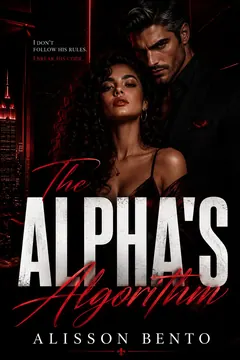

Choose this for a security researcher heroine, a tech billionaire captive premise, and danger created by connected infrastructure. Maya's reproducible tests and attempts to preserve independent evidence make this a strong match for readers who want technical competence to drive the opening conflict.
5 books
Morally Grey Romance: Choose the Conflict That Interests You
Morally grey romance invites you to become interested in people whose choices cannot be understood only through whether they seem kind or dangerous. A character may possess expertise, loyalty or a compelling purpose while using methods that deserve scrutiny. Sometimes the heroine also deceives, breaks rules or acts under pressure. The useful reading question is what the story asks you to examine: the aim, the means, the consequences or the unequal freedom to choose. This collection contains standalone novels in billionaire, cowboy and mafia settings, including stories with captivity and why-choose relationships. Those additional themes describe different features; none settles every moral question in a book. The examples below compare concrete opening situations: a researcher exposing connected infrastructure, an heir arriving at a contested ranch, an artist presenting a counterfeit to a creditor and a witness resisting confinement disguised as protection. Choose the dilemma that gives you something interesting to follow. Moral ambiguity is most useful as a search preference when you can identify the particular decision or imbalance that attracts your curiosity.
Compare these starting points
For readers who want an inherited Texas ranch, a hostile foreman, and a western why-choose premise. Cutter's arrival combines a contested claim to authority with an animal emergency, giving her first attempt to earn respect a physical test in the middle of a dust storm.
Choose this for an art-forger heroine, a father's failed criminal investment, and a morally grey Bratva captivity framework. Darya's painstaking counterfeit gives the confrontation technical specificity, while Ilya's knowledge of her methods turns being understood as an artist into another source of danger.
Choose this for a design student heroine, a criminal-operation witness, and protection complicated by involuntary confinement. Lia's sarcastic resistance keeps the opening's power imbalance visible, while the unidentified photographer creates a concrete concern beyond Henrique's interest in the woman brought to his office.
Separate the purpose from the method
A character's goal and the means used to pursue it can create different reactions. Protecting somebody may be understandable while restricting their movement remains troubling. Saving a parent may inspire sympathy while forgery raises another question. This tension gives morally grey romance much of its interest: you can understand an impulse without deciding that every action following from it is justified. Look for a situation in which those parts can be examined separately.
The Pakhan's Captive starts with Darya Sokolova trying to settle her father's debt through a counterfeit painting. Corrupted by the Light begins with Henrique choosing to bring a witness into his control rather than have her eliminated, while Lia objects to what he calls protection. Compare deception used by someone with limited options to confinement ordered by someone with substantial power. These openings do not require you to rank their characters on one scale. They offer different questions about purpose, pressure and available alternatives.
When a system can turn objections into evidence
The Alpha's Algorithm introduces security researcher Maya Pager finding a flaw in HALCYON's public test environment. An ordinary maintenance certificate can become authority over banks, hospitals, transport and access to homes. The system also treats appeals against exclusion as proof that the targeted person deserves it. This creates a specific form of danger: the process that should let somebody contest a decision instead strengthens that decision. Maya's concern begins with reproducible behaviour rather than an intimidating first impression.
Seeking undeniable evidence, she tests founder Julian Blackwell's identity and triggers a process reaching beyond the sandbox into her apartment. Her real name appears on screens, location tracking switches on and a supposed maintenance visitor arrives after one in the morning. A lock begins turning by itself while she attempts to preserve evidence. Choose this title for technical competence facing infrastructure that can make ordinary routes of appeal ineffective. The moral interest lies partly in the reach of control and the difficulty of proving it from outside its own rules.
Legal authority and earned respect can come apart
A morally grey setting need not begin in an office tower or criminal transaction. Conflict can arise where people disagree about who has the right to make decisions. An inherited deed provides one kind of authority; years of practical responsibility provide another. Neither automatically answers how a newcomer should be treated. This variation can appeal when you want tension grounded in work, resentment and competing claims rather than an immediately stated captivity arrangement.
Cutter Mabry arrives at her newly inherited Texas ranch in Inheriting the Cowboys after another truck forces her off the road and damages her Ford. Three thousand acres belong to her on paper. Foreman Dax Hollowell greets her with resentment and warns that a deed does not establish competence. When storm damage panics a stallion and breaks its gate, Cutter enters the escape route and helps secure the pen before unpacking. Consider this western why-choose premise for an heir's attempt to exercise ownership among the men who maintained the ranch, with practical action interrupting a dispute over legitimacy.
A heroine's deception can carry the first dilemma
Darya has spent weeks ageing a canvas and constructing convincing provenance before bringing a counterfeit Russian landscape to the Volkov Gallery. Her father Bogdan Popov owes four hundred thousand dollars. The smuggling route he promised never existed, and his deadline has expired. In The Pakhan's Captive, the attempted solution is technically careful and ethically compromised. Her skill is visible in the effort to surround a lie with credible details, while her family responsibility explains the pressure behind it.
Bratva leader Ilya Ivanov disregards Bogdan's excuses and identifies synthetic materials in the painting. He recognises Darya's artistry as well as her fraud. That combination makes professional understanding a complicated experience: being seen accurately does not place her in a safe or equal transaction. Choose this opening if you want the heroine's choices to matter to the moral tension, rather than treating ambiguity solely as a quality of the man. Compare the care invested in her work with the claim the creditor can make when it fails.
Protection can be the explanation a powerful person prefers
Henrique runs an empire of pressure and controlled appearances in São Paulo. His lieutenant Cesar brings news of Lia, a twenty-three-year-old design student and underpaid freelancer who witnessed men, a package and a vehicle plate at a Mooca warehouse. Her missing father's gambling debts provide another way others can threaten her, and an unidentified observer has photographed the incident. In Corrupted by the Light, the opening places a witness inside several overlapping risks before Henrique's personal response can settle their meaning.
He orders that Lia be brought to him rather than eliminated. She challenges the confinement and ownership concealed within his claim of protection, recognising guards and legal language as another form of captivity. This title can interest readers who want the explanation offered by a powerful man questioned immediately by the woman receiving it. The unidentified photographer also creates an external concern beyond his attention. Compare the existence of danger with the freedom to decide how to respond to it; one does not make the other question disappear.
Choose the kind of competence that complicates attraction
Expertise can make a character compelling while also giving them a more effective way to manipulate or resist. You may enjoy people recognising one another's ability under uncomfortable conditions. The reader's interest then comes from watching understanding become useful, dangerous or both. Ask what each person can accurately perceive and what that knowledge permits them to do. Admiration for skill is different from trust in how the skill will be used.
Maya's tests expose a technical mechanism, while Darya's counterfeit brings artistic knowledge into a failed debt settlement. Cutter's intervention in the stallion emergency supplies a physical response to an argument about competence. Lia notices how protection is expressed through guards and restrictions. These are four distinct ways of keeping the heroine active in the opening. If you like precision and evidence, start with Maya or Darya. If immediate work and contested authority appeal more, examine Cutter's arrival. If verbal resistance to a man's preferred explanation draws you, consider Lia's encounter.
The setting determines which choices are available
A moral dilemma changes when the environment changes. Connected technology can make dependence difficult to see because the same network serves ordinary life. A ranch places skill, ownership and physical hazards close together. A gallery can present an apparently civil transaction while the debt behind it removes normal bargaining power. A guarded criminal office may use reassuring language without providing an ordinary route out. Choose the environment whose practical rules you want to understand.
This also helps distinguish types of suspense. In The Alpha's Algorithm, preserving independent evidence matters as automated actions reach Maya's home. In The Pakhan's Captive, the material details of a forgery become decisive in front of a knowledgeable creditor. Inheriting the Cowboys makes an animal emergency interrupt the first confrontation. Corrupted by the Light places a witness and an unknown photographer within a regulated criminal world. Each opening gives moral ambiguity a concrete task or resource, rather than asking you to become interested in a dangerous reputation alone.
Does morally grey mean every character is equally responsible?
No. Understanding several motives does not make the participants equally free, equally informed or equally able to cause harm. A debtor's daughter and a creditor may both act strategically while possessing very different alternatives. A researcher testing a public environment and a system reaching into her apartment operate at different scales. Pay attention to what each character knows and which consequences they can impose on somebody else.
That distinction can make the reading experience more satisfying when you want complexity with concrete stakes. Ask whether a choice was made under threat, with scarce resources or from a position that allowed easier alternatives. Then notice what the heroine can contest. Darya's failed counterfeit and Lia's objections offer different forms of resistance, while Cutter arrives with a legal claim that has not produced practical acceptance. You can remain interested in all sides of a conflict without treating their advantages or obligations as interchangeable. This is a question for following the story, rather than a rule predicting its eventual judgment.
How does this differ from dark romance or enemies to lovers?
Morally grey describes ethical complication. Dark romance describes a broader kind of atmosphere and subject matter. Enemies to lovers describes opposition within the romantic relationship. A book can carry more than one of these themes, but each helps answer a different search question. If you mainly want two people with incompatible goals, begin by identifying the conflict between them. If you want a difficult choice or a troubling method used for an understandable aim, examine moral ambiguity itself.
Captivity is another separate feature: it concerns restrictions on leaving. It appears among these examples but does not define the whole collection, as the inherited ranch premise shows. Why-choose describes multiple romantic connections rather than an ethical position shared by every partner. Use adjacent collections when those features are central, then compare the individual opening for the dilemma you want. A narrower combination can help you find both a preferred relationship structure and the kind of pressure that makes its participants interesting.
What should I check before choosing a title?
Begin with one sentence explaining your interest. You might want a researcher exposing a system that punishes objections, an heir challenging resentment through action, a skilled forger facing the creditor she tried to deceive or a witness questioning protection that removes her freedom. These preferences point to different stories even though all share the morally grey classification. They also make it easier to recognise whether the description offers the sort of conflict you actually enjoy.
All four titles are standalone, so you can start with that curiosity. For sensitive subjects, explicit content, relationship boundaries and endings, consult information for the particular book. The label does not settle those questions, nor does it promise redemption through one familiar sequence. The useful expectation is that motives, methods and power deserve attention. Choose a setup whose difficult decisions make you want to keep reading, with enough knowledge of the opening to distinguish fascination with the problem from assumptions about how it will be resolved.
Browse by what you crave.
By genre
By trope
- Find romance books by trope
- Possessive Hero
- Captor & Captive
- Bodyguard & Protector
- Debt & Bargain
- Enemies to Lovers
- Marriage of Convenience
- Forbidden Love
- Forced Proximity
- Small Town
- Fake Dating
- Arranged & Forced Marriage
- Boss & Employee
- Slow Burn
- College & Academia
- Secret Baby
- Single Dad
- Revenge
- Curvy Heroine
- Second Chance
- Fated Mates
- Royals
- Grumpy & Sunshine
- Runaway Bride
- Age Gap
- He Falls First
- Holiday Romance
- Touch Her and Die