For readers drawn to fantasy courts, an exceptionally skilled tracker heroine, and a reverse-harem protector premise. The opening centers on collars, bond inspections, and the removal of a trusted friend, so it suits readers interested in oppressive institutions and unusual sensory abilities with concrete personal stakes.
12 books
Why Choose Bodyguard Romance: Protection, Privacy and the Right to Decide
Why choose bodyguard romance brings several romantic connections into a story concerned with protection. The most useful first question is what needs protecting and who gets to decide how it will be done. A person can need witnesses at a records office, privacy in a photographed life, terms for a dangerous voyage or time to understand an unexpected piece of evidence. These situations do not ask the same thing of the heroine or the people surrounding her. They also change how close attention feels: being observed may help someone recognize a threat, but observation itself may have become the threat. This selection moves through contested ranch land, a museum gala, celebrity surveillance, an Edinburgh investigation and a maritime contract. Choose the practical problem you want to follow, then look at what the heroine insists on retaining. Several protectors can make attention more complicated, but their presence does not erase her work, her information or her need to make decisions.
Compare these starting points
A standalone for readers seeking an ocean-set why-choose romance with military protectors, a resourceful research diver, and dangerous evidence. The setup emphasizes maritime isolation and the heroine's observational skills. Choose it when you want the protector dynamic tied to a concrete discovery and a threat approaching across open water.
Choose this for a manuscript specialist heroine, an inherited country house, and a gothic reverse harem with bodyguards. The opening gives equal weight to unsettling physical details and a suspicious property transaction, appealing to readers who enjoy practical investigation inside an atmospheric setting.
For readers who enjoy a composed public-facing heroine, media blackmail, and a bodyguard why-choose setup. Family loyalty and contractual exposure drive Chloe's decisions, while a yacht changes the boundaries of the security arrangement. This standalone suits readers interested in the uneasy overlap between being protected, observed, and understood.
Protection is a task as well as a source of closeness
The bodyguard framework concerns protection and access; why choose concerns involvement with several partners. Together, they can invite questions about whose skills matter, who sets a protocol and how attention crosses into personal space. Begin with the danger actually described. A threat to property creates different practical needs from a camera inside a home. A rescue clause creates another problem again. Knowing the task helps you compare the beginnings without assuming that every protector occupies the same role or that every heroine wants the same kind of help.
A useful distinction is between being given assistance and agreeing to its terms. Some openings begin after a breach has already occurred; others show someone negotiating before an assignment starts. You might prefer the urgency of an immediate response or the precision of a heroine reading conditions in advance. Neither preference determines a complete later relationship. It does clarify what you want to watch first: people reacting to lost privacy, managing a public confrontation or making safety obligations explicit before a departure.
Contested land makes protection answerable to an heir’s decisions
Three Men for the Heir begins with Celia Ortega inheriting her grandfather Mateo’s high-country ranch and its senior spring, Dry Mercy. At the county records office she learns that Mara Duvall’s lawyer is asking about grazing, water history and whether the heir has taken possession. Celia’s city-planning experience helps her recognize a land grab beneath tidy legal language. Beck, Levi and Tate accompany her as witnesses and protectors. She insists their assessments of risk leave her decisions intact. When Duvall’s representative grabs her arm, their response combines force, a blocked exit and recorded evidence.
Choose this western opening if you want authority over land to matter alongside personal safety. Celia has knowledge relevant to the dispute; the men’s presence does not replace her ability to interpret the claim. Witnesses and recording give the confrontation a documentary dimension as well as a physical one. The spring and possession questions make the inheritance specific. If you enjoy a heroine requiring protection to support rather than overrule her decisions, this beginning states that concern in an actual office encounter. You can follow the contested property and the terms of assistance together.
A museum gala makes private inheritance publicly visible
Bloodline Enforcement introduces Camila Ortega as she prepares to present a restored painting’s provenance at the Bellwether Museum gala. Her late aunt’s bequest arrives while Nico, Emil and Gael Romano are already in the room. Their interest in the envelope makes its delivery feel anything but private. Camila refuses to surrender it or allow warnings to dictate her actions. The packet contains a letter, a chain and a black key belonging to her by Ortega right, with instructions concerning an archive and three heirs. A false caterer photographs it for a rival connected to stolen art.
This beginning can suit readers who want professional evidence and family history entering the same public space. Camila is already concerned with provenance before a new question of ownership arrives. Compare the envelope with Celia’s land records: both heroines must understand what belongs to them while others recognize danger around it. The gala adds an audience and an unnoticed observer. If documentary examination interests you, the contents offer something concrete to follow, while Camila’s refusal to hand them over keeps her own inquiry central to the first encounter.
A damaging photograph can threaten contracts without telling the truth
The Paparazzi Trap begins in Cannes, where Chloe Vance knows how to manage a crowded gala, a photographer and the version of herself presented to the press. Dorian Reiss’s camera credentials conceal another purpose. He holds images that can damage her contracts and implicate her younger brother, then names a price for keeping them out of public view. The threat relies on appearances rather than truth. A private team and a yacht offer distance from the gala, but also protocols, unfamiliar men and decisions Chloe insists on negotiating.
Choose Chloe’s beginning if the pressure you want concerns a story other people can build from an image. Her professional skill is managing presentation, yet the coercive use of photographs turns that skill into a different challenge. Protecting her brother matters alongside her own exposure. Compare with Camila’s gala: one packet is photographed for a rival, while another woman confronts images that already provide leverage. The public setting does not make every threat public immediately. You may enjoy that gap between what an audience sees and what the heroine now has to assess in private.
Surveillance at home changes the meaning of protective attention
Three to Protect follows actress Natasha Petrova, whose career has involved being watched, photographed and taught how to appear unafraid. Her glass-walled home was supposed to let her choose her own light and keep a private version of herself. An envelope containing a photograph and a recording proves someone has filmed her inside those rooms. The attached message borrows performance language. As the threat escalates, her agent brings private protection into the crisis, placing three men between Natasha and a watcher whose reach remains uncertain.
This is a distinct choice if the compelling question is how to accept close attention after looking has become invasive. Natasha’s practiced public confidence cannot restore a boundary already crossed inside her home. Set this beside Chloe’s problem: damaging images in a blackmail encounter and unauthorized footage from private rooms create different kinds of exposure. One opening asks how appearances can be used; the other begins with the loss of a place meant to be secure. You can select the kind of privacy problem that most interests you rather than treating all celebrity premises as identical.
Maritime safety can be negotiated before the voyage begins
Guarded at Sea introduces Lila Córdova needing a twenty-four-day Pacific charter to survey a wreck before commercial permits turn its archaeological value into someone else’s inventory. Fortress Six has the vessel and remotely operated vehicle her work requires. Lila examines the rescue terms before agreeing. Lawyer Soren Hael accepts her demand that safety carry no reimbursement liability. Remembering her drowned father, she asks for measured rescue lines. CEO Hollis Garreth and dive chief Roman Vantor will shape the voyage. Then she notices a penciled warning beneath the signature line, written by an unknown person.
Choose this opening if you enjoy a capable researcher making safety specific rather than leaving it as a general promise. Lila needs the expedition, but that does not stop her asking what rescue will mean. Liability and measured lines give the agreement details she can discuss. Compare with Celia’s insistence on retaining decisions: both women require protection to respect a practical condition. Lila does so before signing into an assignment with specialized equipment. The unexplained warning adds uncertainty to terms she has already worked to clarify, making the contract itself worth close attention.
A rescuer can remain connected to the evidence of a threat
Her Gothic Guardians follows Mhairi MacLeod after seven years challenging the account of her sister Eilidh’s death. She tracks a courier through Edinburgh, photographs a ledger exchange and recognizes a crowned-thorn seal from a property transfer in the case file. She then sees a creature feed on the courier. A second man stops the attacker and demands her phone; she refuses to surrender the evidence. Before dawn, on a rooftop, he identifies himself as Lorcan and claims the mark connected to her sister. His ability to save her cannot be separated from the danger he represents.
This example suits an interest in supernatural discovery that makes assistance difficult to interpret. Mhairi’s investigation has a purpose before the impossible encounter, and the phone carries information she has worked to obtain. Compare the refusal with Camila’s envelope: both women resist giving up evidence, but Mhairi’s rescuer bears a sign associated with the case she has pursued. The reason to question him is therefore concrete. Choose this opening when the attraction of protection includes deciding how much trust a rescue warrants while the helper remains part of the mystery.
Compare the object, the audience and the permission
A records claim, an inheritance packet, a compromising image, a private recording, a rescue contract and an investigator’s phone each focus a different problem. You can choose by the object the heroine must examine or keep. Celia interprets property language; Camila retains the bequest; Chloe assesses leverage; Natasha faces unauthorized observation; Lila reads safety terms; Mhairi protects evidence. These actions help you distinguish her role before imagining how every romantic connection will develop. They also give a reason for the particular kind of attention surrounding her.
Then compare who can witness the first confrontation. An office encounter permits a recorded response. A gala offers public presentation alongside covert observation. A private home can feel exposed without an audience being physically present. A maritime agreement places terms on a page, while an Edinburgh rooftop isolates an urgent demand. If you like public negotiation, the office and galas may interest you. If you want uncertain assistance after a private breach or a supernatural encounter, choose that initial pressure. If professional planning attracts you, start with the charter’s conditions.
Does having several protectors settle every boundary?
No. The combination does not specify sexual explicitness, exclusivity, consent, absence of abuse or cheating, or a particular ending. It does not define every connection between the partners. Protection describes a framework, not proof that every decision will be comfortable. Forced proximity, forbidden attraction and touch-her-and-die are neighboring terms that matter when a particular title includes them; the bodyguard label alone does not supply them all. All these novels are standalone, so you can choose an opening without completing a prior sequence.
For a first choice, name the thing at stake and the response you want to follow. Land and decision-making point toward Celia; inheritance and evidence toward Camila; public appearances and family exposure toward Chloe. Private surveillance points toward Natasha, a charter and explicit rescue provisions toward Lila, and a sister’s case with a suspect rescuer toward Mhairi. Read the first exchanges for tone and for how assistance is presented. That makes several-partner protection a precise selection rather than a single expectation imposed on every woman who needs help.
-
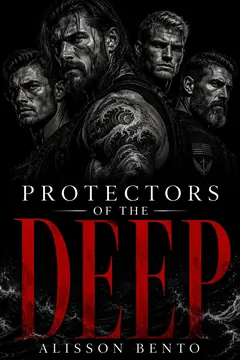 Protectors of the Deep
Buy on Amazon
See the book
-
 Bound by Three Beasts
Buy on Amazon
See the book
-
 Her Savage Guardians
3.8 Goodreads 3.67 (21) Buy on Amazon
See the book
-
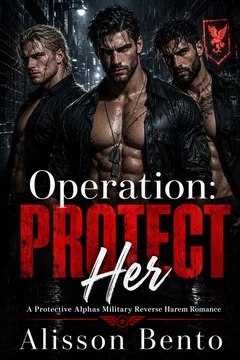 Operation: Protect Her
Buy on Amazon
See the book
-
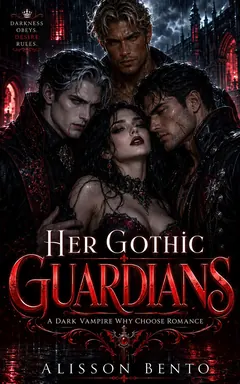 Her Gothic Guardians
Buy on Amazon
See the book
-
 Three to Protect
Buy on Amazon
See the book
-
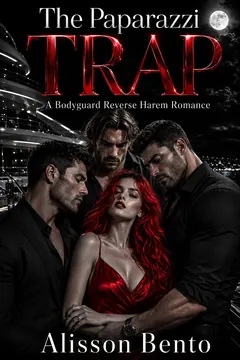 The Paparazzi Trap
Buy on Amazon
See the book
-
 Her Lethal Protectors
3.0 Goodreads 3.43 (14) Buy on Amazon
See the book
-
 Guarded at Sea
Buy on Amazon
See the book
-
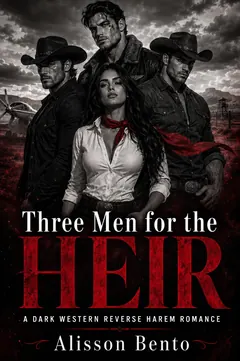 Three Men for the Heir
Buy on Amazon
See the book
-
 Protected by the Dark
Buy on Amazon
See the book
-
 Bloodline Enforcement
Buy on Amazon
See the book
Browse by what you crave.
By genre
By trope
- Find romance books by trope
- Possessive Hero
- Captor & Captive
- Bodyguard & Protector
- Debt & Bargain
- Enemies to Lovers
- Marriage of Convenience
- Forbidden Love
- Forced Proximity
- Small Town
- Fake Dating
- Arranged & Forced Marriage
- Boss & Employee
- Slow Burn
- College & Academia
- Secret Baby
- Single Dad
- Revenge
- Curvy Heroine
- Second Chance
- Fated Mates
- Royals
- Grumpy & Sunshine
- Morally Grey
- Runaway Bride
- Age Gap
- He Falls First
- Holiday Romance
- Touch Her and Die