For readers drawn to a fugitive heroine, winter ranch labor, and a western vampire reverse-harem premise. Juno's calluses and guarded response to an ordinary supper invitation make independence concrete, while the Big House rules introduce the ranch's mystery through the conditions of her employment.
22 books
Why Choose with Possessive Heroes: Attention, Authority and Unequal Stakes
Why choose with possessive heroes brings several romantic possibilities into a story where attachment can carry a strong claim. That combination can appeal through concentrated attention, conflicting loyalties, the wish to be indispensable, or the strain of being wanted by people with power. It also raises an interesting group question: how does one person’s desire interact with the others’ decisions? A collective presence can feel very different from separate encounters, especially when the heroine needs something the men control. In Alisson Bento’s standalone collection, the starting pressures range from a failing ranch and a family debt to concealed records and an unfamiliar wolf. Choose the practical situation first. It gives the intensity a particular shape before you know how the individual bonds develop.
Compare these starting points
For readers drawn to wolf-shifter reverse harem, a curvy baker heroine, and supernatural recognition emerging from an ordinary working life. Wren's unusual scent, failing bakery finances, and encounter at the forest boundary create a specific blend of personal vulnerability and paranormal mystery.
For readers who want art conservation as a heroine's practical expertise, concealed financial records, and a mafia captivity reverse harem premise. The opening connects pigment analysis to a home intrusion, turning a careful professional discovery into an immediate threat to Clara's autonomy.
For readers drawn to an opening built around surveillance, failed escape preparations and a heroine who actively resists an organized intrusion. Harley's portable life and carefully chosen defenses make the loss of control concrete, as small traces of pursuit become a coordinated threat inside her own apartment.
Separate the relationship structure from the claim
Why choose describes a central character with more than one romantic connection. Possessive hero describes an intensity of attachment, often expressed through attention, jealousy, claims or an insistence on involvement. Neither term supplies a complete map of the group. Several partners can already work together, belong to the same family or organization, or encounter the heroine through different circumstances. The pleasure for a reader may come from their differences, from watching a shared response form, or from discovering how private intimacy survives a group decision. Decide which of those experiences interests you instead of assuming that a larger cast automatically creates the same emotional rhythm.
A love triangle commonly makes selection between partners the central question. Why choose opens another possibility: several connections can matter without every encounter becoming evidence for eliminating someone. Possessiveness can complicate that possibility because a claim sounds individual even when the relationship framework is plural. That tension is a useful reading lens, rather than a prediction about any particular book. Look for who speaks, who acts, and who has the means to enforce a decision. The opening can show an imbalance of information or resources without yet explaining the eventual agreements among the characters.
Money makes attention difficult to disentangle
In Owned by the Ranchers, Page Holden returns to the Bitterroot Valley during a blizzard after trying to build a life training horses elsewhere. Her father’s death has left a damaged ranch and an unexpectedly early foreclosure notice. The debt is two hundred and eighty thousand dollars, and the threatened assets include Tempest, the stallion whose trust and talent could still help her build a future. Theo, Martin and Carl have signed the new lien through the McCarthy Estate Trust. Page associates them with her family’s ruin, yet they now hold the debt she needs to confront.
That premise suits a reader who wants attachment entangled with property, resentment and a heroine’s practical skill. Tempest gives the financial dispute a living center: Page is defending more than an abstract balance sheet. The cold house, broken pipes and approaching auction also make delay costly. When comparing this with other possessive why choose books, ask whether you want the men’s power to arise from an obligation already attached to her home. The story begins with Page driving toward creditors; that is a different source of tension from strangers recognizing her as a supernatural match.
Property of the Partners moves the imbalance into a company’s accounts. Tamsin Hayes has disguised treasury transfers for six months to protect her mother’s home from a debt collection sale. A late-night attempt to release three point four million dollars is stopped, and security takes her to Ronan Wolfe, Cormac Shaw and Bastian Frost. The executives have watched her work and control the creditor holding the family debt. She carries a decoy drive while keeping the real authorization records against her body. Choose this for a contest in which money and information give both sides something to guard.
An expert can be vulnerable without becoming passive
Decoding Their Obsession begins with Clara examining a seventeenth-century painting. Beneath its varnish she finds unusual pigment forming bookkeeping entries and six surnames, including Moretti. Her conservation knowledge makes the discovery possible; her decision to copy the names privately shows that she already recognizes a reason for caution. A call about a detective’s investigation into a Hungarian provenance claim adds another disputed history. That evening, four men wait inside her apartment, with one positioned at the only other exit. Her professional discovery has become a problem of access and autonomy.
For a reader, Clara’s expertise supplies a specific reason to follow her thinking. The attraction of this starting point is not merely that dangerous men notice a woman. She can read something that others concealed, and the setting moves from careful examination to a breached private space. Compare it with Tamsin’s concealed authorization records: both heroines hold information, but one discovers hidden accounts within art while the other has actively manipulated company transfers. If you enjoy interpretation and evidence, the restoration premise may appeal; if you prefer a risky rescue attempt already underway, the analyst’s predicament offers that different momentum.
Recognition changes the atmosphere of the claim
Claimed by the Ash Wolves follows Wren, a baker trying to cover rent and flour after her grandmother Eseld’s death. Her sensitive nose has always been useful in the kitchen, but it begins detecting smoke, honey and the suggestion of fire on her own skin. Dreams of burning accompany the scent. Outside, the town’s howling dogs fall silent, silver eyes watch from the Ashwood, and an enormous wolf makes a sound disturbingly close to her name. Wren feels drawn toward it despite the visible danger. Ordinary work becomes the point of contact with something unfamiliar.
Choose that opening if you want bodily perception and supernatural uncertainty to shape your first encounter with the group’s world. It differs from a financial claim because the initial puzzle cannot be resolved by examining a debt document or identifying a creditor. Wren’s reliable skill has become strange to her. A reader who enjoys gradual recognition can attend to scent, sound and the forest boundary; a reader who wants immediately legible leverage may prefer Page or Tamsin. The shifter premise does not itself explain every mating rule or the eventual relationships. Its useful distinction here is how unfamiliar attachment enters a recognizable daily life.
Shelter can make a forceful response harder to judge
Kept by the Brothers opens with Merritt Foster fleeing men and dogs from a compound on a rain-soaked mountain slope. A road offers possible escape, but she nearly runs beneath Gannon’s truck. Her attempt to flee him ends when the ridge collapses onto the pavement. He pulls her clear of the washout and takes her into the heated cab, refusing to let her walk back into storm danger. He and his brothers run the valley’s livestock operation, where he says she can find dry clothes and a working landline. Merritt must assess help while already afraid of confinement.
This is a useful choice when you want immediate physical urgency and uncertainty about the terms of refuge. Warmth, transport and a telephone are concrete needs; Gannon’s uncompromising response makes accepting them emotionally complicated. Contrast that with Page deliberately approaching men she resents. Page goes toward a known financial obstacle, while Merritt is intercepted during escape and must judge a stranger quickly. Both premises make dependence uncomfortable, but their heroines face different decisions. The difference can matter more to your reading mood than the shared possessive label.
The group’s resources are part of its dramatic presence
A group can exert pressure through coordinated action even before its members have distinct romantic scenes. Executives can stop a transfer and redirect security. Creditors can sign a lien. Intruders can occupy the exits of a home. Ranching brothers can offer a place beyond a dangerous road. These are different forms of reach, and they shape the heroine’s available options. If you enjoy a powerful collective, notice what the men can actually do in the first situation. If you prefer tension around an individual encounter, Merritt’s meeting with Gannon or Wren’s wolf encounter gives you a more concentrated starting point.
Individuality remains a separate question. A job title or a name establishes a role, but chemistry depends on the exchanges you read. One partner’s practical response may interest you for different reasons from another’s challenge or hesitation. You can sample for that variation without expecting the opening to distribute attention equally. Also notice the heroine’s method of responding: Page confronts creditors, Tamsin preserves evidence, Clara reads hidden layers, Wren trusts and questions her senses, and Merritt weighs survival against another possible trap. Those actions make each premise a different invitation to the reader.
Notice what can be kept private
Privacy takes a different form in each of these openings. Clara’s apartment has been entered, so the problem concerns physical access to a place she expected to control. Tamsin has already been watched at work, yet still hides the real records on her body. Page’s dispute sits in documents that others can act upon. Merritt has no settled refuge in which to gather information, and Wren’s unexplained scent makes even her own skin a source of questions. If you enjoy tension around secrets, choose the kind of private space being challenged: a home, a body, a plan or an interpretation.
That distinction also helps when sampling a first chapter. Look for what the heroine can withhold and what she must reveal to obtain the thing she needs. A copied surname, a decoy drive, a horse’s value or a reason for fleeing can make a conversation carry more than attraction. You need not know the entire plot to recognize whether you enjoy that particular exchange of information. A possessive group becomes more interesting when its attention encounters a person with knowledge, priorities and methods of her own.
Choose the pressure you want to spend time inside
If your strongest interest is ownership and the future of a working home, start with Owned by the Ranchers. For financial blackmail and records concealed during an executive confrontation, consider Property of the Partners. For a specialist whose discovery reaches into her apartment, look at Decoding Their Obsession. Claimed by the Ash Wolves brings a baker’s sensory world into contact with a shifter mystery. Kept by the Brothers begins with flight, a storm and contested shelter. These are all standalone choices, so you can choose the kind of immediate problem that makes you want to turn the page.
The neighboring guides offer different questions. Forced proximity helps when shared space is the main attraction; fated mates focuses on a supernatural framework for connection; touch her and die emphasizes a response to external danger. None of those terms follows automatically from possessiveness. The combination also does not establish sexual explicitness, every relationship between the partners, a particular ending or an absence of coercion. Read the individual book information for boundaries that matter to you. A useful first selection can still be precise: choose the heroine’s problem, the resource she needs, and the kind of attention that complicates obtaining it.
-
 Bestseller
Their Dark Obsession
3.4 Goodreads 3.58 (19) Buy on Amazon
See the book
-
 Bestseller
Owned by the Soldiers
4.4 Goodreads 4.08 (59) Buy on Amazon
See the book
-
 Bestseller
Claimed by the Mountain Kings
4.4 Goodreads 4.22 (23) Buy on Amazon
See the book
-
 Bestseller
Shared Mafia's Property
4.0 Goodreads 4.29 (41) Buy on Amazon
See the book
-
 Claimed by the Ash Wolves
4.4 Goodreads 4.33 (12) Buy on Amazon
See the book
-
 Property of the Iron Corsairs
3.9 Goodreads 4.06 (18) Buy on Amazon
See the book
-
 Claimed by the Trinity
4.0 Goodreads 3.89 (18) Buy on Amazon
See the book
-
 Owned by the Ranchers
Buy on Amazon
See the book
-
 The Lawson Brothers
3.2 Goodreads 3.71 (14) Buy on Amazon
See the book
-
 Claimed by the Night Lords
3.6 Buy on Amazon
See the book
-
 Beautiful Property
3.9 Goodreads 4.11 (27) Buy on Amazon
See the book
-
 Owned by the Elite
3.9 Goodreads 3.90 (21) Buy on Amazon
See the book
-
 Property of the Partners
Buy on Amazon
See the book
-
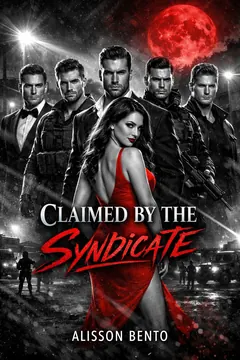 Claimed by the Syndicate
3.6 Goodreads 3.75 (12) Buy on Amazon
See the book
-
 Decoding Their Obsession
Buy on Amazon
See the book
-
 Claimed by the Coven
Buy on Amazon
See the book
-
 Four to Claim Her
Buy on Amazon
See the book
-
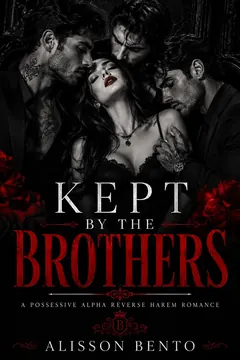 Kept by the Brothers
3.1 Goodreads 3.00 (13) Buy on Amazon
See the book
-
 Claimed by the Operatives
Buy on Amazon
See the book
-
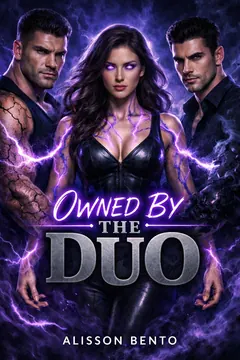 Owned by the Duo
Goodreads 3.60 (10) Buy on Amazon
See the book
-
 Neural Obsession
Buy on Amazon
See the book
-
 New
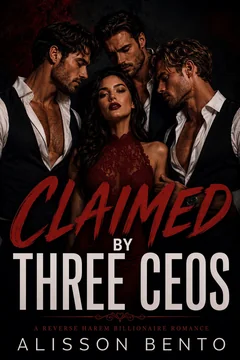
Claimed by Three CEOs
Buy on Amazon
See the book
Browse by what you crave.
By genre
By trope
- Find romance books by trope
- Possessive Hero
- Captor & Captive
- Bodyguard & Protector
- Debt & Bargain
- Enemies to Lovers
- Marriage of Convenience
- Forbidden Love
- Forced Proximity
- Small Town
- Fake Dating
- Arranged & Forced Marriage
- Boss & Employee
- Slow Burn
- College & Academia
- Secret Baby
- Single Dad
- Revenge
- Curvy Heroine
- Second Chance
- Fated Mates
- Royals
- Grumpy & Sunshine
- Morally Grey
- Runaway Bride
- Age Gap
- He Falls First
- Holiday Romance
- Touch Her and Die