For readers who want a scientist heroine, environmental investigation, and a cartel-boss fake-marriage premise. Emma's insistence on valid measurements and Yoli's local water knowledge suit readers drawn to professional rigor, community stakes, and surveillance that makes fieldwork dangerous before the romantic arrangement begins.
23 books
Mafia Romance with Possessive Heroes: Choose How Power Reaches Her
A possessive mafia romance can begin long before a man declares that a woman belongs to him. Power may reach her through a changed song, a document laid across her work, a hospital superior reading her report, or a watcher beside a field survey. The mafia setting supplies organised criminal influence; the possessive theme concerns personal attachment and claims within the relationship. To choose between Alisson Bento’s standalone books, look at the point where those two forms of power meet the heroine’s existing life. Does she first notice attention, confront an offer, discover dangerous information, or lose a route of escape? Those openings invite different reading experiences even when they share the same labels. The comparison below keeps the woman’s task, knowledge, and available decisions in view while helping you identify the pressure that interests you.
Compare these starting points
Choose this for a financially capable heroine, a family business under mafia pressure, and a debt-driven marriage framework. Siena's direct account of the laundry's failures gives the opening a precise working setting, while her father's offer turns professional usefulness into an intensely personal betrayal.
Choose this for a capable pediatric nurse, a surgeon with Bratva authority, and a protective marriage-of-convenience premise. The opening spends time on patient assessment and clinical documentation, giving Elena a professional identity before the hospital's criminal connections turn her new workplace into a source of danger.
For readers who want art conservation as a heroine's practical expertise, concealed financial records, and a mafia captivity reverse harem premise. The opening connects pigment analysis to a home intrusion, turning a careful professional discovery into an immediate threat to Clara's autonomy.
Separate a criminal network from a personal claim
A criminal organisation can control a place, payment, document, or route without every action being romantic. A possessive attachment can focus on a particular woman without explaining the entire organisation’s goals. Treat these as separate questions when you read a description. Who controls the setting? What makes this woman personally significant? You may prefer a powerful man whose attention interrupts a familiar routine, or a heroine who uncovers a secret that brings several interests toward her. Neither preference requires imagining that status itself establishes trust. The useful distinction is between power already operating around her and a claim directed at her specifically.
As a hypothetical comparison, imagine a singer learning that a customer has changed the music, then an archivist being denied access to her phone by men demanding payment. Both encounters involve influence over work, but their immediate restrictions differ. The singer must interpret a customer’s reach; the archivist faces physical obstruction. When selecting, decide whether you want uncertain motives to dominate the opening or an overt act that makes the imbalance unmistakable. These examples are reading criteria rather than scenes promised in every book. Naming the mechanism lets you choose more accurately than assuming that a possessive hero always arrives with the same behaviour.
A quiet intrusion into work can carry the first warning
The Cartel’s Obsession introduces Gabrielle Dickinson through a late-night set at the Canary Room. Her songs, stage manner, and gloves help her control how much intimacy the audience can imagine buying. Manager Webster Shortle tells her that an unnamed cash-paying man occupies the last booth. Pianist Bethany has changed the music at his request, an accommodation Gabrielle questions because money or trouble usually explains such changes. The stranger’s stillness unsettles her practiced survey of the room. This is a useful entry if you want tension through performance and guarded interpretation rather than a contract placed immediately before the heroine.
Notice which ordinary decision has moved out of her hands: a setlist that normally belongs to her professional routine. The opening does not need a completed declaration of ownership for attention to become a question of authority. A reader interested in atmosphere can follow who speaks for the customer, how colleagues accommodate him, and what the heroine notices from the stage. Compare those details with a premise beginning in overt collection or pursuit. Gabrielle’s professional boundaries are already visible before the stranger’s motives become clear. Choose this sort of opening when you enjoy reading small workplace changes as clues, while leaving later conduct to the individual story.
Clinical authority creates a different overlap with criminal power
Claimed by the Surgeon Don begins with Elena Rossi returning to New York after her mother’s death and working in the Beaumont-Vasilev Institute’s pediatric intensive-care unit. She notices a trapped medication line before an alarm and recognises a child’s deterioration despite reassuring monitor readings. Her concise safety report reaches chief of surgery Nikolai Romanov. His attention is already drawn to the new nurse, while hospital leadership shares his day with Bratva business, coded book purchases, and suspicious supply payments. A protective marriage proposal links Elena’s safety to his Bratva name. This premise brings professional hierarchy and a practical union into the same workplace.
Compare the source of access with Gabrielle’s club. A hospital report is part of a necessary clinical chain, while a changed song arises through a customer’s influence. Elena’s competence matters because she sees danger that equipment readings can disguise. Nikolai’s position matters both to that workplace and to a criminal organisation. If medical work interests you, choose by the specific patient assessment and documentation in the opening, then consider what it means for the person reviewing her work also to offer protection. The protective framing does not by itself settle every question about independence or consent. It identifies the practical intersection you may want to follow.
Family bargains can turn competence into leverage
His Collateral Bride introduces Siena Marchetti with an exact understanding of why her father’s laundry accounts fail to balance: overdue customers, broken equipment, and an expiring lease. Vasari men arrive over a four-hundred-thousand-dollar debt. Her father Tomas offers excuses, while Siena gives operational facts. Dante Vasari listens closely enough to recognise who understands the business. The financial reckoning becomes personal when Tomas proposes that Dante take Siena instead. She demands that her father say the offer to her face. Choose this marriage-of-convenience opening if you want a financially capable heroine confronting betrayal inside a working family business.
The Don’s Collateral starts from an estranged daughter rather than a woman still managing family accounts. Archivist Calla Hayes has spent five years separating her quiet life from gambling father Jaron Reed. Enzio Conti arrives at the library with men and a modern paper claiming Calla as collateral for three million dollars owed to the Rossi syndicate. She recognises the supposed agreement as a criminal excuse, but the men block the aisle and her phone. Compare the women’s situations: Siena’s ongoing labour meets her father’s proposal; Calla’s hard-won distance meets a claim enforced through abduction. Shared debt pressure does not make their relationship to the debtor identical.
A discovery can make the heroine’s knowledge the contested resource
Decoding Their Obsession begins when Clara examines a seventeenth-century painting and finds unusual pigment beneath the varnish. The hidden grid contains bookkeeping entries and six surnames, including Moretti. She copies the names privately instead of photographing them. A friend’s call about a detective and a Hungarian provenance claim raises another question about the painting’s history. That evening, four men wait inside her apartment, with one at the only other exit. This captivity and why-choose premise turns a professional discovery into an invasion of private space. It may suit readers interested in knowledge that others intend to control, alongside a heroine’s technical ability to uncover it.
Owned by the Pakhan approaches dangerous knowledge through a planned digital theft. Vita Barton enters a fortified Lake Michigan estate expecting a corrupt hedge fund manager’s ledger. Security exceeds Eden’s briefing, and the terminal instead reveals police bribes, weapons shipments, and human cargo authorised by Chicago Pakhan Nikita Fedorov. Vita stops the download and heads for the exit with half the file before a figure moves from the shadows. Choose between an unexpected discovery during legitimate art work and a skilled infiltration whose target was misrepresented. Both make evidence personal, but the heroine’s reason for entering the space and the reliability of her information differ.
Surveillance and immediate escape create distinct reading rhythms
Their Dark Obsession gives Harley Welch thirteen months of signs that pursuit has followed her from Seattle through Denver to Chicago. She keeps a packed duffel and a reinforced deadbolt. A scent, a warm doorknob, and a cufflink in her car undermine the belief that moving is enough. Tonight, three burner phones fail, the block goes dark, and an infrared lens watches her bedroom exit. A lock opens with an unauthorised key. Harley attacks an intruder, but Giovanni restrains her as another man approaches with a needle. Her defensive preparation matters because the opening shows specific ways it is defeated.
Claimed by the Mountain Kings begins with Callie crashing a stolen sedan into a pine on an Appalachian road while fleeing Miriam’s cartel. An old injury reopens. She leaves the wreck to avoid pursuers and keeps an encrypted drive in her boot containing offshore accounts, shell-company ledgers, and political bribe lists. With no signal, snow, blood loss, and approaching footsteps, safety remains uncertain. Compare sustained invasion of a familiar apartment with a fugitive’s exposure in unfamiliar terrain. Both women actively prepare or act, but one confronts a coordinated breach of chosen defences while the other must improvise after a crash. Choose the form of practical suspense you enjoy.
A marriage treaty can demand an appearance the heroine does not believe
Claimed by the Syndicate places Sapphire Perkins on ancestral land occupied by the fortified Veiled Vows Ranch. A treaty requires her arrival as a veiled bride. Failure could endanger Hollis, her hidden twelve-year-old sister. Madam Jane Reeves frames Sapphire’s compliance as the condition holding a truce between five syndicates together. Sapphire performs frightened submission while observing patrol routes and hiding a ceramic blade beneath her dress. This why-choose opening may interest you if the heroine’s outward behaviour and private intention should diverge, with family survival and disputed land supplying reasons she cannot simply refuse to enter.
A useful reading question is what the heroine’s apparent agreement means. Is she accepting a practical benefit, obeying under threat, buying time, or performing a role while gathering information? These are possibilities to investigate, not interchangeable assurances about consent. Sapphire’s concealed resistance gives the opening one specific answer about her behaviour at arrival. Compare it with Siena’s demand that her father speak his proposal directly, or Calla’s recognition of a false contract. Different women use speech, observation, and documentary judgment in different circumstances. Choosing the method you want to follow keeps their decisions visible within the criminal arrangements, rather than reducing each woman to an object of attention.
Refine the shelf by the pressure you actually want
Captivity concerns restricted departure; touch her and die concerns a threatening protective response; morally grey concerns ethical choices. These can accompany possessiveness, but the combined mafia and possessive labels do not establish every one of them. Likewise, several men in an opening do not by themselves establish several romantic partners. Use the confirmed why-choose label when that structure matters to you. The practical comparison remains what the heroine faces and what actions remain available. A quiet club, an intensive-care unit, a library aisle, and a snowy mountain create different opportunities to question, resist, leave, or seek information.
All the books discussed are standalone selections. Begin with one clear preference: professional attention becoming personal, a family bargain, dangerous evidence, a long pursuit, immediate survival, or a treaty with concealed resistance. Then ask which heroine’s task interests you even before the romantic claim becomes explicit. Consult the individual page for sexual content, sensitive subjects, relationship boundaries, and endings. These two labels do not provide those guarantees. They do give a useful starting intersection: organised criminal power meeting a personal claim. Your more specific choice lies in how that pressure enters the woman’s life and what you want to watch her do in response.
-
 Bestseller
Their Dark Obsession
3.4 Goodreads 3.58 (19) Buy on Amazon
See the book
-
 Bestseller
The Pakhan’s Property
3.8 Goodreads 4.07 (27) Buy on Amazon
See the book
-
 Bestseller
Claimed by the Mountain Kings
4.4 Goodreads 4.22 (23) Buy on Amazon
See the book
-
 Bestseller
Shared Mafia's Property
4.0 Goodreads 4.29 (41) Buy on Amazon
See the book
-
 Bestseller
The Pakhan's Obsession
4.0 Goodreads 3.77 (31) Buy on Amazon
See the book
-
 Property of the Camorra
3.9 Goodreads 3.62 (26) Buy on Amazon
See the book
-
 Owned by the Pakhan
3.6 Goodreads 3.79 (14) Buy on Amazon
See the book
-
 Claiming His Widow
4.2 Goodreads 4.41 (22) Buy on Amazon
See the book
-
 Claimed by the Night Lords
3.6 Buy on Amazon
See the book
-
 The Don's Collateral
Buy on Amazon
See the book
-
 His Collateral Bride
Buy on Amazon
See the book
-
 Claimed by the Surgeon Don
Buy on Amazon
See the book
-
 Claimed by the Syndicate
3.6 Goodreads 3.75 (12) Buy on Amazon
See the book
-
 Decoding Their Obsession
Buy on Amazon
See the book
-
 The Cartel’s Obsession
Buy on Amazon
See the book
-
 Claimed by El Jefe
Buy on Amazon
See the book
-
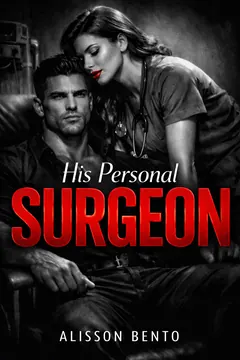 His Personal Surgeon
3.9 Goodreads 4.12 (17) Buy on Amazon
See the book
-
 New
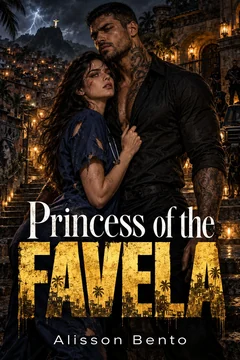
Princess of the Favela
Buy on Amazon
See the book
-
 The Pakhan's Property
Buy on Amazon
See the book
-
 The Irishman's Property
Buy on Amazon
See the book
-
 Corrupted by the Light
Buy on Amazon
See the book
-
 The King of the Forbidden City
Buy on Amazon
See the book
-
 His Final Acquisition
Buy on Amazon
See the book
Browse by what you crave.
By genre
By trope
- Find romance books by trope
- Possessive Hero
- Captor & Captive
- Bodyguard & Protector
- Debt & Bargain
- Enemies to Lovers
- Marriage of Convenience
- Forbidden Love
- Forced Proximity
- Small Town
- Fake Dating
- Arranged & Forced Marriage
- Boss & Employee
- Slow Burn
- College & Academia
- Secret Baby
- Single Dad
- Revenge
- Curvy Heroine
- Second Chance
- Fated Mates
- Royals
- Grumpy & Sunshine
- Morally Grey
- Runaway Bride
- Age Gap
- He Falls First
- Holiday Romance
- Touch Her and Die