Choose this for a plus-size baker, a brother's casino debt, and a romance involving three Bratva brothers. The opening places everyday labor and sharp dialogue beside criminal pressure, with Mary's unfinished orders and family kitchen giving the danger an unusually concrete personal cost.
35 books
Mafia Why Choose Romance: Whose Rules Hold When Power Arrives?
Mafia why choose romance joins a criminal setting to a relationship involving several partners. For choosing a book, the useful distinction is often where the heroine stands when that power first reaches her. Is she at work, responsible for inherited property, already escaping captivity or trying to assess instructions supplied by someone else? Those circumstances make different demands on her, even before the individual romantic connections develop. A bakery intrusion puts family responsibility in the foreground. An emergency clinic gives a doctor rules she can enforce. A debt meeting turns the wording of a document into a practical concern. This selection also includes confinement, a winter flight and supernatural bargaining. Choose the kind of pressure you want around the several-partner framework, then consider what knowledge or action belongs to the heroine. Her first task helps distinguish the stories more precisely than an expectation that every group of powerful men will offer the same experience.
Compare these starting points
For readers who want a doctor heroine, a mafia captivity premise, and a why-choose framework. The opening moves directly from trauma care to an underground holding room, giving Viviana's practiced observation a new purpose as she measures exits, time, and the men withholding answers.
Choose this for a doctor who controls her treatment space, three injured Bratva men, and a why-choose medical romance. The opening emphasizes triage, scarce resources, and staff teamwork, giving readers who enjoy competent heroines a concrete encounter between clinical authority and men accustomed to command.
Choose this for an inherited waterfront hotel, a heroine who reads the loan documents herself, and a romance involving three mafia brothers. The opening emphasizes a payment deadline and a guarantee reaching into Priya's own business, giving financial pressure a specific cost beyond the threatened building.
Separate the criminal environment from the romantic structure
The mafia setting concerns criminal authority, loyalties and practical reach. Why choose concerns the heroine’s involvement with several partners rather than a simple selection of one suitor. Neither term explains every person’s role or every boundary within a relationship. To choose an opening, start with the form authority takes: a debt collected in someone’s kitchen, a proposed purchase of a loan, an enforced removal from a hospital or wounded men needing treatment. These are different encounters with power, despite sharing the same broad setting.
A family connection can make the group’s presence personal, while a workplace or contract can make its demands measurable. Ask what changes when several people enter the problem. Brothers may hold different kinds of authority; an institution may control access; unfamiliar help may appear during an escape. You do not need to imagine a complete relationship arrangement to compare those beginnings. Follow the immediate demand and the heroine’s response. Does she question the terms, protect a professional space, preserve information or try to survive long enough to accept assistance?
An intrusion into a bakery makes another person’s debt personal
Seduced by the Bratva begins with Mary Warren working on a late-night pastry order in her family’s Calle Ocho bakery. Men she did not invite take control of the kitchen. Nicolas Varela has come about her brother Danny’s casino debt: two point four million dollars owed to the Coliseum. The account is not Mary’s, yet Danny’s danger makes that distinction painfully inadequate. Nicolas offers a choice with consequences beyond the unfinished trays. Leaving her grandmother’s kitchen brings Mary into the orbit of Nicolas, Rian and Luca, three brothers with different forms of authority.
Choose this beginning if you want criminal pressure to interrupt ordinary labor in a place the heroine calls home. Mary answers with the practical stubbornness that keeps the bakery running, while awareness of Nicolas is not reducible to fear. The task on her bench gives the intrusion a visible cost. Compare that with a planned financial meeting: she has not arrived to negotiate a loan, and the obligation belongs to someone she wants to protect. The family connection matters because it prevents a simple separation between whose account it is and whose choices it will affect.
A loan deadline rewards attention to the actual wording
Sold to the Moretti Brothers introduces Priya Navarro at her grandmother’s bank with the loan file read and tabbed. A balloon payment of 4.1 million dollars falls due in eighty-seven days. A personal guarantee puts more than the inherited Ostrander hotel at risk. Cesare Moretti attends as an interested party and tells her his family intends to buy the note if she cannot pay. His brothers Valen and Santino control other parts of the surrounding waterfront. Priya asks about servicing terms, assignment language and missing notices rather than accepting a prepared explanation.
This opening suits an interest in documentary scrutiny beside attraction. Priya has a defined deadline and material she can examine. Compare her bank visit with Mary’s interrupted order: both face financial pressure connected to family, but one begins inside a formal transaction and the other with an uninvited collection. The hotel and personal guarantee make different parts of Priya’s future vulnerable. If details of ownership and obligation interest you, the file offers a practical way to follow how the heroine questions a creditor’s expanding claim.
Inside an emergency clinic, criminal preferences do not decide treatment
Fixing the Bratva starts with Dr. Clara Vale enforcing Nightglass’s central rule: everyone crossing the clinic’s line becomes a patient, and weapons do not come past it. During a February power failure, an SUV brings Nikolai Volkov, Dmitry Morozov and Ilya Antonov, three wounded men whose names carry criminal authority. Clara requires them to surrender weapons before treating chest trauma, active bleeding and a possible concussion. One operating table, a generator and limited blood supplies make her judgment essential. Her staff work with her to keep the emergency space functioning.
Choose this example if the appeal is watching powerful men encounter a limit they cannot set for themselves. Their injuries make medical expertise immediately necessary. Clara’s authority is attached to a specific place and task, which gives the group encounter a different shape from debt collection. You follow decisions about treatment rather than promises of protection. The practical scarcity also matters: equipment and supplies require prioritization. A heroine’s competence becomes concrete when the people accustomed to command must depend on how she manages the room.
Leaving the hospital can strip a doctor of familiar protections
The Mafia’s Prescription begins after Viviana Greer stops a young stabbing victim’s bleeding. Marcellus Moretti appears outside her trauma bay; an unidentified woman has already asked about her shifts. Viviana tries to keep their conversation away from patients and within sight of hospital security. Bellamy Moretti takes hold of her, and the brothers bring her to an underground room beneath an industrial plant. Marcellus claims she unknowingly possesses something of his but does not explain. Her professional observation now meets confinement and information controlled by the men around her.
Set this beside Clara’s clinic if you want to choose the position from which a doctor faces criminal authority. Clara makes the men relinquish weapons inside her treatment space. Viviana is removed from the hospital after trying to keep the exchange within its protections. The difference concerns access and setting, not a ranking of their abilities. One opening allows clinical rules to govern the encounter; the other asks what observation can do when familiar support is lost. Choose according to whether you want an emergency room under a heroine’s direction or a doctor assessing an imposed confinement.
A remembered ledger makes escape more than movement away
Winter Sanctum follows Briony into a lakeside snowstorm carrying the contents of Bram Varga’s destroyed ledger in her memory. Nine months of captivity have left her without money, papers or a phone. The names and routing strings she retained make her valuable to the men hunting her. Her former work cataloguing auction lots helps her understand how Varga prices her usefulness. Unable to outrun a truck, she leaves the road and crawls toward an unexpectedly open gate. Declan finds her collapsing in the drift and calls for help.
Choose this beginning if surviving the cold and preserving knowledge are the pressures you want. The evidence is not a file Briony can hand over without consequence; she carries it through her own recollection. Help arrives while the pursuit is still close, so the first encounter has an urgency different from a meeting she planned. Compare her memorized information with Priya’s tabbed loan documents. Both kinds of knowledge matter, but one is attached to flight without resources and the other to examining a formal financial demand.
A magical deadline makes the instructions themselves questionable
Tamed by the Triumvirate introduces Delphine Fontenot-Sainte crossing shifting New Orleans streets with a silver grimoire and a countdown implanted by Leander during her Order training. At a warded estate she meets Valerius, Cyprian and Balthazar Moreau, three vampire brothers whose different powers she has been taught to fear. Her briefing says binding herself to all three before dawn will interrupt the mechanism; failure threatens her body and the Veil. She can recognize wards and assess danger, but cannot verify the account supplied by the man controlling her supposed trigger phrase.
This choice adds supernatural rules to the problem of trusting an instruction. Delphine’s training gives her tools without making her briefing reliable. Compare her deadline with Priya’s: a loan file has language to inspect, while a magical countdown depends partly on claims she cannot independently confirm. If you enjoy uncertain rules and an urgent bond negotiation, this opening offers a distinct route into the several-partner framework. The question is not only whether the demand is costly, but whether the person who described its mechanism has told her the truth.
Choose the source of leverage and the kind of boundary
These six heroines begin with different resources. Mary knows her work and family; Priya reads contractual detail; Clara controls treatment; Viviana observes outside her familiar support; Briony remembers financial evidence; Delphine understands wards but doubts a briefing. None of those resources makes all danger disappear. They do make the first response different. Pick a form of action you would enjoy following even before the romantic connections become central. That can be sharper dialogue in a kitchen, exact questions at a bank, staff cooperation or an urgent effort to retain information.
Also choose the location of the boundary. A clinic threshold can be enforced immediately. A personal guarantee extends a claim beyond one building. Captivity and flight alter whether a person can leave or seek help. A magical bond adds bodily consequences to accepting terms. These comparisons distinguish pressure without treating every intense situation as the same kind of romance. They let you ask what the heroine wants to keep: her work, her property, her movement, her evidence or her ability to judge the rules presented to her.
What does the combination leave for the individual book?
The criminal setting and several-partner structure do not establish sexual explicitness, consent dynamics, exclusivity, abuse, cheating or an ending. They also do not specify whether the partners have romantic or sexual connections with one another. Use information about the individual title for those boundaries. Adjacent terms such as possessive hero, arranged marriage and revenge describe other sources of tension when the book actually includes them. All the novels here are standalone, so no sequence is required before choosing one of these starting situations.
For a first selection, connect a pressure to the action you want beside it. Family debt and interrupted baking lead toward Mary; a loan deadline and careful reading toward Priya; injured men and treatment rules toward Clara. Confinement after trauma care points toward Viviana, remembered evidence during winter flight toward Briony, and questionable magical instructions toward Delphine. Then read an opening for tone and the amount of detail you enjoy. Your interest in several partners can remain the same while the heroine’s practical problem changes from book to book.
-
 Bestseller
Seduced by the Bratva
Buy on Amazon
See the book
-
 Bestseller
Their Dark Obsession
3.4 Goodreads 3.58 (19) Buy on Amazon
See the book
-
 Bestseller
Claimed by the Mountain Kings
4.4 Goodreads 4.22 (23) Buy on Amazon
See the book
-
 Bestseller
Shared Mafia's Property
4.0 Goodreads 4.29 (41) Buy on Amazon
See the book
-
 Bestseller
Bought by the Pakhan Triad
Buy on Amazon
See the book
-
 Her Ruthless Captors
3.7 Buy on Amazon
See the book
-
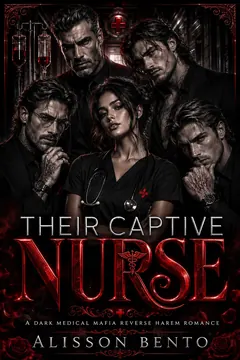 Their Captive Nurse
Buy on Amazon
See the book
-
 Sold to the Moretti Brothers
Buy on Amazon
See the book
-
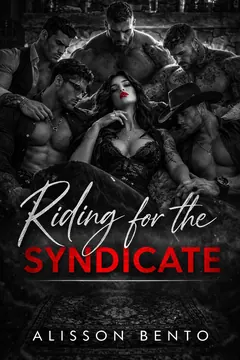 Riding for the Syndicate
3.8 Goodreads 4.07 (14) Buy on Amazon
See the book
-
 Winter Sanctum
Buy on Amazon
See the book
-
 The Bratva's Target
4.1 Goodreads 3.92 (12) Buy on Amazon
See the book
-
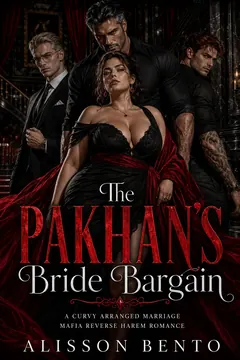 The Pakhan’s Bride Bargain
Buy on Amazon
See the book
-
 Shared by the Security Team
Buy on Amazon
See the book
-
 Her Ruthless Patient
4.2 Buy on Amazon
See the book
-
 Claimed by the Night Lords
3.6 Buy on Amazon
See the book
-
 The Mafia's Pawn
3.7 Goodreads 3.64 (11) Buy on Amazon
See the book
-
 No Escape from the Bratva
Buy on Amazon
See the book
-
 The Mafia’s Prescription
Buy on Amazon
See the book
-
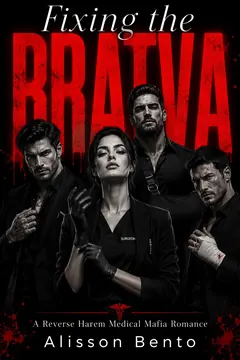 Fixing the Bratva
Buy on Amazon
See the book
-
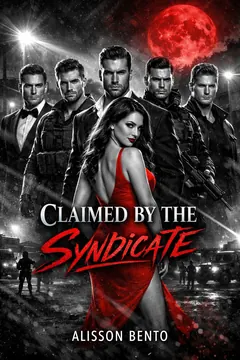 Claimed by the Syndicate
3.6 Goodreads 3.75 (12) Buy on Amazon
See the book
-
 Decoding Their Obsession
Buy on Amazon
See the book
-
 Men of the Underworld
Buy on Amazon
See the book
-
 Three to Score
Buy on Amazon
See the book
-
 Her Three Dons
3.3 Buy on Amazon
See the book
-
 Starved Devotion
Buy on Amazon
See the book
-
 Healing the Pakhan
Buy on Amazon
See the book
-
 Bound to the Bosses
Buy on Amazon
See the book
-
 The Syndicate's Queen
3.7 Goodreads 4.00 (10) Buy on Amazon
See the book
-
 Corrupt Calculations
Buy on Amazon
See the book
-
 Collateral Captive
Buy on Amazon
See the book
-
 Velvet Subjugation
Buy on Amazon
See the book
-
 Rocked by Three
Buy on Amazon
See the book
-
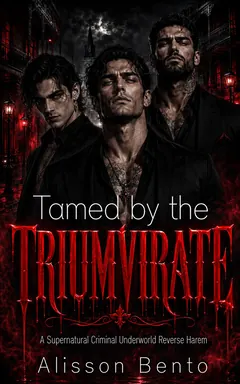 Tamed by the Triumvirate
Buy on Amazon
See the book
-
 Bloodline Enforcement
Buy on Amazon
See the book
-
 The Don's Catalyst
Buy on Amazon
See the book
Browse by what you crave.
By genre
By trope
- Find romance books by trope
- Possessive Hero
- Captor & Captive
- Bodyguard & Protector
- Debt & Bargain
- Enemies to Lovers
- Marriage of Convenience
- Forbidden Love
- Forced Proximity
- Small Town
- Fake Dating
- Arranged & Forced Marriage
- Boss & Employee
- Slow Burn
- College & Academia
- Secret Baby
- Single Dad
- Revenge
- Curvy Heroine
- Second Chance
- Fated Mates
- Royals
- Grumpy & Sunshine
- Morally Grey
- Runaway Bride
- Age Gap
- He Falls First
- Holiday Romance
- Touch Her and Die